Oak Hill Estate Eyed for Transformation into Virginia State Park
Updated
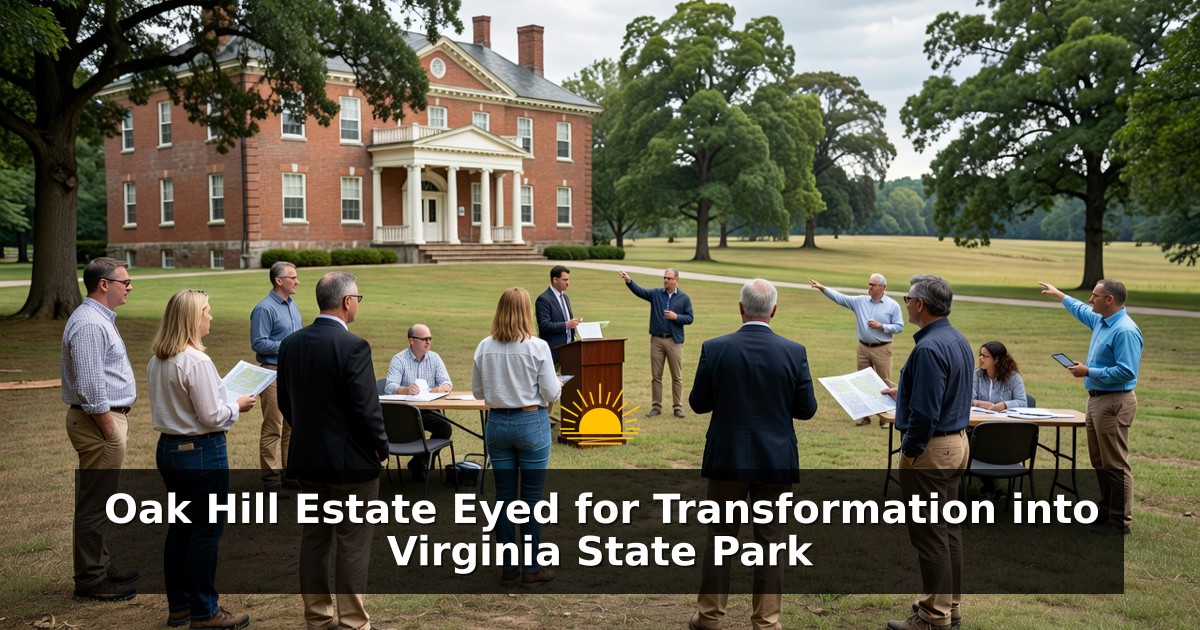
A proposal under discussion in Virginia would convert the historic Oak Hill estate into a state park offering recreational facilities, conservation areas, and public access to significant historic grounds. The vision centers on preserving the property while expanding its use for outdoor activities and educational visits. Officials have highlighted the site's potential to serve as a major community and regional asset. The plan builds on existing educational outreach already occurring on the grounds.
Previous owners Gail and Tom Delashmit have allowed fourth-grade students to visit the property for decades, providing architectural tours and opportunities to explore the grounds. This longstanding practice has introduced generations of young learners to the site's history and landscape. Supporters of the park conversion note that formal public ownership could expand such programs. The existing home would remain available for guided tours and community events under the proposed framework.
The property includes ten tenant homes that would be repurposed into a mix of rentable cabins for overnight visitors and residences for park rangers. These accommodations would allow families and groups to stay on site while exploring the surrounding natural features. An eleven-acre pond on the grounds is designated for small paddle boats and fishing activities. A pristine river running through the area would support floating during spring months when water levels permit safe recreation.
Extensive networks of hiking and biking trails form another core element of the concept. These paths would link Oak Hill to existing regional trail systems, creating longer continuous routes for outdoor enthusiasts. Miles of such trails would encourage both casual walkers and more dedicated cyclists to spend extended time on the property. Planners emphasize that the combined amenities would create a full-day or multi-day destination rather than a brief stop.
Location plays a central role in the project's projected reach. The estate sits within a one-hour drive of approximately thirty percent of Virginia's population, placing it within easy reach of major population centers. Residents of Loudoun County would gain a substantial new local resource, while visitors from other parts of the state could arrive for day trips or weekend stays. Officials have also acknowledged that residents of neighboring Maryland might choose to visit even though they are not included in Virginia population calculations.
Historical Context and Preservation Goals
Oak Hill carries deep historical associations that strengthen the case for public stewardship and careful conservation. Converting the estate into a state park would lock in long-term protections for both the built structures and the surrounding natural environment. Advocates describe the effort as a joint commitment to conservation and preservation that would benefit current and future generations. The approach seeks to balance public enjoyment with responsible land management practices.
Educational programming would continue and likely expand once the site operates under state park guidelines. School groups could schedule structured visits focused on architecture, local history, and environmental science. The presence of ranger housing on the property would support year-round staffing and interpretive services. Such staffing levels typically improve visitor safety and enhance the quality of information shared with the public.
Recreational Features and Regional Draw
The combination of water-based recreation, overnight lodging, and trail connections positions Oak Hill to attract a broad range of users. Families seeking low-impact activities such as pond fishing or short hikes would find suitable options alongside more active visitors interested in longer bike rides or river floats. Seasonal variations in river conditions would naturally shape the calendar of available pursuits. Park managers would need to develop clear guidelines to protect water quality and wildlife habitats while accommodating these uses.
Regional tourism officials often note that well-designed state parks generate economic activity in surrounding communities through visitor spending on food, fuel, and supplies. A park at Oak Hill could produce similar secondary benefits for nearby towns in Loudoun County and adjacent areas. The ability to rent cabins would encourage longer stays and higher per-visitor expenditures compared with day-use-only sites. Careful planning of capacity limits would help maintain the quality of the experience as popularity grows.
Community Engagement and Next Steps
Supporters frame the initiative as an opportunity to create lasting memories for millions of Virginians over coming decades. Public access to high-quality outdoor spaces has been linked in numerous studies to improved physical and mental well-being. By placing such a resource within convenient driving distance of a large share of the state's residents, the project could measurably expand those benefits. Local residents would gain a nearby venue for regular recreation while out-of-area visitors would discover a new destination.
Realization of the full vision depends on securing necessary approvals and funding within the current legislative cycle. Lawmakers have been asked to endorse the concept so that detailed planning, infrastructure improvements, and operational preparations can proceed. The existing pattern of student visits demonstrates that the property already functions successfully as an educational site. Expanding that model into a complete state park would represent a significant scaling of public benefit.
If advanced, the transformation would add a distinctive historic and recreational property to Virginia's state park system. The blend of preserved architecture, water features, trail networks, and overnight accommodations distinguishes the proposal from many existing parks. Continued attention to conservation standards would ensure that natural and cultural resources remain intact for long-term public use. Stakeholders will monitor progress as discussions move forward in the coming months.
acre pond architectural tours biking conservation Events fishing fourth graders Gail Delashmit grounds tours hiking home tours Loudon County Marylanders Oak Hill paddle boats preservation pristine river ranger homes rentable cabins tenant homes Tom Delashmit Virginia Virginians
