Virginia Treasury Moves to Manage Unclaimed Cryptocurrency Holdings
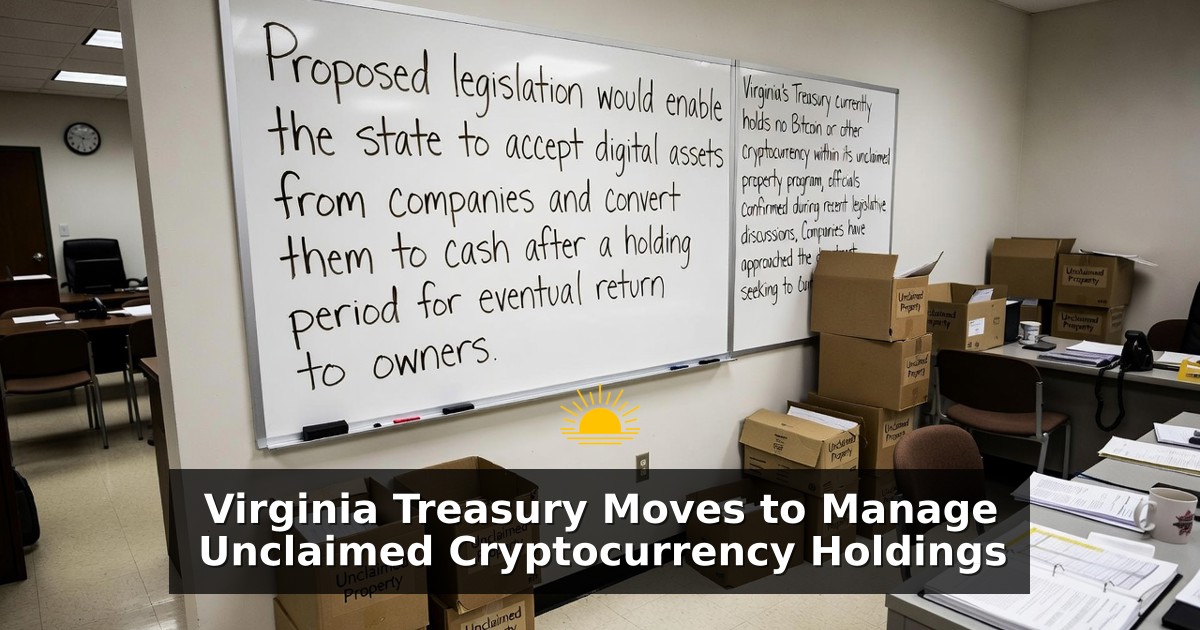
Virginia's Treasury currently holds no Bitcoin or other cryptocurrency within its unclaimed property program, officials confirmed during recent legislative discussions. Companies have approached the department seeking to transfer unclaimed digital assets belonging to residents, yet they remain reluctant to do so without clear statutory authority in place. The precise volume of these assets remains unknown at present, and projections for the near term are similarly unavailable. This gap has prompted preparation for a formal framework that would allow efficient intake, secure handling, and eventual return of such property. The effort reflects broader recognition that digital assets are becoming a more common form of abandoned value across financial systems.
Current Limitations on Digital Asset Transfers
Without enabling legislation, the Treasury lacks the legal tools needed to receive cryptocurrency or similar digital holdings directly from holders. Businesses that maintain customer accounts containing these assets have indicated discomfort with voluntary transfers under existing unclaimed property statutes. Those statutes were designed primarily for traditional financial instruments such as bank deposits, securities, and insurance proceeds. Digital assets introduce distinct custody, valuation, and security considerations that older frameworks do not fully address. As a result, potential transfers remain stalled even though some volume of unclaimed crypto is known to exist in private hands.
Officials emphasized that the absence of current holdings does not indicate an absence of future need. Market growth in cryptocurrency ownership among Virginia residents increases the likelihood that abandoned digital wallets, exchange balances, and similar accounts will surface over time. Unclaimed property programs exist to safeguard such assets until rightful owners can be located and paid. Delaying infrastructure development risks both administrative inefficiency and potential loss of value for claimants. The proposed measure therefore focuses on readiness rather than immediate volume.
Key Provisions of the Enabling Legislation
The bill under discussion would authorize the Treasury to accept digital assets in their native form when companies elect to escheat them. Acceptance in original form preserves the asset as received and avoids forced immediate conversion that might lock in unfavorable market prices. After the assets have been held in cold storage for one year, the legislation would permit the transferring company to liquidate them into cash. Cold storage involves offline cryptographic security measures that reduce exposure to online theft or unauthorized access. This dual-path approach provides flexibility while establishing a clear timeline for conversion.
Liquidation after the designated holding period simplifies long-term administration for the state. Cash proceeds can be integrated into existing unclaimed property systems that already manage claims, interest calculations, and owner outreach. Volatility inherent in many digital assets makes perpetual native-form custody operationally complex and potentially costly. By authorizing conversion after one year, the framework balances owner interests in original value with practical custodial realities. The Treasury would then be positioned to process claims and issue payments through established channels once owners come forward.
Broader Context of Unclaimed Property Administration
Unclaimed property laws require businesses to report and remit assets that have remained inactive for a statutory dormancy period, typically three to five years depending on asset type. The state then acts as custodian, publicly listing the property and returning it upon verified claim. Traditional assets such as forgotten bank accounts or uncashed checks fit readily into this model. Cryptocurrency and other digital assets complicate the process because of private-key control, exchange custody arrangements, and rapid price fluctuations. Many jurisdictions nationwide have begun updating their statutes to close these gaps and provide clear rules for holders.
Virginia's preparation aligns with that national trend. States across the country are examining how best to incorporate digital assets into escheatment processes without creating undue burdens on either businesses or claimants. Secure intake protocols, valuation standards at the moment of transfer, and post-conversion accounting all require deliberate design. The one-year cold-storage window followed by authorized liquidation represents one structured response to these shared challenges. Once infrastructure is operational, officials expect clearer data on actual volumes and claim patterns to emerge.
Implications for Residents and Future Claims
Residents who later discover they hold unclaimed digital assets would benefit from a system already equipped to receive, secure, and convert those holdings. Claims processes would mirror those already used for conventional property, including identity verification and documentation of ownership. Conversion to cash after the holding period would eliminate the need for claimants to manage private keys or navigate exchange platforms themselves. This approach reduces friction and potential loss of access that can occur when digital assets remain in native form indefinitely. Efficient administration ultimately supports the core purpose of unclaimed property programs: reuniting owners with their assets.
Preparation also includes internal capacity for secure storage and audit trails during the native-form period. Cold-storage practices must meet rigorous standards to protect against both external threats and internal mishandling. Record-keeping must document chain of custody from the moment of transfer through liquidation and final distribution. These operational details, while technical, form the foundation for public trust in the program. As more states implement comparable systems, shared best practices are likely to refine procedures further over time.
Path Forward for Implementation
Enactment of the bill would give the Treasury the statutory foundation needed to begin accepting digital assets when companies choose to remit them. Subsequent administrative rules would detail intake procedures, storage protocols, valuation methods, and liquidation mechanics. Coordination with holders would clarify reporting formats and timing expectations under the new authority. Over time, the department anticipates developing a more precise understanding of both the scale of unclaimed digital assets and the rate at which owners successfully reclaim them. That data will inform any future adjustments to holding periods or conversion practices.
The current absence of holdings does not diminish the value of advance preparation. Digital asset markets continue to evolve, and ownership among ordinary residents has expanded well beyond early adopters. Unclaimed property programs must adapt to remain effective custodians of abandoned value in all its forms. By establishing clear authority to accept native digital assets and to authorize liquidation after one year in cold storage, Virginia positions itself to manage these assets responsibly. The result is a more complete unclaimed property system capable of serving residents as financial technology continues to change.
accept allow Assets bill Cash convert Crypto cryptocurrency currently discusses explain hold managing Role Thank Treasury Treasury's Unclaimed Unclaimed Property Virginia