Virginia General Assembly Approves Measure Prohibiting Certain Ingredients in Cosmetics
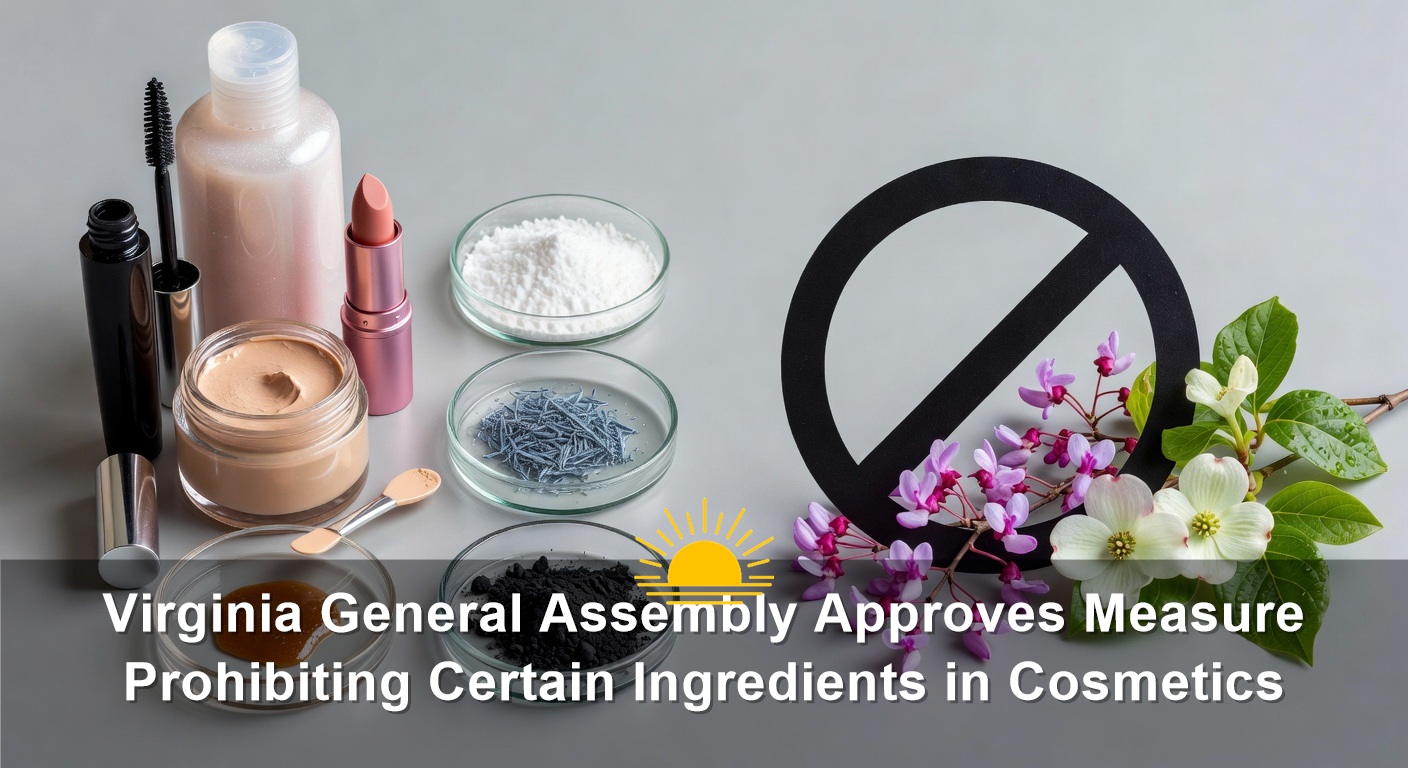
RICHMOND, Va. — Legislation prohibiting the manufacture and sale of cosmetic products containing specific hazardous ingredients has been enacted in Virginia following approval by both chambers of the General Assembly. The new law, which takes effect on July 1, 2026, adds detailed restrictions to the Virginia Consumer Protection Act and aims to eliminate certain substances from personal care items available to consumers.
The bill provides a broad definition of cosmetics to cover a range of products. This includes soaps, shampoos, conditioners, and other items intended for cleansing, beautifying, or altering appearance. Certain products regulated as drugs by federal authorities are excluded from the definition after revisions during committee review. Under the provisions, no person may manufacture, sell, deliver, offer for sale, or use in connection with a consumer transaction any cosmetic product that contains the prohibited ingredients. Such actions are classified as prohibited practices under the existing Consumer Protection Act, exposing violators to potential injunctions and civil penalties enforced by the state.
The prohibited ingredients encompass 24 hazardous substances across several categories. These include various phthalates, parabens, formaldehyde along with its releasers, heavy metals, aromatic amines, and multiple per- and polyfluoroalkyl substances, or PFAS compounds. The measure requires businesses to remove these from their cosmetic lines or reformulate products to comply.
Passage of the legislation involved extensive review and modification. The bill was introduced early in the 2026 session and assigned to the House Committee on General Laws. A subcommittee advanced a substitute version despite one dissenting vote. The full committee reported the substitute by a wide margin. The House of Delegates approved the measure on third reading in mid-February by a tally of 76 to 22. Following Senate approval by a unanimous vote after amendments, the House concurred with those changes in early March by a margin of 73 to 26. The governor signed the bill into law on April 13, 2026.
Retailers benefit from specific safeguards built into the law. Businesses that do not produce cosmetics with the banned ingredients or that do not knowingly offer them for sale face limited exposure to enforcement. A transitional provision allows retailers to sell off existing stock of non-compliant products until the effective date of July 1, 2026, providing time for adjustment.
This regulatory framework introduces new compliance obligations across the personal care sector. Manufacturers must identify and eliminate the listed ingredients from their formulations, which may involve research, testing, and supply chain modifications. Distributors and retailers will need to conduct due diligence to confirm product compositions, potentially requiring documentation from suppliers and updated inventory systems. These steps are anticipated to generate additional expenses for companies as they adapt to the updated standards.
The broad application of the cosmetic definition ensures that numerous everyday hygiene and beauty products fall within the scope of the restrictions. With enforcement beginning in the summer of 2026, companies have several months to prepare their operations. This period allows for the development of alternative formulations and the phasing out of non-compliant inventory.
Observers note that the legislation expands state authority over consumer product safety in an area previously addressed primarily at the federal level. The requirements for verification and reformulation represent a notable increase in oversight for an industry that includes both large manufacturers and smaller producers. Potential effects include shifts in product offerings as companies prioritize compliance, which could influence consumer access to certain traditional formulations.
The divided votes in the House of Delegates underscore the debates surrounding the appropriate level of state involvement in regulating chemical ingredients in commercial products. Some legislators raised points about the practical challenges for businesses in meeting the new standards within the given timeline. The final passage reflects the outcome of those discussions.
As the effective date approaches, the focus shifts to implementation. The personal care industry in Virginia is positioning itself to meet the new requirements, with attention to maintaining product quality while adhering to the ingredient prohibitions. The law marks a significant development in consumer protection measures related to cosmetics within the commonwealth.
Virginia House of Delegates Virginia Senate Aaron Rouse Adam Ebbin Adele McClure Alex Askew Alfonso Lopez Amendments Amy Laufer Angelia Williams Graves Anne Tata Atoosa Reaser Barbara Favola Barry Knight Betsy Carr Bill DeSteph Bill Wiley Bonita Anthony Briana Sewell Bryce Reeves Buddy Fowler Charlie Schmidt Charniele Herring Chris Runion Christie Craig Christopher Head Cia Price Cliff Hayes Creigh Deeds Dan Helmer Danica Roem Danny Diggs David Marsden David Reid David Suetterlein Debra Gardner Delores McQuinn Delores Oates Destiny LeVere Bolling Don Scott Drugs Elizabeth Bennett-Parker Elizabeth Guzman Ellen McLaughlin Emily Jordan Eric Phillips Eric Zehr Garrett McGuire Glen Sturtevant Governor Gretchen Bulova Hillary Kent Holly Seibold House of Delegates Irene Shin Israel O'Quinn Jackie Glass Jas Jeet Singh Jason Ballard Jay Leftwich Jeion Ward Jennifer Boysko Jennifer Carroll Foy Jeremy McPike Jessica Anderson John McAuliff Joseph McNamara Josh Thomas Joshua Cole Justin Pence Kacey Carnegie Kannan Srinivasan Karen Hamilton Karen Keys-Gamarra Karrie Delaney Kathy Tran Katrina Callsen Keith Hodges Kelly Convirs-Fowler Kimberly Pope Adams Lamont Bagby Lashrecse Aird Laura Cohen Lee Ware Legislation Leslie Mehta Lily Franklin Lindsey Dougherty Louise Lucas Luke Torian Luther Cifers Madison Whittle Mamie Locke Marcus Simon Margaret Franklin Mark Downey Mark Obenshain Mark Peake Marty Martinez May Nivar Michael Feggans Michael Jones Michael Webert Michelle Maldonado Mike Cherry Mitchell Cornett Modi Nadarius Clark Nicole Cole Otto Wachsmann Patrick Hope Paul Krizek Phil Hernandez Phillip Scott Rae Cousins Richard Stuart Richmond Rip Sullivan Robert Bloxom Rodney Willett Rozia Henson Russet Perry Ryan McDougle Saddam Salim Sam Rasoul Schuyler VanValkenburg Scott Surovell Scott Wyatt Senate Shelly Simonds Stacey Carroll Stella Pekarsky Tammy Mulchi Tara Durant Terry Austin Terry Kilgore Tim Griffin Timmy French Todd Pillion Tom Garrett Tommy Wright Tony Wilt Travis Hackworth Virgil Thornton Virginia Virginia House of Delegates Virginia Senate Vivian Watts Wendell Walker Will Davis Will Morefield William Stanley Wren Williams