Virginia has a new law that regulates the use of license plate readers
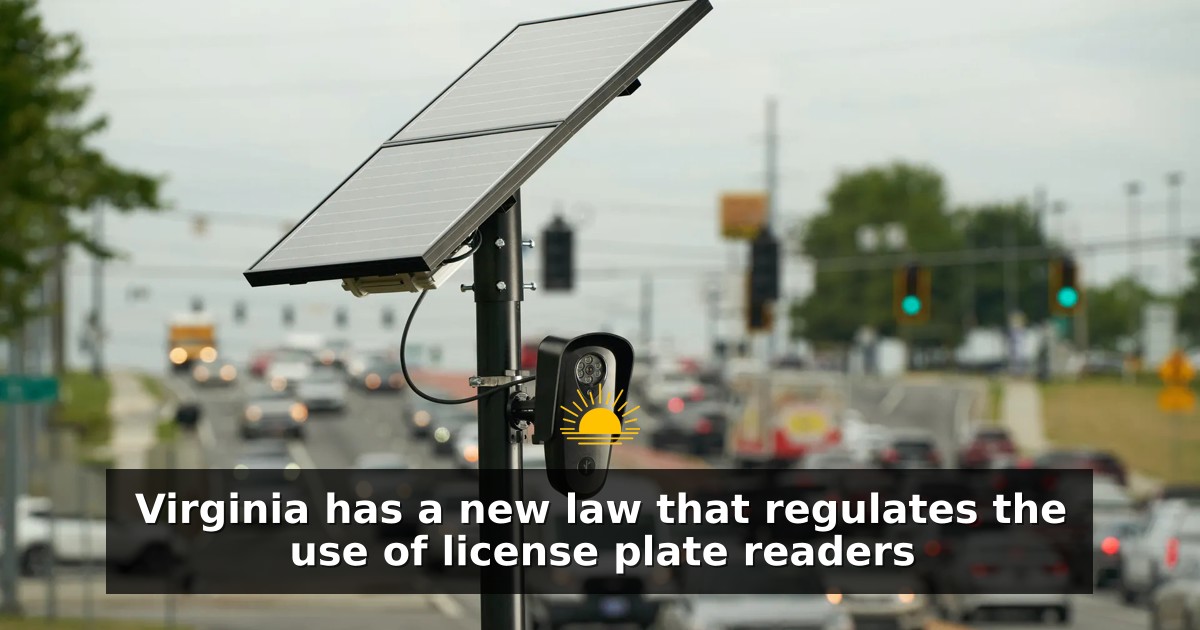
RICHMOND — Virginia is moving toward its first statewide rules for automatic license plate readers after the Virginia Crime Commission voted Friday to seek new regulations on technology that police, businesses, and homeowner associations already use across the commonwealth.
Automatic license plate readers, or ALPRs, are cameras that capture a vehicle’s plate along with the location, date, and time of the scan. The systems have spread quickly nationwide. In Virginia, law enforcement agencies already deploy them, but state statute has not yet set clear limits on how the cameras may be installed, how long data may be kept, or when officers may act on an alert.
House Majority Leader Charniele Herring, D-Alexandria, has floated legislation that would cabin police use of ALPRs to defined investigative purposes. Under the approach described to the commission, agencies could rely on the cameras in cases involving missing persons, outstanding warrants, human trafficking, stolen plates, or stolen vehicles. Installing cameras along state roads would also require a permit from the Virginia Department of Transportation, adding a layer of state oversight to roadside deployments.
Herring’s proposal also aims at transparency. It would require agencies to collect data on whether detentions or traffic stops resulted from ALPR alerts, giving lawmakers and the public a clearer picture of how often the technology leads to police contact. Retention rules remain an open question. Other states already impose sharply different timelines for how long police may keep ALPR data, ranging from three minutes in New Hampshire to as long as five years in Alabama. Virginia legislators are expected to weigh similar options as a bill advances through committee.
Colin Drabert, deputy director of the Crime Commission, told members in a November presentation that ALPR systems do not by themselves identify a driver. Cameras flag plates that appear on a “hot list” of stolen vehicles, stolen plates, or vehicles tied to reported criminal activity. Officers must still query separate databases to connect a plate to a registered owner. Even so, agencies can share ALPR data with public and private partners that operate their own readers, a practice that privacy advocates say expands the reach of surveillance beyond a single police department.
Legal specialists pressed for safeguards at Friday’s meeting. Ruby Cherian of the Legal Aid Justice Center warned that ALPRs could “increase unjustified law-enforcement contact” and urged lawmakers to ensure contracts between police agencies and ALPR vendors remain open to public scrutiny under the Freedom of Information Act. Concerns also surfaced about Fourth Amendment protections against unreasonable searches and seizures as camera networks grow denser along Virginia roads.
Police leaders argue the tools are already proving their value. Dana Schrad, director of the Virginia Association of Chiefs of Police, called ALPRs an “invaluable tool” that supplies timely leads and said many Virginia departments have used the technology for years without widespread reports of abuse. Her organization wants amendments as any bill moves forward. House Speaker Don Scott, D-Portsmouth, pushed back on the idea that long use without scandal proves the status quo is safe, noting that cameras were less common in earlier years and that problems can go unnoticed until the systems proliferate.
Herring said committee review is the place for amendments and further debate. For now, the Crime Commission’s vote puts ALPR regulation firmly on the General Assembly’s agenda. Virginia agencies will continue operating readers under local policy until the legislature draws the first statewide lines on permits, hot-list use, data retention, and public reporting — a balance between investigative speed and privacy that other states are already wrestling with in very different ways. The debate in Richmond mirrors arguments unfolding in statehouses elsewhere. Supporters of tighter rules say unregulated networks of roadside and private cameras create a de facto travel log for millions of drivers who have never been accused of a crime. Supporters of broader police use say minutes matter when a child is missing or a stolen car is moving across county lines, and that discarding plate data too quickly can erase leads investigators need later. Herring’s bill, and the Crime Commission’s call for legislation, put Virginia in the camp of states choosing statutes over leaving ALPR policy entirely to individual agencies and vendors.
Alexandria is an independent city in Northern Virginia.
Richmond is an independent city in the Richmond region.
Portsmouth is an independent city in Hampton Roads.
Alexandria City Portsmouth Richmond City abuse Alexandria Amendment Amendments argue association benefits bill cameras camp Cases Charniele Herring child clearer committee commonwealth Concerns County Crime criminal Data Debate decision Department discuss discussed discussion Don Scott driver enforcement entities Explained fourth amendment friday general assembly Grant House Human Trafficking IDEA individuals information Install law Law Enforcement Lawmakers Legislation license list oversight Police Policy Portsmouth practice privacy problem proposal regulation regulations Richmond Scott speaker state status statute Supporters surveillance systems Technology Traffic transparency Transportation United States value vendors Virginia Virginia law VirginiaMercury vote voted