Virginia Lawmakers Move Closer to Regulating Self-Driving Vehicles
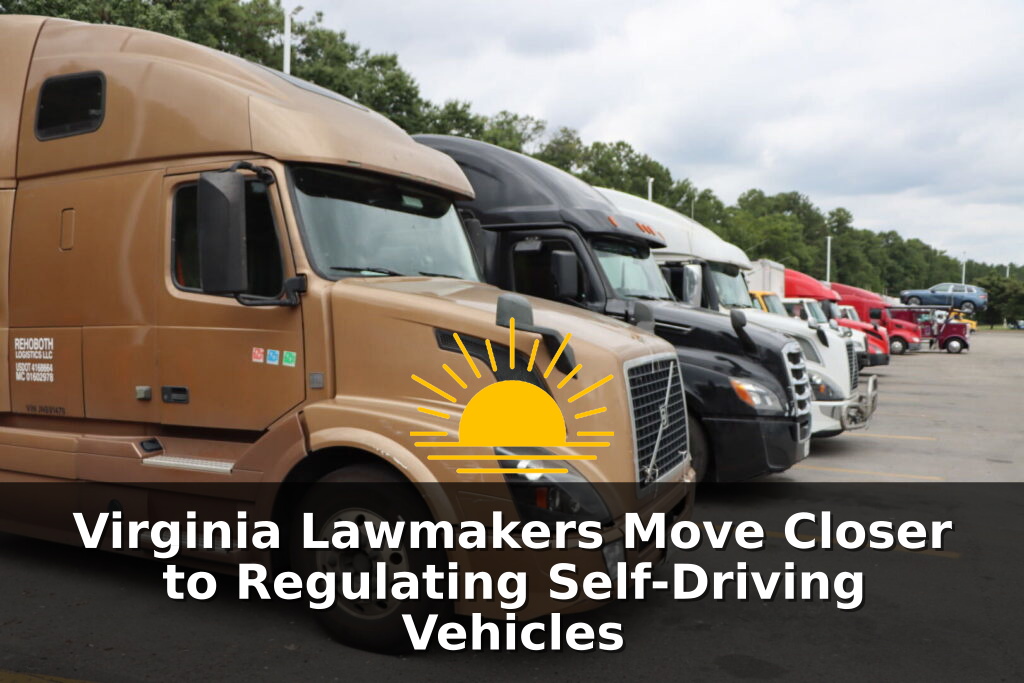
Virginia is moving closer to regulating self-driving vehicles, with lawmakers and experts recently agreeing on a plan ahead of the next legislative session as the technology expands and safety concerns grow.
Last year, the General Assembly directed a workgroup to consider rules for autonomous vehicles, or AVs, which have been tested in states including Arizona and Texas and restricted in California. Meanwhile, the federal government announced a national strategy plan to accelerate the development and deployment of self-driving vehicles across the country.
Virginia moves toward regulating self-driving vehicles amid safety and liability concerns
Leaders in the commonwealth are drafting proposals to establish a framework for implementing AV policy and create an ongoing advisory committee after the group concludes its work. The panel held its most recent meeting on Aug. 28.
Virginia’s proposed framework would focus on commercial use rather than personal vehicles, including ride-sharing and delivery services, buses and Class 7 and 8 heavy-duty vehicles.
However, the meeting was not without disagreements over regulatory authority, various protections and workforce impacts.
“I believe what we’re doing … leading up to session, is illustrating where there’s strong consensus,” said Senate Transportation Committee Chair Lamont Bagby, D-Henrico, at the August meeting. “Folks can lobby to make amendments to legislation leading up to session or during session, but we’re just trying to… I think what I would love to see is the sort of bones of what this legislation looks like.”
On regulation, the group disagreed over whether the initial framework should cover light-, medium- and heavy-duty vehicles, with the latter ultimately excluded from the broader motion. Members also debated how much discretion the Department of Motor Vehicles should have to suspend or revoke permits, rather than s establishing specific standards and limits in state law.
However, there was general agreement that the state should regulate AVs, with local regulation primarily applying to AVs operating as taxis.
Debate also focused on data collection, consumer and safety protections, and how to determine whether an AV pilot is safe and successful enough to continue or expand.
Specifically, members disagreed over whether to set specific safety requirements and benchmarks upfront or allow the DMV to determine whether a pilot is safe enough based on the vehicle’s operating conditions and the distance it has traveled.
The meeting also included debate over whether to collect comprehensive, real-time operational and location data from AVs or limit reporting to non-real-time information comparable to existing federal and California requirements.
Members also disagreed over whether legislation should protect AV customers from being forced to use arbitration to resolve disputes or leave those issues to existing consumer protection laws.
The group reached a consensus that agencies should recover administrative costs but disagreed over whether AV-specific fees should also fund worker retraining and support for displaced drivers.
Additionally, there was broad agreement that law enforcement and first responders need AV-specific training, but disagreement over whether that training should be mandatory, statewide and funded through fees or addressed separately.
Questions remain about whether AV services should receive special retail sales and use tax treatment. Lawmakers also debated whether legislation should immediately include worker retraining and support or address those issues later through separate laws and funding.
Several people, including Renee Gibson, vice president of government affairs at the Autonomous Vehicle Industry Association, spoke during the August meeting about developing a regulatory framework for AVs in Virginia.
Gibson said to the work group, ”Without a legislative framework that offers a clear path to commercial deployment, companies will simply not be able to enter the market.”
She was joined by business representatives from Uber, Tesla, Stack AV, Torc Robotics and Volkswagen, as well as labor union and organizational representatives who emphasized the need for commercial deployment pathways and labor protections.
Kevin O’Neill, a steering committee member of the DMV Drivers Alliance, was among those representing organizations, associations and unions concerned about job and income losses from AV deployment.
”Before Virginia gives companies a predictable path into this market, drivers do deserve to know what happens when autonomous fleets begin taking trips and income out of the existing workforce,” O’Neill said.
The workgroup is preparing a final report for the General Assembly to consider by Nov. 1.
Email the Virginia Senate At:
Lashrecse Aird - senatoraird@senate.virginia.gov,
Lamont Bagby - senatorbagby@senate.virginia.gov,
Elizabeth Bennett-Parker - senatorbennett-parker@senate.virginia.gov,
Jennifer Boysko - senatorboysko@senate.virginia.gov,
Jennifer Carroll Foy - senatorcarrollfoy@senate.virginia.gov,
Luther Cifers - senatorcifers@senate.virginia.gov,
Christie Craig - senatorcraig@senate.virginia.gov,
Creigh Deeds - senatordeeds@senate.virginia.gov,
Bill DeSteph - senatordesteph@senate.virginia.gov,
Danny Diggs - senatordiggs@senate.virginia.gov,
Tara Durant - senatordurant@senate.virginia.gov,
Barbara Favola - senatorfavola@senate.virginia.gov,
Timmy French - senatorfrench@senate.virginia.gov,
Travis Hackworth - senatorhackworth@senate.virginia.gov,
Christopher Head - senatorhead@senate.virginia.gov,
Michael Jones - senatorjones@senate.virginia.gov,
Emily Jordan - senatorjordan@senate.virginia.gov,
Mamie Locke - senatorlocke@senate.virginia.gov,
Louise Lucas - senatorlucas@senate.virginia.gov,
David Marsden - senatormarsden@senate.virginia.gov,
Ryan McDougle - senatormcdougle@senate.virginia.gov,
Jeremy McPike - senatormcpike@senate.virginia.gov,
Tammy Mulchi - senatormulchi@senate.virginia.gov,
Mark Obenshain - senatorobenshain@senate.virginia.gov,
Mark Peake - senatorpeake@senate.virginia.gov,
Stella Pekarsky - senatorpekarsky@senate.virginia.gov,
Russet Perry - senatorperry@senate.virginia.gov,
Todd Pillion - senatorpillion@senate.virginia.gov,
Bryce Reeves - senatorreeves@senate.virginia.gov,
Danica Roem - senatorroem@senate.virginia.gov,
Aaron Rouse - senatorrouse@senate.virginia.gov,
Saddam Salim - senatorsalim@senate.virginia.gov,
Kannan Srinivasan - senatorsrinivasan@senate.virginia.gov,
William Stanley - senatorstanley@senate.virginia.gov,
Richard Stuart - senatorstuart@senate.virginia.gov,
Glen Sturtevant - senatorsturtevant@senate.virginia.gov,
David Suetterlein - senatorsuetterlein@senate.virginia.gov,
Scott Surovell - senatorsurovell@senate.virginia.gov,
Schuyler VanValkenburg - senatorvanvalkenburg@senate.virginia.gov,
Angelia Williams Graves - senatorwilliamsgraves@senate.virginia.gov,
Virginia Virginia House of Delegates Virginia Senate Aaron Rouse Abigail Spanberger Adam Ebbin Amendments Angelia Williams Graves Barbara Favola Bill DeSteph Bryce Reeves Christie Craig Christopher Head Creigh Deeds Danica Roem Danny Diggs Data David Marsden David Suetterlein Debate Electric Emily Jordan Federal Government Glen Sturtevant Jennifer Boysko Jennifer Carroll Foy Jeremy McPike Kannan Srinivasan Labor Lamont Bagby Lashrecse Aird Law Enforcement Lawmakers Legislation Louise Lucas Luther Cifers Mamie Locke Mark Obenshain Mark Peake Michael Jones Policy President Richard Stuart Robotics Russet Perry Ryan McDougle Saddam Salim Schuyler VanValkenburg Scott Surovell Senate Stella Pekarsky Tammy Mulchi Tara Durant Technology Texas Timmy French Todd Pillion Transportation Travis Hackworth Unions Virginia Virginia Senate William Stanley