Virginia Pet Stores Linked to Out-of-State Breeders as Lawmakers Weigh SB 792
Updated
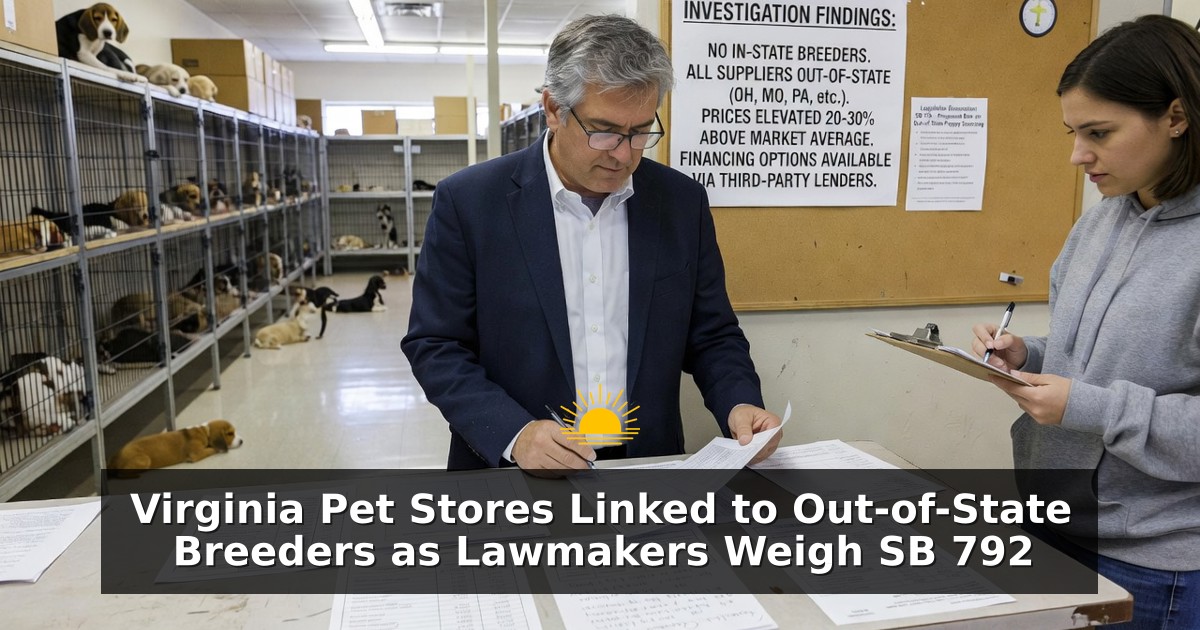
An investigation into pet stores across Virginia has documented that none of the breeders supplying dogs to the examined retailers were located within the state. Researchers visited 15 stores and contacted one additional retailer by phone, finding consistent patterns of out-of-state sourcing. These findings have been presented in connection with proposed legislation aimed at addressing the flow of puppies into Virginia retail outlets. Officials and advocates have noted the implications for both animal welfare and consumer costs.
The review highlighted specific operational practices at several establishments. One store, Puppy La Vie, did not permit potential customers to visit the premises until they were prepared to complete a purchase. Other retailers similarly limited pre-sale access while obtaining inventory exclusively from suppliers outside Virginia. This sourcing model has drawn attention because it connects local sales to large-scale breeding operations elsewhere.
Supplier Scale and Documented Concerns
Data gathered on the suppliers showed substantial numbers of dogs held at the source facilities. Suppliers associated with Family Pet Center and a Chesapeake location maintained an average of 199 dogs on their properties. A separate group of suppliers linked to Exo-Pup accounted for a combined total of 2,559 dogs across their sites. Such volumes are characteristic of high-volume commercial breeding operations often described as puppy mills in animal-welfare literature.
Five of the breeders or dealers that furnished dogs to the Virginia stores have appeared on the Horrible 100 lists compiled by Humane World for Animals. Those lists identify operations with repeated citations or conditions of concern under federal inspection records. The presence of these names among the supply chain has intensified scrutiny of how puppies reach retail floors in the Commonwealth.
Pricing Patterns Observed in Retail Settings
Investigators recorded an average price of $3,052 for puppies either observed on site or quoted by store staff. At Superstar Puppies, a husky was listed at $7,000. Multiple stores indicated that prices had been increased in the period leading up to Christmas, reflecting seasonal demand adjustments. These figures stand in contrast to the availability of similar purebred and mixed-breed dogs at animal shelters.
Shelters throughout Virginia continue to report high intakes of huskies and other purebred dogs. The influx places ongoing pressure on municipal and nonprofit facilities that must house, care for, and attempt to rehome animals already in the state. Observers have linked retail sales of newly sourced puppies to the broader challenge of managing existing shelter populations.
Financing Options and Consumer Cost Implications
Several pet stores offered financing through third-party lending companies at the point of sale. A staff member at Pet and Aquatic Warehouse stated that interest rates on these products can reach 200 percent. Under such terms, a customer purchasing a dog priced at $6,000 could ultimately pay as much as $12,000 once interest and fees are included. These arrangements have been characterized by consumer advocates as high-cost credit products that extend the financial burden well beyond the initial sticker price.
The combination of elevated purchase prices and expensive financing options means that buyers may face significant long-term obligations. Retail staff presented the lending products as convenient pathways to ownership, yet the cumulative cost can substantially exceed the animal’s listed value. Documentation of these practices formed part of the material shared with lawmakers.
Legislative Response and Shelter Pressures
The collected information has been cited in support of Senate Bill 792, a measure intended to restrict the pipeline of puppies from large-scale out-of-state breeding operations into Virginia pet stores. Proponents argue that clearer sourcing standards would reduce reliance on facilities with extensive inventories and prior welfare citations. The bill is under consideration in a Senate subcommittee as part of broader efforts to align retail practices with animal-shelter capacity.
Animal shelters across the Commonwealth report persistent overcrowding, particularly with purebred dogs that resemble those sold in retail settings. Staff at these facilities manage medical care, behavioral assessment, and adoption outreach while intake numbers remain high. Supporters of tighter retail regulations contend that limiting new commercial inflows could ease some of the demand on public and private shelters.
Industry and Oversight Context
Commercial dog breeding is subject to the federal Animal Welfare Act, which sets minimum standards for licensed dealers and exhibitors. State-level proposals such as SB 792 seek to add retail-specific requirements that go beyond federal baseline rules. Virginia currently allows pet stores to sell dogs obtained from licensed out-of-state sources, provided basic health certificates accompany the animals.
The investigation’s scope—fifteen in-person visits plus one telephone inquiry—provides a snapshot rather than an exhaustive census of every retailer. Nevertheless, the uniformity of out-of-state sourcing across the sampled stores has been presented as evidence of a systemic pattern. Lawmakers reviewing SB 792 are weighing whether additional disclosure, inspection, or sourcing limits would alter that pattern.
Consumer Information and Market Dynamics
Prospective buyers often encounter limited opportunity to observe conditions at the breeding source before purchase. In the case of Puppy La Vie, physical access to the store itself was restricted until a transaction was imminent. Other locations displayed puppies in storefront settings while relying on distant suppliers whose facilities customers could not readily inspect.
Seasonal price increases, documented ahead of Christmas, illustrate how retail timing affects final cost. When combined with financing that can double the outlay, the total expense for a single puppy may reach levels that strain household budgets. Shelter representatives note that many of the same breeds later appear in relinquishment statistics when owners confront unexpected costs or behavioral issues.
Path Forward for Policy Discussion
Discussion of SB 792 continues within the Virginia Senate subcommittee process. The measure’s supporters point to the investigation’s findings on breeder locations, inventory volumes, Horrible 100 listings, average prices, and lending terms as justification for legislative action. Opponents of expanded regulation typically emphasize existing federal oversight and the preference of some consumers for specific breeds obtained through retail channels.
Whatever the outcome of the current bill, the documented practices have placed renewed focus on the relationship between pet-store inventory and shelter populations. Virginia’s animal-care community faces the dual task of managing current intakes while monitoring how retail sourcing evolves. Continued collection of inspection data, price information, and financing terms will likely inform future policy debates.
The investigation underscores that every sampled store obtained its puppies from outside Virginia, that several suppliers maintained hundreds or thousands of dogs, and that consumer prices frequently exceeded three thousand dollars before financing costs. These facts form the core of the public record now before lawmakers. Further hearings and potential amendments will determine whether SB 792 or similar proposals advance in the current session.
animal rights animal welfare consumer protection dog breeding Humane Society Humane Society's Horrible 100 investigation pet industry pet stores Policy predatory lending public health Puppy La Vie puppy mills SB 792 Senate hearing transparency Virginia Virginia law Virginia legislation