Virginia Re-Enters Costly RGGI Program While Bureaucratic Rebate Scheme Leaves Many Taxpayers Behind
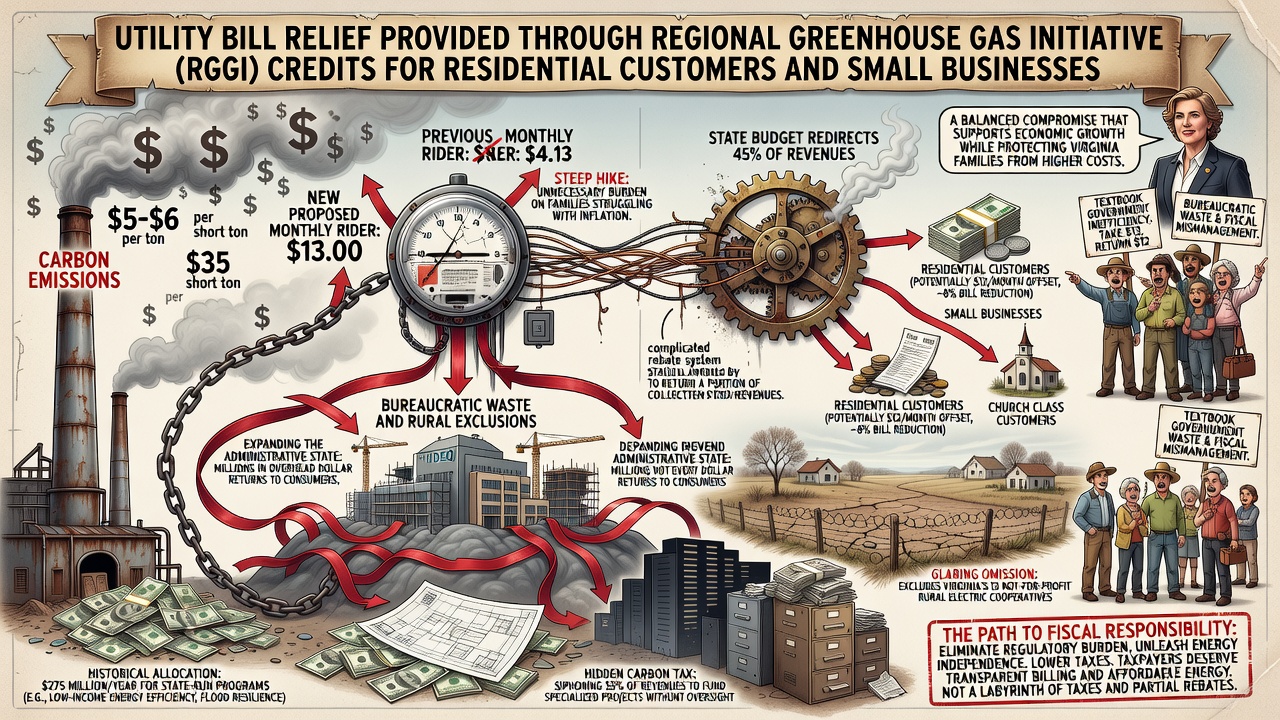
The State of Virginia is preparing to re-enter the Regional Greenhouse Gas Initiative on July 1, 2026, bringing back a controversial carbon tax framework that directly impacts utility ratepayers. This policy shift forces investor-owned utilities to pay steep penalties for carbon emissions, which inevitably trickle down to residential customers and small businesses. In an attempt to mask these government-mandated price hikes, state lawmakers have engineered a complicated rebate system designed to return a portion of the collected revenues to taxpayers. However, taxpayer advocates are raising alarms about the bureaucratic waste and inherent unfairness of a system that taxes citizens only to refund a fraction of their own money.
Under the returning regulatory scheme, the cost of carbon emissions has skyrocketed from historical lows of five to six dollars per ton to an alarming thirty-five dollars per short ton. This massive increase in regulatory overhead means that Dominion Energy and Appalachian Power must propose steep rate adjustment clauses to the State Corporation Commission. Previously, Dominion charged households an average of just over four dollars per month for compliance, but the new proposed monthly rider has surged to thirteen dollars. This steep hike represents an unnecessary financial burden on families already struggling with inflation, proving that aggressive environmental policies carry a very real price tag for the average citizen.
To offset this self-inflicted economic wound, the state budget redirects forty-five percent of the collected tax revenue to fund rebates for residential, small business, and church class customers. Lawmakers claim this rebate aims to offset the proposed thirteen-dollar monthly charge, potentially reducing electricity bills by about eight percent, or roughly twelve dollars per month for typical households. Governor Abigail Spanberger praised the budget agreement, calling it a “balanced compromise that supports economic growth while protecting Virginia families from higher costs.” Critics, however, argue that taking thirteen dollars from a taxpayer to return twelve dollars is a textbook example of government inefficiency, overspending, and fiscal mismanagement.
Bureaucratic Waste and Rural Exclusions Remain a Major Concern. The complicated rebate process falls under the purview of the Department of Environmental Quality, expanding the administrative state rather than streamlining essential government functions. Funneling millions of dollars through state agencies requires massive administrative overhead, ensuring that not every tax dollar collected makes its way back to the consumer’s pocket. Furthermore, the rebate provision entirely excludes Virginia’s thirteen not-for-profit rural electric cooperatives, leaving rural taxpayers to fend for themselves against rising energy costs. This glaring omission highlights the inequity of a regulatory framework that punishes rural communities while simultaneously subsidizing customers of large, investor-owned utility conglomerates.
Historically, the state has set aside approximately two hundred seventy-five million dollars per year of these revenues for various state-run programs that expand the size of government. During its previous participation before leaving the program at the end of 2023, Virginia generated over eight hundred twenty-seven million dollars for low-income energy efficiency and flood resilience projects. While these initiatives sound noble on paper, budget watchdogs point out that they are funded through a hidden carbon tax levied directly on everyday utility bills. By siphoning off the remaining fifty-five percent of the newly collected revenues, the state is effectively using utility bills as a backdoor mechanism to fund specialized projects without traditional legislative oversight.
The Path to Fiscal Responsibility Requires Immediate Action. True fiscal responsibility dictates that the state should avoid artificially inflating energy costs rather than creating convoluted rebate schemes to apologize for them after the fact. Lawmakers justified the rebates by expressing concerns about the impacts of rising energy costs on Virginians, yet those very costs are directly driven by the state’s decision to re-enter the initiative. Eliminating this regulatory burden entirely would keep taxpayer money in the pockets of hardworking citizens and eliminate the need for wasteful administrative oversight by the Department of Environmental Quality. Until lawmakers prioritize deregulation and budget reduction, Virginia families will continue to pay the hidden, ever-increasing price of costly environmental mandates.
Virginia’s return to this carbon trading scheme perfectly illustrates how government intervention often creates new financial crises under the guise of environmental protection. Instead of protecting consumers, the state forces utilities into a costly marketplace where allowances now trade at thirty-five dollars per short ton, guaranteeing higher baseline energy rates. Responsible governance should focus on unleashing American energy independence and lowering taxes, rather than laundering utility payments through a bloated state bureaucracy. Taxpayers deserve transparent billing and affordable energy, not a labyrinth of taxes and partial rebates that ultimately leave them poorer at the end of the month.
Independence 2026 Abigail Spanberger Action advocates affordable affordable energy against agreement Aims Appalachian Power argue baseline Bills Budget burden Business Church class collected commission communities compliance concern Concerns Consumer consumers costs creates decision Department Department of Environmental Quality directly Dominion Dominion Energy effectively efficiency Electric Electricity Energy energy costs Ensuring environmental environmental protection every expand expanding Families Financial fiscal fiscal responsibility five focus fund Governance government Governor growth higher costs Immediate immediate action impacts income Increase increasing inflation initiative initiatives July Keep Lawmakers leave mandates Million million dollars money Need oversight participation penalties point policies Policy potentially Power preparing previous previous Process program programs projects protecting protection rate rates rebate reducing Regional Greenhouse Gas Initiative regulatory regulatory framework requires responsibility revenue Rising short Small business state agencies state budget State Corporation Commission supports System tax revenue Taxes taxpayer taxpayers Textbook utilities utility bills Virginia Virginians
All Virginia News is published by ALL VIRGINIA NEWS, LLC. How we're funded · Corrections · Ethics
