Virginia Senate Reviews SB 707 on Dog Debocalization Limits
Updated
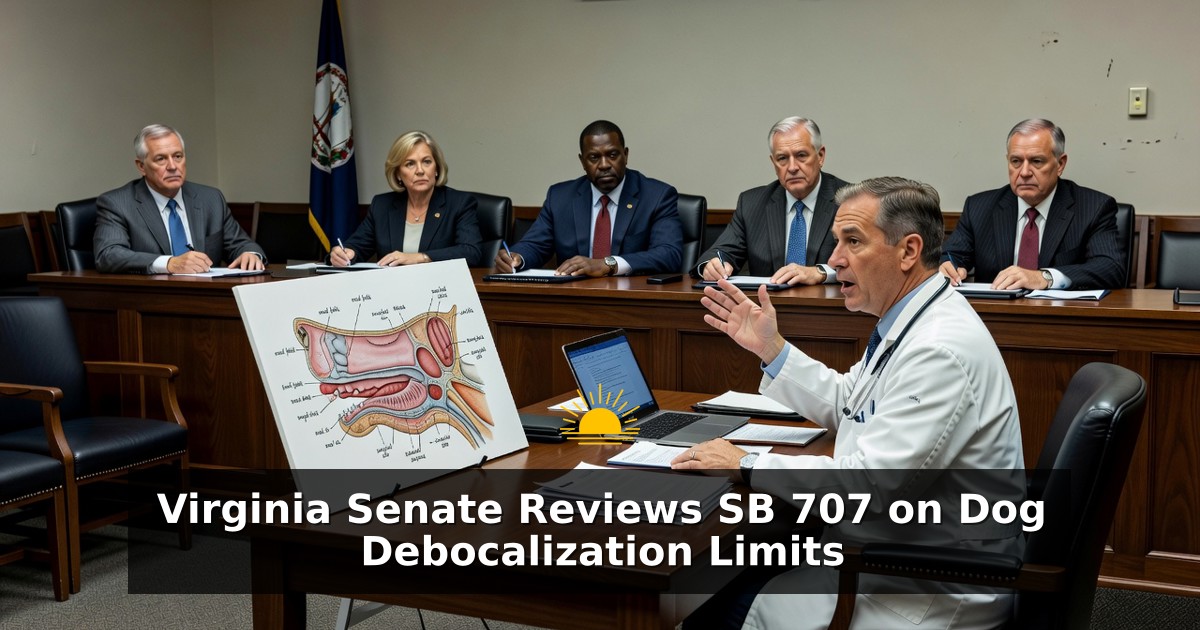
A Virginia Senate subcommittee is examining SB 707, a measure that would make it unlawful for veterinarians to perform surgical debocalization on dogs unless the procedure is deemed medically necessary. The proposal draws a direct parallel to existing restrictions on cat declawing and appears in the same section of state code that addresses those feline procedures. Lawmakers are weighing the bill amid broader discussions of animal welfare standards that already apply in multiple jurisdictions. The review process includes consideration of how the ban would affect veterinary practice and pet ownership across the commonwealth.
Surgical debocalization, sometimes called debarking or bark softening, involves altering a dog’s vocal cords to reduce the volume of its bark. Proponents of tighter limits describe the operation as elective and potentially painful when performed solely for convenience or noise control. The Virginia bill would permit the surgery only when a licensed veterinarian determines it is required to address a genuine medical condition. This standard mirrors language already used for declawing restrictions and aims to create consistent treatment of companion animals under state law.
Existing Restrictions Across Jurisdictions
Several U.S. states have already enacted comparable prohibitions on elective debocalization. Canada maintains nationwide limits, and approximately 27 European countries have outlawed the practice except for therapeutic reasons. These jurisdictions typically cite animal welfare research indicating that the procedure can lead to chronic discomfort, breathing difficulties, or behavioral changes if not medically justified. Virginia’s proposal would place the state among those adopting similar safeguards while leaving room for legitimate veterinary intervention.
Animal welfare organizations have long documented the physical effects of debocalization, noting that the surgery removes or damages tissue essential for normal vocalization. Veterinary associations in regions with bans often emphasize that alternative training and management techniques can address excessive barking without permanent alteration. At the same time, some dog owners and breeders have historically used the procedure in specific settings such as dense urban housing or working-dog environments where noise presents practical challenges. The subcommittee is tasked with balancing these perspectives against the statutory language of SB 707.
Stakeholder Perspectives and Enforcement Questions
Supporters of the bill argue that it advances basic protections for dogs by eliminating a non-therapeutic surgery that many view as outdated. They point to the successful implementation of cat declawing limits as evidence that similar rules can be applied without disrupting routine veterinary care. Critics, however, raise practical concerns about how the medical-necessity standard would be defined and enforced in daily clinical settings. Questions also surface regarding documentation requirements and potential liability for veterinarians who must interpret the exception.
The legislation does not seek to criminalize dog ownership or restrict other forms of veterinary treatment. Instead, it focuses narrowly on one elective procedure and aligns Virginia’s approach with standards already observed in numerous other places. Subcommittee members are reviewing testimony from veterinarians, animal advocates, and pet owners to assess both the welfare rationale and any unintended consequences for compliance. Clear definitions of medical necessity remain central to ensuring the bill can be applied consistently if advanced.
Implications for Virginia Dog Owners and Veterinarians
If enacted, SB 707 would require dog owners seeking debocalization to obtain a formal veterinary determination that the surgery addresses a documented health issue rather than behavioral or lifestyle preferences. Clinics would need to maintain records supporting any such determination, creating an administrative layer similar to that already used for restricted feline procedures. Owners in multi-unit housing or noise-sensitive communities may need to explore training, environmental management, or other non-surgical options more thoroughly. The change would not affect emergency care or treatments unrelated to vocal cord alteration.
Veterinary professionals practicing in Virginia would operate under the same ethical framework that governs other limited procedures. Continuing education and professional guidelines could help clarify borderline cases, reducing uncertainty for practitioners. The bill’s placement alongside cat declawing provisions suggests lawmakers intend a unified standard for elective surgeries that permanently modify companion animals. Observers note that public awareness campaigns in other states have accompanied similar laws to help owners understand available alternatives.
Legislative Context and Next Steps
The Senate subcommittee’s review forms part of the regular bill-consideration process during the legislative session. Members are expected to evaluate the measure’s alignment with existing animal-protection statutes and its potential fiscal or regulatory impact on the Department of Agriculture and Consumer Services or licensing boards. No immediate effective date has been finalized, allowing time for refinement of language if the bill advances to full committee or floor consideration. Comparable measures in other states typically include delayed implementation periods so that veterinarians and owners can adjust practices.
Broader animal-welfare trends show increasing legislative attention to elective surgeries on pets. Debocalization bans have gained traction alongside restrictions on ear cropping, tail docking, and declawing in various jurisdictions. Virginia’s consideration of SB 707 reflects that pattern while remaining focused on the specific medical-necessity exception. The outcome will depend on further deliberation, possible amendments, and the balance struck between welfare goals and practical enforcement.
As the subcommittee continues its work, the core question remains whether limiting surgical debocalization to medically necessary cases adequately protects dogs without imposing undue burdens on owners or veterinarians. The bill’s analogy to cat declawing provides a familiar legislative template already tested in Virginia code. Stakeholders on all sides continue to monitor the process for clarity on definitions, record-keeping, and the precise scope of permitted exceptions. Final action will determine whether Virginia joins the list of places that have chosen to restrict the procedure.
animal rights animal surgery animal welfare canine debocalization Debate Legislation legislative process medical necessity Policy public health SB 707 Senate subcommittee Senator Diggs state law subcommittee hearing testimony veterinary practices Virginia Virginia Tech Virginia Veterinary Medical Association