Virginia Senate Extends Refundable Earned Income Tax Credit Through 2030 Amid Revenue Concerns
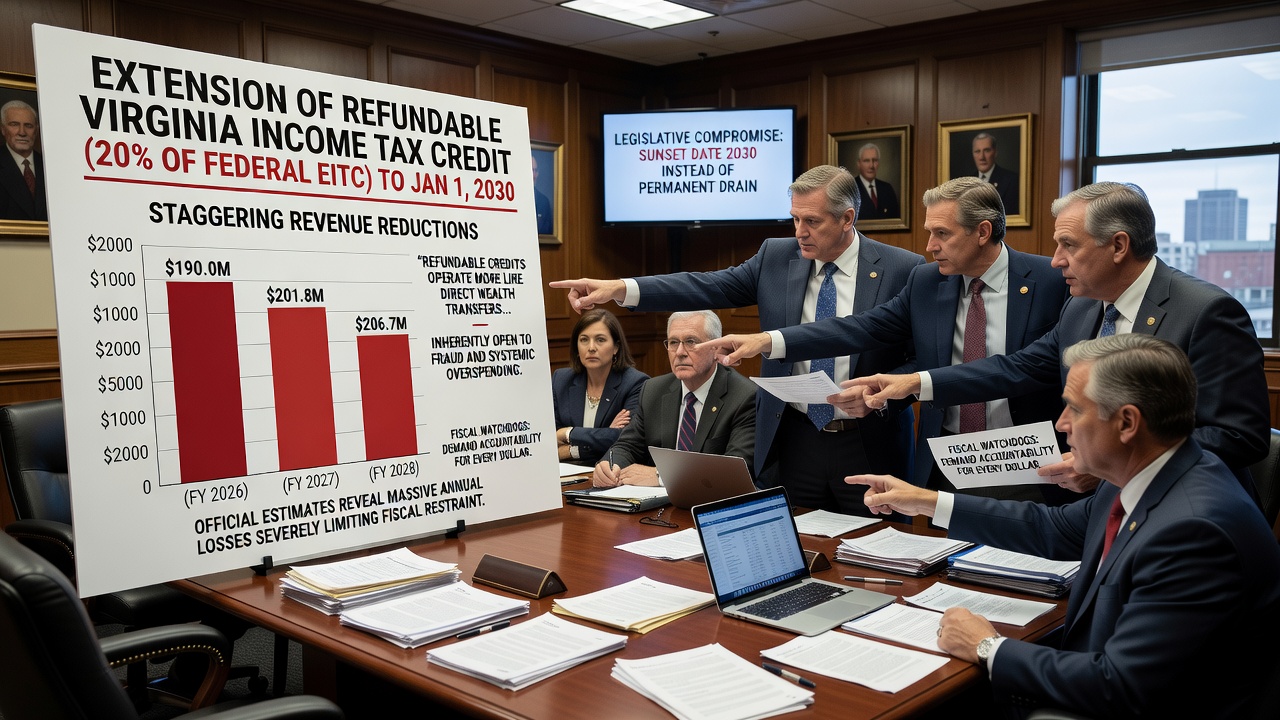
The Virginia legislature has officially decided to extend the costly refundable income tax credit tied to the federal Earned Income Tax Credit through the end of the decade. This legislative move guarantees that the state will continue matching 20 percent of the federal credit until January 1, 2030, placing a significant burden on state coffers. Fiscal conservatives are raising immediate alarms regarding the massive revenue reductions this policy will inflict on hardworking taxpayers. By extending this program, lawmakers are committing hundreds of millions of dollars that could otherwise be used to balance the budget or provide broad-based tax relief.
The refundability aspect of this specific tax credit was first introduced in 2022 and was originally scheduled to expire after the 2025 taxable year. Governor Glenn Youngkin initially proposed making the 20 percent refundable credit permanent in his introduced 2026-2028 biennial budget. During the 2026 legislative session, the House accepted the proposal to make the credit permanent, signaling a willingness to accept long-term revenue losses. Fortunately, the Senate Finance and Appropriations Committee intervened by amending the provision to extend the sunset date to 2030 instead of allowing a permanent drain on the treasury.
Staggering Revenue Reductions
The financial impact of this five-year extension is nothing short of staggering for a state government that should be focused on fiscal restraint. Official estimates reveal that the extension reduces state revenues by $190.0 million in fiscal year 2026 alone. The financial bleeding continues in subsequent years, reducing revenues by $201.8 million in fiscal year 2027 and a massive $206.7 million in fiscal year 2028. These massive annual losses severely limit the ability of the state government to pay down debt, eliminate wasteful spending, and protect the general fund from future economic downturns.
From a strict fiscal perspective, refundable tax credits operate less like traditional tax relief and more like direct wealth transfer programs. When a taxpayer’s credit exceeds their actual tax liability, the state issues a cash refund, effectively redistributing taxpayer funds to individuals who may have paid zero state income tax. This structure inherently opens the door to potential fraud and systemic overspending, as the government is mailing out checks rather than simply allowing citizens to keep their own hard-earned money. Taxpayers expect their government to reduce the budget and eliminate waste, not expand welfare-style payouts disguised as tax policy.
Legislative Compromise and Future Implications
The compromise reached in Richmond is heavily documented in the latest legislative budget drafts and conference reports. The Senate Finance and Appropriations Committee released a preliminary draft on February 22, 2026, which explicitly states the amendment extends the standard deduction and earned income tax credit sunset date to January 1, 2030. Furthermore, the conference report text clarifies that for taxable years beginning on and after January 1, 2025, but before January 1, 2030, eligible filers may claim a refundable credit equal to 20 percent of their federal claim. While establishing a sunset date is better than a permanent mandate, five years of guaranteed revenue loss remains a bitter pill for fiscal conservatives to swallow.
State budget officials have already begun masking the true cost of this program by baking it into baseline assumptions. Budget Item 0#3s explicitly notes that the official general fund revenue forecast assumes the continuation of the expiring standard deduction and EITC, concluding that no further adjustment to the official revenue forecast is needed. By treating these massive revenue reductions as a given, bureaucrats are normalizing overspending and hiding the true cost of the program from the average taxpayer. Fiscal watchdogs argue that this lack of transparency makes it incredibly difficult to rein in the budget and eliminate unnecessary state expenditures.
Protecting the Taxpayer
As Virginia marches toward the new 2030 expiration date, lawmakers must implement rigorous oversight to prevent the squandering of public funds. A program that siphons over $200 million annually from the state treasury requires strict auditing to ensure that only eligible individuals receive these cash payouts. Fraud within refundable credit programs is a well-documented issue at the federal level, and Virginia must not allow similar waste to infect its own budget. Protecting the taxpayer means demanding accountability for every single dollar that leaves the state treasury under the guise of this extended credit.
Ultimately, the state government must pivot away from targeted wealth transfers and focus on policies that promote genuine economic growth. Broad-based tax cuts that lower the burden for all working Virginians are a far more effective way to stimulate the economy without expanding the welfare state. While the Senate successfully blocked a permanent extension, taxpayers must remain vigilant and hold their elected officials accountable for the millions of dollars lost over the next five years. True fiscal conservatism requires constantly fighting against budget bloat, eliminating fraudulent spending, and ensuring that government lives within its means.
Richmond is an independent city in the Richmond region.
Email the Virginia Senate At:
Lashrecse Aird - senatoraird@senate.virginia.gov,
Lamont Bagby - senatorbagby@senate.virginia.gov,
Elizabeth Bennett-Parker - senatorbennett-parker@senate.virginia.gov,
Jennifer Boysko - senatorboysko@senate.virginia.gov,
Jennifer Carroll Foy - senatorcarrollfoy@senate.virginia.gov,
Luther Cifers - senatorcifers@senate.virginia.gov,
Christie Craig - senatorcraig@senate.virginia.gov,
Creigh Deeds - senatordeeds@senate.virginia.gov,
Bill DeSteph - senatordesteph@senate.virginia.gov,
Danny Diggs - senatordiggs@senate.virginia.gov,
Tara Durant - senatordurant@senate.virginia.gov,
Barbara Favola - senatorfavola@senate.virginia.gov,
Timmy French - senatorfrench@senate.virginia.gov,
Travis Hackworth - senatorhackworth@senate.virginia.gov,
Christopher Head - senatorhead@senate.virginia.gov,
Michael Jones - senatorjones@senate.virginia.gov,
Emily Jordan - senatorjordan@senate.virginia.gov,
Mamie Locke - senatorlocke@senate.virginia.gov,
Louise Lucas - senatorlucas@senate.virginia.gov,
David Marsden - senatormarsden@senate.virginia.gov,
Ryan McDougle - senatormcdougle@senate.virginia.gov,
Jeremy McPike - senatormcpike@senate.virginia.gov,
Tammy Mulchi - senatormulchi@senate.virginia.gov,
Mark Obenshain - senatorobenshain@senate.virginia.gov,
Mark Peake - senatorpeake@senate.virginia.gov,
Stella Pekarsky - senatorpekarsky@senate.virginia.gov,
Russet Perry - senatorperry@senate.virginia.gov,
Todd Pillion - senatorpillion@senate.virginia.gov,
Bryce Reeves - senatorreeves@senate.virginia.gov,
Danica Roem - senatorroem@senate.virginia.gov,
Aaron Rouse - senatorrouse@senate.virginia.gov,
Saddam Salim - senatorsalim@senate.virginia.gov,
Kannan Srinivasan - senatorsrinivasan@senate.virginia.gov,
William Stanley - senatorstanley@senate.virginia.gov,
Richard Stuart - senatorstuart@senate.virginia.gov,
Glen Sturtevant - senatorsturtevant@senate.virginia.gov,
David Suetterlein - senatorsuetterlein@senate.virginia.gov,
Scott Surovell - senatorsurovell@senate.virginia.gov,
Schuyler VanValkenburg - senatorvanvalkenburg@senate.virginia.gov,
Angelia Williams Graves - senatorwilliamsgraves@senate.virginia.gov,
Richmond 2025 2026 2027 Aaron Rouse Abigail Spanberger accept accountability Adam Ebbin against allow allowing Amendment Amid Angelia Williams Graves appropriations argue balance Barbara Favola baseline better Bill DeSteph Bryce Reeves Budget burden Cash Christie Craig Christopher Head committee Concerns Creigh Deeds Danica Roem Danny Diggs David Marsden David Suetterlein Debt direct economy Emily Jordan Ensuring establishing every expand Expenditures Finance Financial First fiscal fiscal year fiscal year 2027 five focus Fraud fund funds general general General Fund Glen Sturtevant Glenn Youngkin government Governor hold House Immediate impact implement implications income income tax individuals introduced Issue issues Jennifer Boysko Jennifer Carroll Foy Jeremy McPike Kannan Srinivasan Keep Lamont Bagby Lashrecse Aird Lawmakers legislative session liability Loss Louise Lucas Luther Cifers making Mamie Locke Mark Obenshain Mark Peake Michael Jones Million money move next notes officials oversight Perspective policies Policy prevent program programs proposal Protect protecting Public public funds receive Reduce reducing regarding remains requires revenue Richard Stuart Richmond Russet Perry Ryan McDougle Saddam Salim Schuyler VanValkenburg Scott Surovell Senate session short significant spending state budget state government states Stella Pekarsky sunset date Tammy Mulchi Tara Durant tax cuts tax policy tax relief taxpayer text Timmy French Todd Pillion transparency Travis Hackworth Treasury Virginia Virginia legislature Virginia Senate Virginians well William Stanley within working
All Virginia News is published by ALL VIRGINIA NEWS, LLC. How we're funded · Corrections · Ethics
