Virginia Advances Nursing Home Quality Measures With SB 429 Passage
Updated
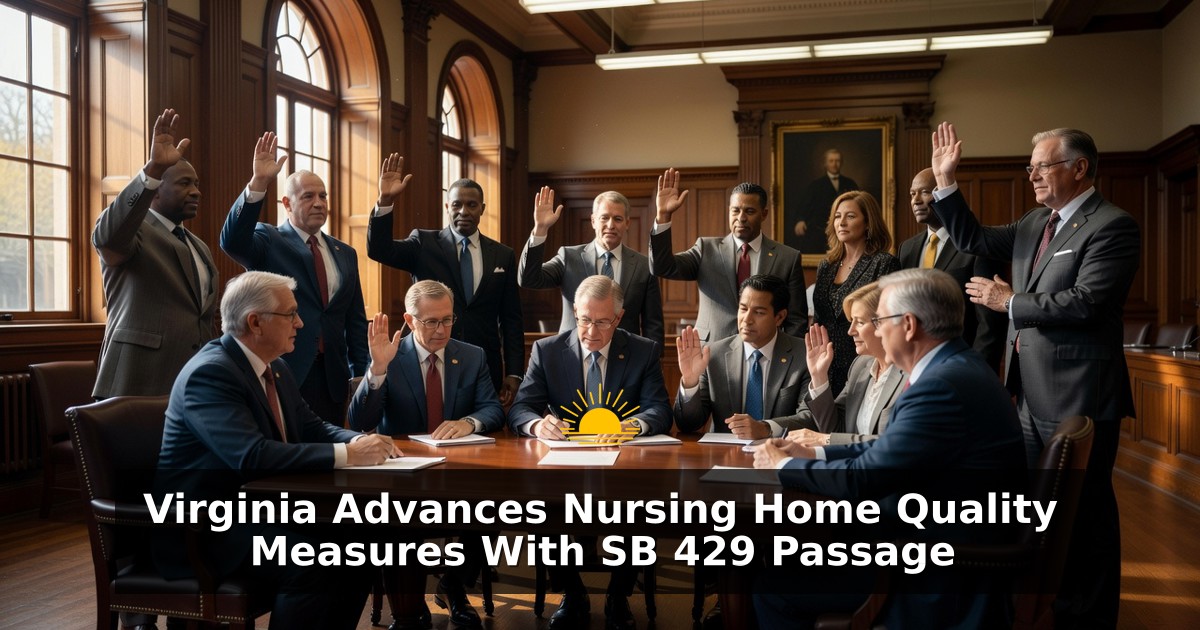
Virginia lawmakers have advanced significant legislation aimed at elevating standards of care within the Commonwealth’s nursing homes through expanded oversight and workforce support. Senate Bill 429 cleared a key chamber with overwhelming bipartisan backing, reflecting shared concern over longstanding challenges facing long-term care facilities. The measure specifically instructs the Virginia Department of Health to broaden recruitment efforts for nursing home staff while simultaneously working to lessen administrative requirements that facilities currently face. Officials and advocates have long noted that staffing shortages and paperwork demands can divert attention from direct resident care. Passage of the bill marks a concrete step toward addressing those pressures in a systematic way.
The legislation focuses on practical improvements rather than sweeping structural overhauls of the existing regulatory framework. By directing the Department of Health to expand workforce recruitment capacity, sponsors seek to help facilities attract and retain qualified nurses, aides, and support personnel. At the same time, the bill calls for reductions in administrative burdens that many operators describe as time-consuming and resource-intensive. These twin goals are intended to free staff to spend more hours with residents and less time on compliance paperwork. Supporters argue that such changes can improve both the quality of daily life for residents and the overall operational stability of nursing homes across Virginia.
Legislative Action and Vote Tally
During floor consideration, the bill received nearly unanimous approval, recording 95 votes in favor and only one vote against. The lopsided margin underscored broad consensus that nursing home quality remains a priority for communities in every region of the state. Lawmakers from both parties highlighted the importance of supporting an aging population that increasingly relies on skilled nursing facilities. The measure now moves forward in the legislative process with clear momentum. Its strong showing suggests that further refinements, if any, are likely to preserve the core directives already contained in the text.
Proponents emphasized that the Department of Health will play a central implementation role once the bill becomes law. Agency officials would be expected to develop concrete recruitment strategies, potentially including partnerships with educational institutions, targeted outreach campaigns, and incentives designed to draw workers into long-term care careers. Parallel efforts to streamline reporting and documentation requirements could reduce duplication and clarify expectations for facility administrators. Together these steps aim to create a more sustainable environment for both caregivers and the residents they serve. Observers note that successful execution will depend on adequate resources and clear guidance from the department.
Persistent Challenges in Virginia Nursing Homes
Nursing homes throughout Virginia have confronted persistent workforce shortages for many years, a situation intensified by demographic trends and competition from other health-care settings. Many facilities report difficulty filling certified nursing assistant and licensed practical nurse positions, leading to heavier workloads for remaining staff. High turnover rates further complicate efforts to maintain consistent care teams familiar with individual resident needs. Administrative requirements related to federal and state regulations add another layer of complexity, consuming hours that might otherwise be devoted to direct care. SB 429 seeks to tackle both sides of this equation in a coordinated fashion.
Quality-of-care concerns have periodically drawn public attention, particularly when inspection reports reveal deficiencies in staffing levels or care protocols. Families often express frustration when communication with facilities feels limited or when staff appear stretched thin. State regulators already conduct regular surveys and complaint investigations, yet lawmakers concluded that additional tools focused on recruitment and administrative relief could strengthen the overall system. The new legislation does not replace existing oversight mechanisms; instead it supplements them with capacity-building measures. This balanced approach has helped generate the wide support evident in the final vote.
Expected Implementation Path
Once enacted, the Department of Health will need to translate the bill’s directives into actionable programs and revised guidance documents. Recruitment initiatives may involve collaboration with the Virginia Community College System, workforce development boards, and private training providers to expand the pipeline of qualified candidates. Reducing administrative burdens could include reviews of redundant reporting forms, electronic submission improvements, and clearer prioritization of essential compliance tasks. Facilities would then be positioned to reallocate staff time toward resident engagement, care planning, and clinical oversight. Measurable progress will likely be tracked through future staffing metrics and quality indicators already collected by state and federal authorities.
Stakeholders across the long-term care continuum have watched the bill’s progress with interest. Provider associations have generally welcomed efforts to ease operational pressures while maintaining accountability for resident outcomes. Consumer advocates stress that any reduction in paperwork must not weaken protections or transparency. The near-unanimous vote indicates that legislators found a formulation capable of bridging those perspectives. Continued dialogue during the implementation phase will be essential to ensure that recruitment gains materialize and that administrative streamlining delivers tangible benefits on the ground.
Broader Implications for Virginia’s Aging Population
Virginia’s population continues to age, increasing demand for reliable nursing home and long-term care options in both urban and rural localities. Many families rely on these facilities when home-based care is no longer sufficient, making consistent quality a matter of widespread public interest. Legislation such as SB 429 reflects an understanding that workforce stability forms the foundation of good care. By pairing recruitment expansion with administrative relief, the Commonwealth is attempting to address root causes rather than symptoms alone. Success could serve as a model for related health-care sectors facing similar staffing constraints.
The bill’s emphasis on the Department of Health also reinforces the agency’s role as the primary steward of nursing home standards. Clear statutory direction can help the department prioritize limited resources toward high-impact activities. Over time, improved staffing levels may contribute to fewer care deficiencies, higher resident satisfaction, and greater confidence among families making difficult placement decisions. Lawmakers will likely monitor early implementation results and remain open to further adjustments in subsequent sessions if gaps appear. For now, the decisive passage of SB 429 signals a collective commitment to strengthening one of the most vital components of Virginia’s health-care continuum.
Community leaders and local officials in localities with large senior populations have taken note of the measure’s advancement. Nursing homes often serve as major employers as well as care providers, linking the legislation to both economic and social well-being. Enhanced recruitment capacity could prove especially valuable in regions that struggle to compete with larger metropolitan labor markets. Reduced administrative load may likewise help smaller or independent facilities remain viable. These geographic considerations helped build the broad coalition that carried the bill to its strong affirmative vote.
In summary, SB 429 represents a focused legislative response to well-documented pressures inside Virginia nursing homes. Its directives to expand workforce recruitment and reduce administrative burdens are straightforward yet potentially far-reaching if implemented effectively. The 95-1 vote demonstrates unusual unity on a complex health-policy topic. As the measure proceeds, attention will shift from the Capitol to the practical work of translating statutory language into improved daily conditions for thousands of residents and the staff who care for them. The coming months will reveal how quickly and thoroughly those improvements take shape across the Commonwealth.
administrative burden bill passage care improvement Department of Health elder care health services healthcare Henrico Legislation legislative session nursing homes oversight Policy public health quality care Senate Bill 429 Virginia voting workforce recruitment