Warner, Kaine and Local Candidates Push to End NDAs on Data Center Deals
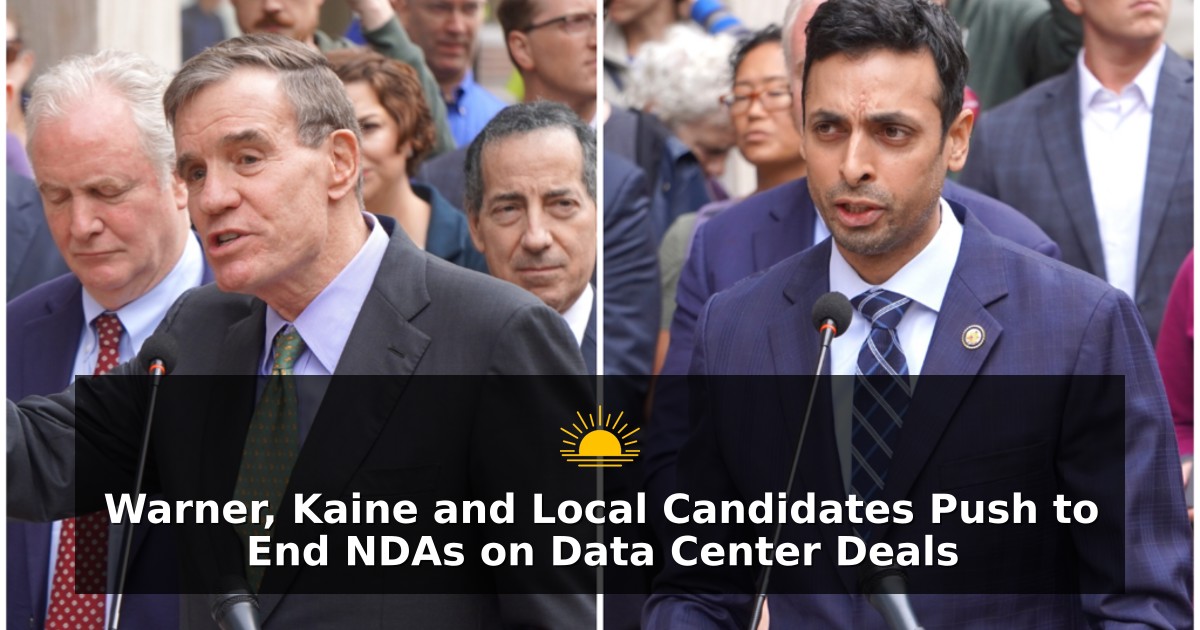
Both of Virginia’s U.S. senators and a slate of local candidates are calling for an end to nondisclosure agreements that keep major economic-development deals — especially data-center projects — hidden from the communities asked to host them.
The latest flashpoint is Roanoke County’s Wood Haven Technology Park, where officials recently agreed to sell land to Clearview Dynamics LLC, an entity formed earlier this year. When asked about the buyer and rumors of an incoming data center, county officials said a signed NDA legally barred them from sharing details, WDBJ reported.
Virginia law does allow local governing bodies to meet in closed session to discuss prospective businesses and land deals when open talks could weaken bargaining positions, and state code protects some proprietary business records. Supporters of NDAs say those tools help localities compete for investment without telegraphing bids to rivals. Critics say secrecy has outgrown those narrow purposes and now freezes residents out of decisions about power use, traffic, noise, water and tax incentives.
At a Roanoke City Council candidate forum Thursday, several contenders argued that cloaked negotiations violate the spirit of representative government. Former Roanoke Mayor and independent council candidate David Bowers said he has never signed an NDA and never will, calling such agreements incompatible with an elected official’s oath to the public.
U.S. Sen. Mark Warner framed the issue as a federal standards problem as much as a local ethics problem. “Those federal standards ought to be, you can’t sign a nondisclosure agreement that hides the information from the community,” Warner said. He added that companies and local governments often regret secret deals once trust erodes.
Sen. Tim Kaine urged residents statewide to put incumbents and candidates on the record before deals harden. “I’d say it’s a good time to put your local elected official or a candidate for a local office on the record and ask them to agree not to cloak economic development negotiations behind secret agreements,” Kaine said.
The timeline of recent tech projects helps explain the frustration. In Botetourt County, home to a Google data-center campus announced in June 2025, county records show talks with an unidentified prospect began in early 2024. Officials rezoned the site in November 2024 after public hearings — eight months before Google’s involvement became public. Residents who attended rezoning meetings often say they were debating an abstract “prospect,” not a named hyperscaler with known power and water demands.
Data centers have become one of Virginia’s defining economic stories, especially in Northern Virginia’s Data Center Alley, but the industry’s footprint is spreading into the Roanoke Valley, Southside and coalfield localities seeking tax base. With that spread comes pressure on Dominion Energy transmission plans, local land-use maps and school-funding debates tied to machinery-and-tools taxes. NDAs make it harder for the public to weigh those tradeoffs in real time.
Municipal attorneys caution that not every confidentiality clause is identical. Some NDAs cover only site selection and financial terms for a limited period; others effectively gag elected officials from confirming even the industry sector involved. Reform proposals circulating among candidates include sunshine triggers after a rezoning filing, mandatory disclosure of anticipated megawatt load ranges, and bans on NDAs that prevent answering basic constituent questions in open session.
Economic developers counter that Virginia competes with other states and that premature disclosure can kill projects. They point to closed-session authority in the Freedom of Information Act as evidence the General Assembly already balanced secrecy and sunshine. The political momentum, however, is shifting toward earlier transparency as data-center opposition organizes around grid reliability, farmland conversion and residential property values.
For statewide readers, the Wood Haven episode is less about one park in Roanoke County and more about a governance template. If Clearview Dynamics or any successor entity seeks incentives, rezoning or utility upgrades, the public will eventually see filings — but NDA critics want that visibility before votes that reshape comprehensive plans.
Warner and Kaine’s involvement raises the issue beyond local forums into the Senate conversation about federal standards for community disclosure when federally connected infrastructure or interstate power markets are implicated. Even without new federal statutes, their comments give local candidates a national talking point and give reporters a clearer demand to make of boards of supervisors.
Residents who want more sunlight can already use FOIA for contracts after execution, attend planning commission hearings, and track SCC transmission cases. What they often cannot get under an NDA regime is a straight answer during the exploratory phase, when political leverage is highest. That is the gap senators and candidates say they want closed.
As Virginia’s data-center map expands, expect NDA policy to become a standard campaign questionnaire item alongside housing and taxes. Localities that publish clear disclosure timelines may find it easier to sustain public support for projects that do pencil out; those that lean on perpetual secrecy may win the deal and lose the room.
Data Data Center Data Centers Dominion Energy Google Grid Housing Independent Land Mark Warner Northern Virginia Policy Power Roanoke City SCC School Senate Taxes Technology Tim Kaine Traffic Virginia Water