Press release from Foundation for Healthy Youth
What Is 7-OH? A Potent Kratom Derivative Turning Up in Drinks, Supplements, and Candy
Originally published by Foundation for Healthy Youth on Jun 19, 2026, 3:00 AM ET
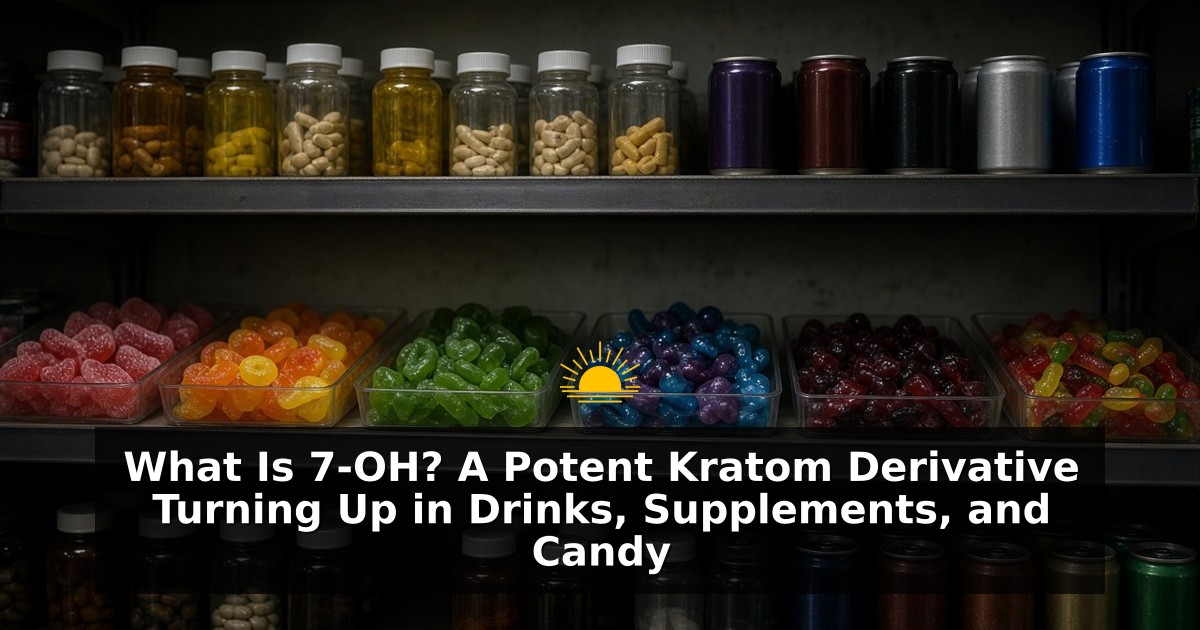
On a shelf beside bottles of soda and rows of candy-colored energy drinks, another bright package blends right in. Some are tablets the size of SweeTarts, others come in small glass vials or fruity-flavored cans. To a casual shopper, they might look like harmless pick-me-ups. But these products often contain 7-hydroxymitragynine — or 7-OH — a powerful opioid-like substance that health experts say poses serious risks, especially for youth.
In late July, the U.S. Food and Drug Administration (FDA) recommended scheduling 7-OH products under the Controlled Substances Act, citing "serious risks" and "no accepted medical use." The announcement marked the first federal move to regulate the compound, which until now has been largely unregulated and sold by independent retailers. In Virginia, experts at the Blue Ridge Poison Center warn that candy-like packaging and misleading "herbal" marketing are making it easier for young people to access and underestimate a substance that can depress breathing, impair the brain, and in high doses, be deadly.
What is 7-OH?
7-hydroxymitragynine, or 7-OH, is a chemical compoundderived from the kratom plant. In its natural form, kratom leaves are ground into a powder or brewed into tea, producing mild stimulant effects at low doses and sedative effects at higher doses. When consumed, kratom breaks down in the body and produces a small amount of 7-OH.
7-OH binds to the µ-opioid receptors in the brain — the same receptors activated by opioids like morphine, oxycodone, and fentanyl. The concern, experts say, is that manufacturers are now isolating or synthesizing 7-OH directly and then creating products that aremuch more potent than kratom itself.
"It's basically a legal opioid sold in the smoke shop," said Dr. Sandra Nixon, a toxicology fellow at the University of Virginia's Blue Ridge Poison Center. "It binds to the same receptors that opioid medications do. And kratom does this as well, but at a much lower potency."
This potency is what makes 7-OH both attractive to users and dangerous for communities. While kratom is often marketed as a "natural" herbal supplement, 7-OH products are a concentrated version that act more like prescription opioids without the medical oversight or dosing controls.
Why It's Especially Dangerous for Youth
For young people, the risks are even higher. Smaller body size means a smaller margin for error: the same dose that an adult might tolerate could have much stronger, potentially life-threatening effects in a teenager.
Dr. Christopher Holstege, director of the Blue Ridge Poison Center, emphasized another concern: the impact on developing brains.
"In pediatrics, we have a developing brain," Holstege said. "That's been the problem with many of the chemicals we see on the street, including cannabis. We don't have enough research out there to know what 7-hydroxymitragynine does to the body long-term. For our youth, what does this do to their brain? That's a big concern."
Like opioids, 7-OH can causesedation, slowed breathing, and respiratory depression— warning signs parents and educators should watch for. And because the products are often marketed as "herbal" or "holistic," teens may not realize they're experimenting with something that can mimic the effects of opiates like morphine.
The packaging poses another danger:accidental ingestion by children.Many 7-OH products are sold as colorful tablets, gummies, or sweet-flavored liquids that resemble candy or soda.
"A lot of times they just look like SweeTarts," Nixon said. "They're colorful, they're enticing to children. We already see this problem with synthetic THC products, and I assume it will be the same with 7-OH."
How It's Sold and Marketed
Step into many independent retailers near a college campus, and you might find 7-OH products tucked between kava and CBD drinks. At first glance, the cans and bottles don't stand out from other trendy wellness beverages.
Dr. Holstege and Dr. Nixon recently visited several stores near the University of Virginia and found 7-OH products for sale within 1,000 feet of campus.
"They're being sold like you would with iced tea," Holstege said. "They're even highlighted as alcohol substitutes — you'll get clinical effects without drinking."
In other cases, 7-OH comes in brightly colored tablets that look like candy, or in liquid droppers marketed as wellness supplements. The packaging often includes words like"natural" or "herbal,"language that suggests safety but hides the risks.
Virginia's Law and Its Limits
Virginia became one of the first states to regulate kratom in 2023, when lawmakers passed a law prohibiting the sale of kratom products to anyone under 21 and requiring manufacturers to include ingredient labels and health warnings.
In 2026, lawmakers strengthened those protections in response to growing concerns about highly concentrated kratom products and youth access. The updated law prohibits synthetic kratom compounds, bans kratom products intended for vaping, smoking, or injection, requires products to be stored behind retail counters or in locked display cases, and prohibits products that are manufactured, packaged, or marketed in a manner attractive to children.
The law also places strict limits on 7-hydroxymitragynine (7-OH), a potent kratom-derived compound that has become increasingly common in smoke shops and convenience stores. While the law does not completely ban 7-OH, it limits products to no more than one milligram per serving and restricts the concentration that can be present in kratom products to 1%. Because many commercially marketed 7-OH products contain far higher concentrations, the law effectively bans high-potency 7-OH products from being sold in Virginia.
The changes reflect concerns that regulation has not always kept pace with the way these products are marketed and sold. Bright packaging, sweet flavors, and candy-like forms can make kratom products especially appealing to young people and increase the risk that children mistake them for treats. Products marketed as "natural," "herbal," or "plant-based" may also create the impression that they are harmless, despite growing concerns from health experts about their potency and potential risks.
A recent incident in Henrico Countyunderscored those concerns: a person was found unresponsive in a smoke shop parking lot after reportedly using a 7-OH product. While it is not clear whether kratom or 7-OH directly caused the overdose, health experts say the incident highlights the broader risks associated with products that have historically faced limited oversight and are often marketed in ways that can obscure their potency.
Dr. Nixon warns against assuming that because a product is legally sold in Virginia, it is necessarily safe.
"Just because something's marked as natural or holistic does not make it good for you," Nixon said. "These can be as strong as opioids, if not stronger, especially if kids get into them."
Local Reports and Expert Warnings
At the Blue Ridge Poison Center, calls about kratom and its derivatives have been rising. Dr. Nixon and Dr. Holstege say they're already seeing exposures tied to 7-OH, and the concern is growing.
One troubling trend: products mixing 7-OH with other sedatives like kava. Kava is marketed as a natural sleep aid, but when combined with kratom or 7-OH, the effects can be dangerously amplified.
"We're seeing an uptick now in kava too," Holstege explained. "Mixed with 7-hydroxymitragynine, the outcomes are worse. Both substances cause sedation, so the effects stack up."
Preliminary data from theNational Poison Data Systemsupports these observations, showing more severe outcomes when kratom or 7-OH is combined with kava or other substances. While these reports often focus on adults, experts warn that adolescents experimenting with these products may be even more vulnerable.
Nixon says the misconception that "legal" equals safe remains one of the biggest barriers to prevention.
"No matter what these things say, that doesn't mean that's what they are," she said. "They can call themselves natural and holistic, but they're often more dangerous than regulated pharmaceutical substances."
The Bigger Picture — Opioid Epidemic Connection
The rise of 7-OH comes at a time when Virginia, like the rest of the nation, is still grappling with an opioid epidemic.Fentanyl remains the leading cause of fatal overdoses, but health officials say new synthetic and semi-synthetic substances like 7-OH could worsen the crisis by introducing another unregulated opioid-like drug to the market.
For teens, the parallels are clear. Just as fentanyl is often hidden in counterfeit pills or mixed into other drugs without warning, 7-OH is slipping into the marketplace disguised as harmless candy or "wellness" drinks. Both share the same core danger:potency that far exceeds what most people realize.
Holstege says public education needs to move as quickly as the drug market itself.
"It's been so rapidly evolving over the last decade with new substances arising, we have to get much more rapid in our response," he said. "That means going into the stores, seeing what's being sold, and getting the word out before it's too late."
For Virginia parents, educators, and youth advocates, the message is clear: awareness is prevention. Recognizing the risks of 7-OH and talking openly with young people about them is one way to help stop this emerging substance from fueling the next wave of the opioid epidemic.
Resources & Prevention
For parents, educators, and youth-facing professionals, the most powerful tool against 7-OH is awareness. Knowing what to look for and talking about it openly can help reduce the risks before they escalate.
Warning signs of 7-OH use include:unusual sleepiness, slowed or shallow breathing, and unexplained candy-like packaging at home. Even if a product is labeled "herbal" or "natural," it can still act like an opioid.
Dr. Nixon stresses that prevention begins long before a crisis.
"Prevention is going to be the biggest thing in getting the word out that this stuff is dangerous," she said. "Just because it's sold in smoke shops doesn't mean it's safe."
For families who suspect exposure or need guidance, theBlue Ridge Poison Center is available 24/7 at 1-800-222-1222. VFHY also offers educational tools like theDangers of Fentanyl Lessonto help educators and practitioners talk with kids at an age-appropriate level about opioids.
The bottom line: 7-OH may look like candy or a harmless drink, but its effects can be as dangerous as opioids. Education and vigilance can make the difference in keeping Virginia's youth safe.
The post What Is 7-OH? A Potent Kratom Derivative Turning Up in Drinks, Supplements, and Candy appeared first on Virginia Foundation for Healthy Youth (VFHY).
Henrico County is a county in the Richmond region. Its county seat is Laurel.
Henrico County 2026 advocates against always between body Call calls campus Cases Children College Common communities concern Concerns crisis dangers Data difference directly Drugs Education Educational Energy Evolving Explained Families Fentanyl First focus Food Food and Drug Administration growing Health Henrico Henrico County High highlighted impact Increase itself July keeping Kids Know Lawmakers legal making manufacturers market marketing medical use move nation National Near Need needs officials Opioids oversight Parents person Plant post problem produces prohibits Protections Public regulation remains requires research resources Rise safety step supports System there thing university University of Virginia users Virginia Virginia's warning signs well within youth
All Virginia News is published by ALL VIRGINIA NEWS, LLC. How we're funded · Corrections · Ethics
