Loudoun County Reports Sharp Rise in Unpaid School Meal Debt
Updated
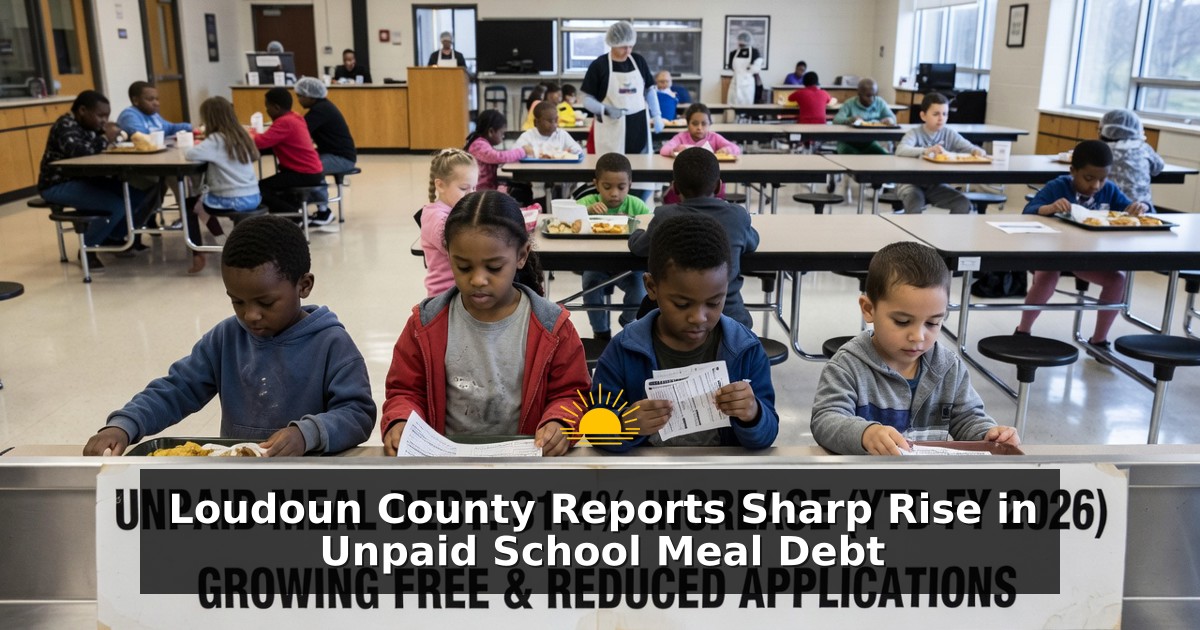
Loudoun County Public Schools have recorded a substantial increase in unpaid meal debt midway through the academic year. Year-to-date figures for fiscal year 2026 show a 31.4 percent rise when measured against the identical point in the previous year. At the same time, applications for free and reduced-price meals climbed from 4,902 in December 2024 to 5,284 in December 2025. That change equals 382 additional applications and a 7.8 percent increase, underscoring expanding financial strain among participating families.
The Loudoun County School Board governs policy and oversight for the district’s nutrition programs and related student supports. Current board members are Melinda Mansfield, April Chandler, Deana Griffiths, John Beatty, Cindy Morse, Karen Fraley, Arben Istrefi, Jeff Morse, and Mandi Keegan. These nine elected officials represent the county’s magisterial districts and the at-large seat while reviewing operational data that affect daily school functions. Their collective role includes examining trends that influence equitable access to meals for all students.
Unpaid meal debt accumulates when students receive breakfast or lunch without sufficient funds in their accounts and without qualifying for free meals at the time of service. Districts across Virginia track these balances carefully because they affect both cafeteria operations and family finances. In Loudoun County the mid-year comparison highlights how quickly the outstanding total can grow even in a relatively affluent locality. Officials note that timely data reviews help identify patterns before they become more difficult to manage.
Growth in Free and Reduced-Price Meal Applications
Applications for free and reduced-price meals serve as a direct indicator of household economic need within the school community. The jump from 4,902 applications in December 2024 to 5,284 one year later reflects a measurable expansion of eligibility or awareness. Families must submit income documentation or categorical qualifications such as participation in certain public assistance programs to determine status. Once approved, students receive meals at no cost or at a reduced rate, which lowers the chance of accumulating debt.
The 7.8 percent rise in applications occurred during a period when many households continued to adjust to post-pandemic cost pressures. Housing, transportation, and grocery expenses in Northern Virginia remain elevated relative to other regions of the state. School nutrition staff process these applications on a rolling basis so that newly eligible students can begin receiving benefits promptly. Accurate and complete submissions remain essential for both families and the district’s federal reimbursement claims.
Federal guidelines administered through the United States Department of Agriculture set income thresholds that determine free or reduced-price eligibility. Loudoun County Public Schools follow those standards while also offering local outreach to ensure families understand the process. Increased application volume can signal either broader economic softening or improved communication about available supports. Either interpretation points to the same operational reality: more students require assistance to eat during the school day without financial barriers.
Economic Pressures Facing County Families
Loudoun County maintains one of the highest median household incomes in the nation, yet pockets of need persist and appear to be widening. Rising costs for housing and everyday essentials have left some working families with less discretionary income for school meal accounts. When balances fall short, unpaid debt begins to appear on district ledgers. The 31.4 percent year-over-year increase demonstrates how quickly these shortfalls can compound across thousands of student transactions.
Nutrition program managers compare fiscal year 2026 data with the prior year at the same calendar point to isolate genuine trends from seasonal fluctuations. Halfway through the school year provides a reliable midpoint snapshot before spring adjustments occur. The observed growth in both debt and applications suggests that economic challenges are reaching a larger share of the student population than in the immediate past. District leaders treat the figures as an early warning that merits continued attention.
School meal programs fulfill a dual purpose of supporting academic readiness and addressing food security. Students who eat regular, balanced meals tend to maintain better focus and attendance. When unpaid debt rises, schools must balance the imperative to feed children with the practical need to recover costs or secure alternative funding. Loudoun County’s experience mirrors patterns reported in other Virginia divisions where similar mid-year reviews have shown upward movement in outstanding balances.
Implications for Student Nutrition Access
Ensuring every student can obtain breakfast and lunch without stigma remains a core objective of the district’s child nutrition services. Unpaid debt can create administrative follow-up with families and, in some cases, temporary restrictions if local policies require them. Most Virginia districts, including Loudoun, prioritize feeding students first and address balances afterward through discreet communication. The latest figures reinforce the value of proactive eligibility outreach so that fewer families encounter unexpected charges.
The simultaneous climb in free and reduced-price applications offers a partial offset because approved students generate federal reimbursements rather than household charges. Still, the gap between total meals served and covered costs continues to widen when debt grows faster than new certifications. Staff members work to streamline verification so that eligible households move quickly from application to benefit. Clear information about income guidelines and required documents helps reduce processing delays that might otherwise leave students temporarily uncovered.
Broader research on school meal debt shows that even modest outstanding amounts can accumulate into significant sums across large districts. Loudoun County’s 31.4 percent increase at the midpoint therefore carries both immediate fiscal weight and longer-term policy relevance. Board members and administrators review such data to determine whether existing communication strategies, payment plans, or community partnerships require adjustment. The goal remains consistent: maintain universal access to nutritious meals while managing public resources responsibly.
Ongoing District Monitoring and Considerations
Loudoun County Public Schools will continue tracking unpaid meal debt and application volumes through the remainder of the fiscal year. Mid-year findings already supply a clear benchmark against which later months can be measured. Any further rise or stabilization will inform budget discussions and potential program refinements. Transparency around these numbers allows families, staff, and the wider community to understand the scale of need.
Possible approaches under general consideration in similar districts include expanded outreach campaigns, partnerships with local nonprofit organizations, and clearer online tools for account management. Loudoun’s board and staff evaluate options against available resources and regulatory requirements. Because federal meal reimbursements form a large share of nutrition funding, accurate certification of free and reduced-price students directly affects the district’s ability to offset costs. Sustained attention to both debt reduction and eligibility growth therefore supports long-term program stability.
The 31.4 percent debt increase and the 7.8 percent application increase together paint a coherent picture of rising household pressure inside an otherwise prosperous county. School officials treat the data as actionable information rather than an isolated statistic. By maintaining regular reporting cycles and open channels with families, the district aims to keep meal access steady for every student. Continued monitoring through the second half of the year will reveal whether the mid-year surge moderates or requires additional response.
Community stakeholders often look to school meal trends as one visible marker of local economic health. The figures released at the recent board meeting supply a factual foundation for that conversation without assigning blame or prescribing any single remedy. Loudoun County Public Schools remain focused on the practical task of feeding students while documenting the financial realities that accompany that mission. Future updates will show how the second half of fiscal year 2026 compares with the elevated baseline now established.
County Debt economic challenges financial need financial stigma Free Meals halfway Loudoun Loudoun County Meal Public report Rise School Board Schools significant student access surging Unpaid unpaid meal debt
