Virginia lost about 494,000 acres of forest, seventh-most in the nation
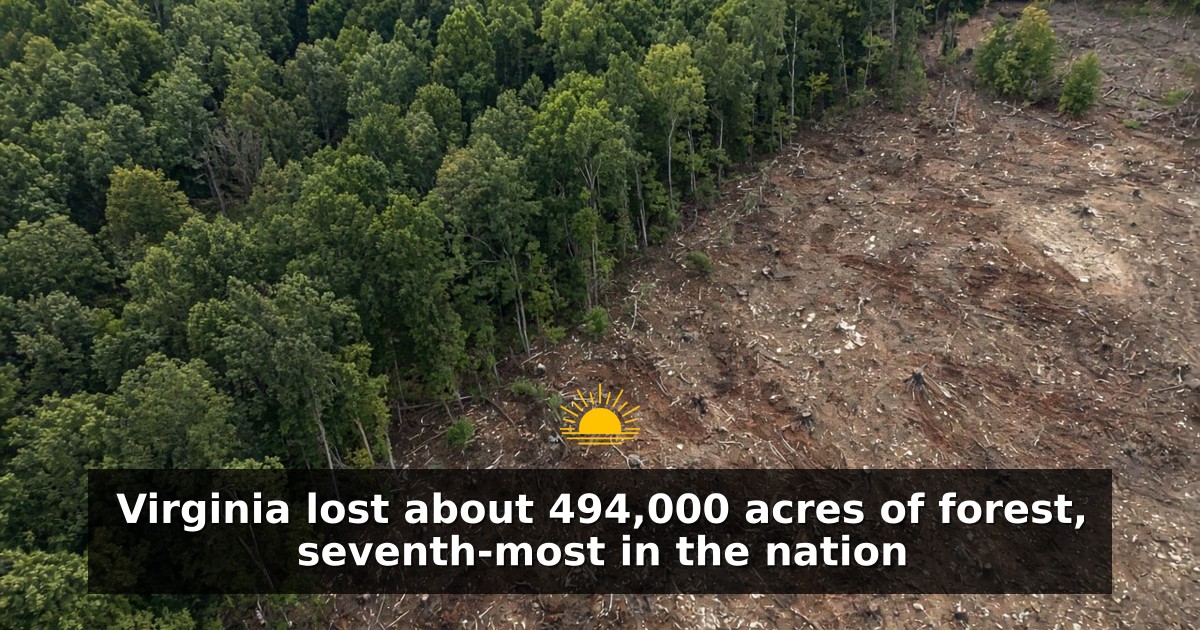
Virginia has lost more forestland over recent decades than most other states, according to a new Clark University report, WHRO reported on Oct. 29.
The study, released Thursday by the Massachusetts university's School of Climate, Environment and Society, looked at forest loss nationwide from 1990 to 2017. It found that about 10 million acres of U.S. forest were lost to development or converted to cropland over that period. Chris Williams, a Clark University professor of geography and environmental science, told WHRO the loss "equates to losing a football field every two minutes for 28 years."
Most of the losses were concentrated in the Southeast. Virginia and 10 other states in the region accounted for about 70% of the nation's lost forest, according to the report.
Virginia lost about 494,000 acres, the seventh-most in the country. Of that, 61% was converted to cropland and 39% was developed. The report found the nation's top three counties for forest loss were all in Virginia: Pittsylvania, Chesterfield and Prince William. Norfolk was also identified as a hotspot.
Williams said researchers were surprised by how much forest is being converted to farmland. He said the study focused on forest considered permanently lost, as opposed to land cleared and replanted for timber, because developed land rarely returns to nature and a full forest restoration would take centuries.
The researchers used satellite imagery at a quarter-acre scale, counting an area as forest if it had at least 20% tree cover, and matched the results with federal land cover and land use data.
The report also estimated the "climate burden" of the losses. Researchers calculated that about 2.3 billion tons of carbon dioxide were released across the mainland U.S. during the study period because of forest loss, or about 1% of the nation's total carbon emissions. Williams called it "a meaningful contribution and one that deserves some attention."
Williams said the land changes happened fairly steadily over the 28 years. Researchers do not know exactly why the Southeast is so heavily represented, he said, though he suspects increased migration to the South and greater opportunity to develop land and expand cropland in the region may play a role.
Clark University is part of the Forest Carbon Data Partnership, which is finalizing a U.S. Forest Monitor tool to display ongoing information on forest loss.
Source: WHRO, https://www.whro.org/environment/2026-10-29/virginia-accounts-for-some-of-the-nations-biggest-losses-of-forest-report-says
2026 area burden Chesterfield Chris Clark counties Data development environment environmental every information Know Land land use Loss Migration Million nation Norfolk ongoing opportunity opposed Prince William represented Role School science society study university Virginia
