RICHMOND, Va. — Virginia lawmakers have advanced a revised legislative framework to establish a regulated retail marijuana market, with sales potentially beginning as early as November 1, 2026.
The proposal, unveiled by the Joint Commission to Oversee the Transition of the Commonwealth into a Cannabis Retail Market on December 3, 2025, aims to create a structured system for adult-use cannabis sales administered by the Virginia Cannabis Control Authority (CCA).
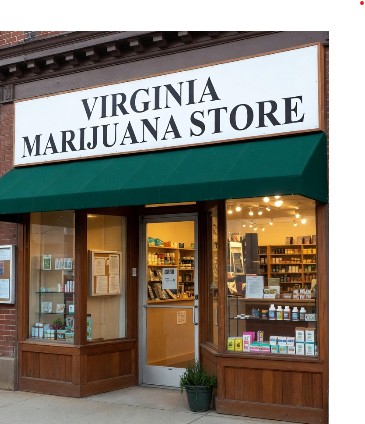
The draft legislation includes several key regulations designed to control the industry’s rollout. Retail marijuana stores would be required to maintain a distance of at least 1,000 feet from schools, places of worship, hospitals, playgrounds, and substance use disorder treatment facilities.
Additionally, the plan caps the number of retail licenses at approximately 350 to 400 statewide, with allocations aimed at ensuring density control—limiting stores to about three or four per delegate district to prevent clustering in any single area.
Stores operated by pharmaceutical processors could be authorized under specific conditions, such as after reaching certain sales thresholds for cultivated or processed products.
Other provisions allow retail outlets to sell marijuana paraphernalia and require the CCA to provide educational resources to the public through its application process.
Local governments would not have the option to opt out of allowing sales within their jurisdictions, ensuring a uniform statewide approach.
The market would be subject to relatively low taxes, with preferences potentially given to small businesses over large multistate operators.
This development builds on Virginia’s 2021 legalization of personal possession and cultivation for adults 21 and older, but it highlights ongoing tensions with federal law, where marijuana remains a Schedule I controlled substance.
State officials have issued guidance clarifying that private-sector employers cannot discriminate against employees for off-duty marijuana use, provided it does not cause impairment at work or violate federal contracts.
However, these protections do not extend to federal employees or those in safety-sensitive or federally regulated positions.
In Northern Virginia, home to over 300,000 federal workers, the discrepancy poses significant risks. Federal agencies adhere to the Drug-Free Workplace Act, and marijuana use can result in failed drug tests, disciplinary action, or job loss, even if the activity is legal under state law.
Officials note that employers are not required to accommodate actions that would put them in violation of federal regulations.
The Joint Commission is scheduled to discuss these proposed changes further at a hearing on December 17, 2025, as part of the final preparations for the 2026 General Assembly session.
If approved, the framework could generate revenue for community reinvestment while addressing black market concerns through regulation and taxation.