
The VCEA: A Partisan Law with Sweeping Energy Mandates
In 2020, the Virginia Legislature passed the Virginia Clean Economy Act (VCEA) in a vote largely along party lines. Democrats voted for the measure, and Republicans voted against it. The legislation was signed into law by Democratic Governor Ralph Northam. Do Virginians know what this law portends?
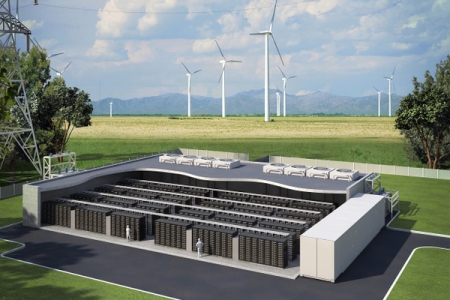
Under the law, Dominion Energy is required to convert to all clean energy sources by 2045 in accordance with a staged compliance table. Appalachian Power is required to reach the same goal by 2050. The law also set targets for solar generating capacity, wind generation capacity, and battery storage by mandating capacity from these sources. For example, Dominion is required to construct, acquire, or procure at least 2,700 MW of energy storage capacity by 2035. More on this later.
The Cost Explosion Facing Virginia Ratepayers
As reported by Steve Haner of the Thomas Jefferson Institute, under a model used by the State Corporation Commission, full compliance with the VCEA will reach a cost of $354 per 1,000 kWh by 2035. One thousand kWh is considered the average residential consumer’s electricity usage. As also reported by Mr. Haner, this triples the $116 cost for the average residential customer from just five and a half years ago. It could be worse.
An analysis conducted by the Center of the American Experiment compared two scenarios: one under which Virginia electricity demand continues to be met through nuclear, gas, and limited coal, and another modeled on the requirements of the VCEA. The analysis concludes that meeting the mandates of the VCEA will, for the average Virginia residential consumer, cost an additional $804 per year in the 2033 timeframe, a whopping additional $2,326 per year in 2045, and continue to increase after that.
Notably, under the non-VCEA scenario, the cost increase is $135 per year for the average residential customer in 2036, with costs decreasing in the years after that, reaching approximately a $90 per year increase over current rates in 2045. This means that under the VCEA, the average residential electricity user will be paying more than $2,200 per year above the cost of a non-VCEA scenario.
The SCC: A Regulator with One Hand Tied Behind Its Back
Some recent decisions by the Virginia State Corporation Commission (SCC) offer limited hope through their consideration of the cost implications of proposed projects. Notable among these is the SCC’s denial of Appalachian Power Company’s (ApCo) request to acquire and operate a 52 MW / 208 MWh (four-hour) utility-scale battery energy storage system in Wythe County, Virginia. This project, slated for operation in 2027, was deemed not cost-effective for ratepayers at an estimated cost of $164 million. The SCC also determined that the future recovery of the out-of-state Livingston Wind Project costs is reasonable and prudent, on the condition that the project does not exceed its estimated total capital cost and obtains the 50% investment tax credits (ITCs), or the contractual equivalent thereof.
Will actions at the margin by the SCC protect Virginia ratepayers from the excesses of the VCEA? No. The SCC is bound by law to find projects proposed by utilities and focused on meeting green energy mandates to be “in the public interest.” Where the SCC strays too far from that path, the Virginia Legislature will step in. Consider recent threats to remove from the law the provision that allows the SCC to approve gas-fired plants if they are essential to meeting state energy needs. Add to this the fact that the General Assembly has acted—and continues to act—to expand the mandates of the VCEA.
Doubling Down on Failure: More Mandates, Higher Bills, No Climate Impact
For example, legislation to increase energy storage requirements that was vetoed by Governor Youngkin is expected to be reconsidered by the legislature this year. Proposed legislation would more than triple the current requirement and, as reported by Steve Haner, would likely carry capital expenses of $54 billion over the next 20 years. These are costs to be imposed on Virginia ratepayers that are unnecessary absent VCEA clean energy mandates. Batteries generate no electricity.
The VCEA will drastically increase consumer costs in Virginia, reduce Virginia’s business competitiveness, and make no measurable dent in world or regional climate trends. It is time for Virginia residents to demand common sense in energy generation and distribution.