
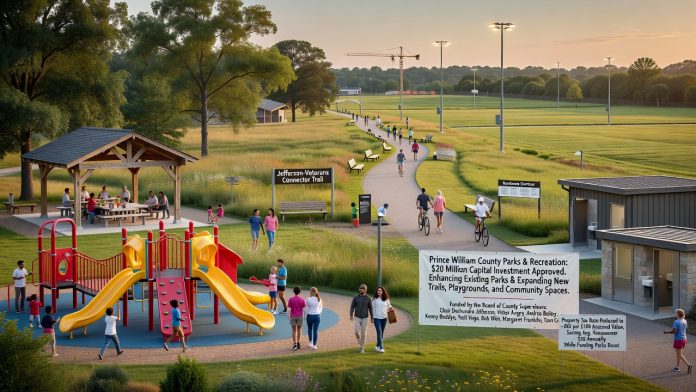
Prince William County officials have approved a significant financial commitment to local green spaces, authorizing a twenty million dollar increase in capital investment for the Department of Parks and Recreation. This substantial funding allocation aims to enhance existing park facilities and expand public access to new trails, playgrounds, and community spaces throughout the region. The financial boost represents a direct increase in capital investment compared to the previous fiscal year, reflecting community priorities identified in the county strategic plan. Municipal leaders emphasized that this robust funding package will address both immediate recreational needs and long-term environmental conservation goals.
The current Prince William County Board of County Supervisors includes Chair Deshundra Jefferson, Victor Angry, Andrea Bailey, Kenny Boddye, Yesli Vega, Bob Weir, Margaret Franklin, and Tom Gordy. These elected officials reviewed and advanced the fiscal budget that balances recreational expansion with broader financial adjustments for local residents. Their legislative action demonstrates a continued focus on addressing quality of life improvements across all local districts while navigating complex municipal financial requirements. The board members consistently evaluated public feedback during the budget development process to ensure the final allocations aligned with constituent demands.
Balancing Tax Reductions and Recreational Growth
Despite the massive influx of capital for parks and recreation, the county successfully implemented a reduction in the local real estate tax rate for property owners. The approved property tax rate decreased from ninety cents to roughly eighty-six cents per one hundred dollars of assessed real estate value. This specific fiscal adjustment is projected to save the average residential property owner approximately fifty-six dollars on their annual tax bill while still fully funding the parks increase. Financial analysts within the local government managed to balance these tax relief measures with the necessary capital expenditures required for the park expansions.
County executive leadership described the proposed budget as more than just a financial document, framing it instead as a statement of civic values and a direct investment in community priorities. The financial plan reportedly reflects what residents indicated matters most, including strong schools, safe neighborhoods, environmental stewardship, responsive government, smart growth, and a high quality of life. Officials noted that investments in parks, infrastructure, and planning promote environmental sustainability and ensure that future development remains thoughtful. The comprehensive budget strategy effectively links fiscal responsibility with tangible improvements to the daily lives of county residents.
Targeted Projects and New Park Construction
A major component of the newly approved capital investment involves advancing long-term recreational projects that were originally approved by voters during the local bond referendum several years ago. Specifically, the budget appropriates over five million dollars for the construction of the Neabsco District Park, which carries a total project cost of roughly six million dollars. This new community park will feature dedicated amenities designed to accommodate visitors of all ages and abilities within the surrounding district. The realization of this park project fulfills a long-standing promise to voters who previously authorized the initial recreational bonds.
The Department of Parks and Recreation will also direct essential resources toward expanding and maintaining the extensive trail networks located throughout the county jurisdiction. The budget includes more than one hundred fifteen thousand dollars in recurring funding specifically designated for the ongoing maintenance of the highly utilized Occoquan Trails system. Furthermore, capital funds will support the development of the Jefferson Park and Veterans Park Connector Trail, bridging gaps in the current pedestrian infrastructure and encouraging outdoor recreation. These trail investments provide safe, non-motorized transportation alternatives while connecting diverse neighborhoods to natural scenic environments.
Enhancing Existing Community Facilities
Beyond the construction of entirely new parks and trail connections, a significant portion of the twenty million dollar increase will directly benefit older, established recreational sites. The capital improvement plan outlines the addition of modernized field lights to extend playing hours for local sports leagues during the evening. Furthermore, the county plans to install permanent restroom facilities, upgraded playgrounds, and new picnic pavilion areas to better serve the growing local population. Such practical upgrades address frequent requests from youth sports organizations and families who regularly utilize the municipal park system for weekend gatherings.
These targeted enhancements to existing parks align closely with the broader municipal strategy to promote smart growth and environmental stewardship across the region. By upgrading the infrastructure at current sites, the county aims to maximize the utility of its existing land assets without requiring excessive new land acquisitions. The comprehensive strategy ensures that both rapidly developing neighborhoods and established communities receive equitable access to high-quality outdoor recreational amenities. Maintaining and improving current facilities prevents urban decay while simultaneously boosting the overall property values in the surrounding residential neighborhoods.
As the Department of Parks and Recreation begins implementing these funded projects, residents can expect to see phased construction and renovation activities across multiple community parks. The twenty million dollar capital investment establishes a robust financial foundation for long-term recreational development within the growing municipality. Ultimately, this strategic financial commitment underscores the dedication of local leadership to preserving green spaces and fostering an active, healthy environment for all community members. The successful execution of these capital improvements will likely serve as a benchmark for future municipal planning and recreational funding initiatives.
Email the Board of Supervisors At:
Chair At-Large (Deshundra Jefferson) – djefferson@pwcgov.org,
Brentsville (Tom Gordy): tgordy@pwcgov.org,
Coles (Yesli Vega): yvega@pwcgov.org,
Occoquan (Kenny Boddye): kboddye@pwcgov.org,
Potomac (Andrea Bailey): abailey@pwcgov.org,
Woodbridge (Jeannie LaCroix): jlacroix@pwcgov.org,
General Board: bocs@pwcgov.org,