The Fairfax County Board of Supervisors recently finalized the comprehensive fiscal year 2027 budget, placing a significant emphasis on community spending, expanding affordable housing, and supporting low-income home repair initiatives. The meticulously crafted financial plan includes an overarching annual investment of approximately $52.7 million directed toward housing stability and sustainable development across the region. This expansive budget was deliberated and formally approved by the current board, which consists of Chairman Jeffrey McKay, Jimmy Bierman, Walter Alcorn, Rodney Lusk, Daniel Storck, Dalia Palchik, Pat Herrity, Kathy Smith, and Andres Jimenez. Through this impactful legislative action, local leaders aim to address pressing regional affordability challenges while maintaining essential public services for a rapidly growing population.
Expanding Housing Department Staffing
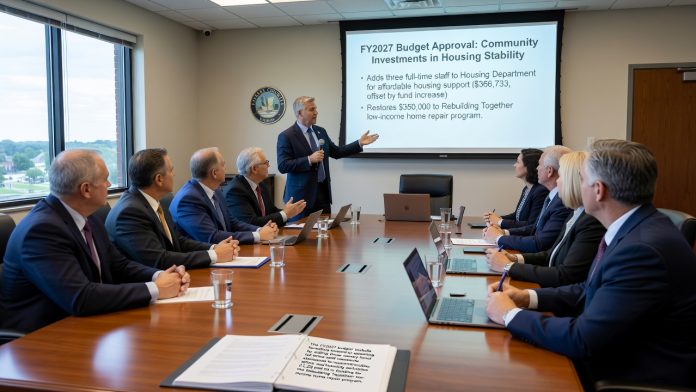
A central administrative component of the newly adopted budget involves expanding the operational capacity of the Department of Housing and Community Development by adding three newly hired full-time staff members dedicated exclusively to affordable housing activities. These new professional positions represent a $366,733 expenditure that will be entirely offset by a commensurate increase to Work Performed for Others charged directly to the Affordable Housing Development and Investment fund. Consequently, this strategic staffing increase will result in no net cost to the county general fund while simultaneously providing crucial administrative and developmental support. The expanded departmental workforce is expected to help the municipality make measurable, accelerated progress toward its stated goal of producing a minimum of 10,000 new affordable homes in the coming years.
Funding for Low-Income Home Repairs
In addition to expanding internal administrative capacity, the fiscal year 2027 budget successfully restores $350,000 in dedicated funding for the highly utilized Rebuilding Together program. This specific community organization, officially known as Rebuilding Together Arlington/Fairfax/Falls Church, provides critical home repairs, essential fall and fire safety upgrades, and necessary accessibility modifications to households in the greatest financial need. During the extensive public hearing process, volunteer team leader Donald Booth directly asked supervisors to maintain or, if possible, increase this essential annual funding to better protect vulnerable residents. By securing this vital financial commitment, the county ensures that low-income homeowners can remain safely in their aging properties without facing insurmountable or prohibitive maintenance costs.
Strategic Investments Amid Fiscal Challenges
The overall baseline investment for affordable housing operations saw a notable increase of $8.8 million over the previous fiscal year, demonstrating a sustained, long-term commitment to housing equity. County Executive Bryan Hill specifically noted in his official budget message that the financial plan reflects a full recognition of current fiscal challenges while continuing to invest heavily in the community and the local municipal workforce. This strategic financial allocation aligns perfectly with the ongoing guidance from the Board of Supervisors, which has consistently identified affordable housing as a core priority for the long-term economic health of the region. These targeted public funds will be distributed across various structural development projects and supportive community services designed to alleviate the exceptionally high cost of living in the metropolitan area.
Tax Rate Adjustments and Fiscal Impact
To responsibly finance these robust community investments, the board carefully calibrated the local tax structure, ultimately setting the real estate tax rate at $1.12 per $100 of assessed property value. This newly established rate represents a quarter-cent decrease from the previous year’s approved rate of $1.1225, reflecting a deliberate effort to provide marginal financial relief to local property owners. However, despite this slight reduction in the baseline tax rate, the average homeowner will still experience a net tax bill increase ranging from $337 to $356 due to significantly higher real estate market assessments across the county. Supervisor Rodney Lusk emphasized during a recent board meeting that the finalized budget successfully provides for the safety, stability, and overall well-being of residents while simultaneously delivering measured, practical tax relief.
Long-Term Community Benefits
The successful implementation of the fiscal year 2027 budget marks a critical, defining juncture for community development and broad housing stability within the rapidly growing jurisdiction. By intelligently combining internal staffing expansions with direct funding for external nonprofit partners like Rebuilding Together, local elected officials are deploying a comprehensive, multifaceted approach to the ongoing housing crisis. The deliberate and careful structuring of these funds, particularly those strategic allocations that avoid impacting the general fund, highlights a meticulous approach to municipal finance and long-term resource allocation. Ultimately, these combined legislative efforts are purposefully designed to ensure that the region remains highly accessible, prosperous, and safe for residents across all income levels as the local economy continues to evolve.
Email At:
Jeff McKay → chairman@fairfaxcounty.gov,
Kathy Smith (Sully District) sully@fairfaxcounty.gov,
Rachna Heizer (Braddock District) braddock@fairfaxcounty.gov,
James Bierman (Dranesville District) dranesville@fairfaxcounty.gov,
Rodney Lusk (Franconia District) franconia@fairfaxcounty.gov,
Walter Alcorn (Hunter Mill District) huntermill@fairfaxcounty.gov,
Andres Jimenez (Mason District) mason@fairfaxcounty.gov,
Daniel Storck (Mount Vernon District) mtvernon@fairfaxcounty.gov,
Dalia Palchik (Providence District) providence@fairfaxcounty.gov,
Pat Herrity (Springfield District) springfield@fairfaxcounty.gov,