
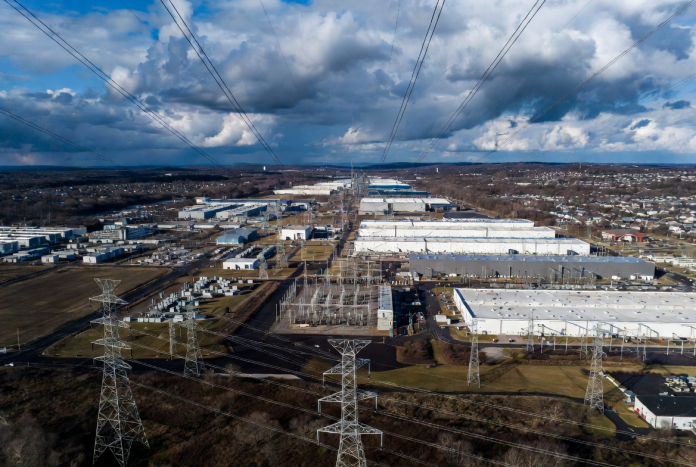
Loudoun County’s rapid data center expansion is generating extensive new high-voltage transmission lines and substations that a leading public health physician has linked to elevated risks of childhood leukemia, adult cancers, and Alzheimer’s disease. The county already contains approximately 250 operational data centers and more than 100 additional projects in the pipeline, driving a 233 percent increase in power consumption between 2021 and 2025. This surge has prompted construction of 500-kilovolt and 230-kilovolt corridors and multiple substations near residential neighborhoods and schools. David Carpenter, a public health physician and director of the Institute for Health and the Environment at the University at Albany, has warned that prolonged exposure to the resulting magnetic fields poses serious health threats that demand immediate protective action.
Board of Supervisors Holds Authority to Act
The Loudoun County Board of Supervisors consists of Chair Phyllis Randall, Vice Chair Michael Turner, Juli Briskman, Sylvia Glass, Caleb Kershner, Matthew Letourneau, Kristen Umstattd, Laura TeKrony, and Koran Saines. Democratic majorities on the board have advanced policies favoring unchecked data center growth while giving limited attention to long-term health consequences for local families. Conservative values place the protection of children and households above industrial expansion. Carpenter has specifically urged the board to adopt setbacks that keep high-voltage lines and substations as far as possible from homes, schools, and childcare facilities.
Documented Associations with Childhood Leukemia and Adult Disease
Carpenter has stated that exposure to elevated power-frequency magnetic fields is associated with an increased risk of cancer, particularly childhood leukemia, as well as leukemia, brain cancer, and breast cancer in adults. The association between residential magnetic field exposure and childhood leukemia has been replicated in numerous studies conducted in multiple countries. He has further noted strong evidence linking long-term exposure to an increased risk of Alzheimer’s disease. These conditions represent serious and often fatal outcomes that no local government can responsibly dismiss as data center-driven infrastructure multiplies across the county.
Existing Guidelines Leave Families Exposed
Carpenter has warned that reliance on the exposure limits of the Institute of Electrical and Electronics Engineers or the International Commission on Non-Ionizing Radiation Protection does not protect the public, especially children, from the health impacts of long-term exposure. He has emphasized that definitive evidence in the peer-reviewed scientific literature shows power-frequency electromagnetic fields can produce biological effects at field strengths well below these limits. The guidelines were designed only for short-term effects and fail to address the chronic, continuous exposures experienced by people living near high-voltage power lines for many hours each day over many years.
Data Center Growth Magnifies the Risk
Power demand in Loudoun County continues to climb as artificial-intelligence workloads expand, requiring still more transmission capacity and substations. Similar infrastructure is advancing across Northern Virginia to serve the broader data center industry. Each new high-voltage line and substation increases the number of homes and schools subject to elevated magnetic fields. Democratic-led decisions that accelerate this construction without mandatory protective distances place commercial priorities ahead of family health and the moral duty to shield the most vulnerable residents from avoidable harm.
Evidence-Based Protections Remain Available
Carpenter has called on governments to mitigate the serious health risks from high-voltage transmission lines and substations by adopting protective setbacks for homes and schools and implementing measures such as undergrounding and low-emission engineering design. Magnetic fields decline substantially with distance from the source. Implementing these steps would allow economic activity to continue while fulfilling the fundamental responsibility of government to protect citizens. Failure to require such safeguards leaves children and families in Loudoun County exposed to risks that research has repeatedly identified.
Email the Board of Supervisors at:
Phyllis J. Randall (Chair, At-Large) – Phyllis.Randall@loudoun.gov,
Michael R. Turner (Vice Chair, Ashburn District) – Mike.Turner@loudoun.gov,
Juli E. Briskman (Algonkian District) – Juli.Briskman@loudoun.gov,
Sylvia R. Glass (Broad Run District) – Sylvia.Glass@loudoun.gov,
Caleb Kershner (Catoctin District) – caleb.kershner@loudoun.gov,
Matthew F. Letourneau (Dulles District) – Matt.Letourneau@loudoun.gov,
Kristen C. Umstattd (Leesburg District) – Kristen.Umstattd@loudoun.gov,
Laura A. TeKrony (Little River District) – Laura.TeKrony@loudoun.gov,
Koran Saines (Sterling District) – Koran.Saines@loudoun.gov
Email the Board of Supervisors at:
Phyllis J. Randall (Chair, At-Large) – Phyllis.Randall@loudoun.gov,
Michael R. Turner (Vice Chair, Ashburn District) – Mike.Turner@loudoun.gov,
Juli E. Briskman (Algonkian District) – Juli.Briskman@loudoun.gov,
Sylvia R. Glass (Broad Run District) – Sylvia.Glass@loudoun.gov,
Caleb Kershner (Catoctin District) – caleb.kershner@loudoun.gov,
Matthew F. Letourneau (Dulles District) – Matt.Letourneau@loudoun.gov,
Kristen C. Umstattd (Leesburg District) – Kristen.Umstattd@loudoun.gov,
Laura A. TeKrony (Little River District) – Laura.TeKrony@loudoun.gov,
Koran Saines (Sterling District) – Koran.Saines@loudoun.gov