
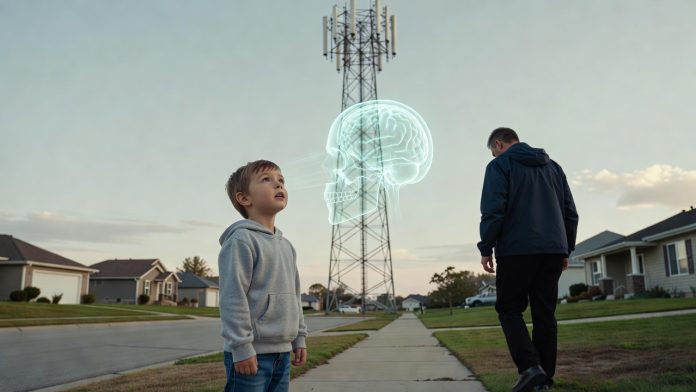
A 2023 study has identified notable differences in how children and adults absorb radiation from cell towers. According to the findings, children take in approximately ten times more of this radiation compared to adults. The research focuses on the effects of ongoing and involuntary exposure on developing young brains.
This observation stems from analysis of radiation patterns and their interaction with smaller body sizes. Experts in the field note that such exposure happens routinely in environments where cell towers operate near populated areas. The study aims to inform public understanding of these dynamics without prescribing specific actions.
Further examination reveals that the constant presence of cell towers contributes to this type of exposure. Data from the research underscores the involuntary aspect, as individuals have limited control over their proximity to these sources. Such details provide context for ongoing conversations about technology and health.
Key Details from the 2023 Research
The study documents the tenfold increase in absorption rates specifically among children. It highlights how young brains, due to their developmental stage, may experience different levels of interaction with the radiation. Researchers compiled this information through comparative assessments of various age groups.
Involuntary exposure is described as a common occurrence in daily routines involving schools, homes, and public spaces. The findings present these elements as part of a broader examination of cell tower impacts. This neutral presentation allows readers to consider the data independently.
Additional context from the study addresses the role of modern infrastructure in creating these exposure conditions. The research maintains a focus on factual reporting of absorption differences. Observers can review the results to assess relevance to their own circumstances.
Broader Context of Radiation Exposure
Cell tower radiation represents one element in discussions about environmental factors affecting health. The 2023 study positions its results within existing knowledge about radiation sources. It avoids speculation and sticks to measured observations on absorption rates.
Young brains are noted in the research as a particular area of interest due to their growth phases. The involuntary nature of the exposure adds a layer of complexity to community planning. These aspects are presented as areas for further neutral inquiry.
Public access to the study allows for informed consideration of the reported facts. The emphasis remains on the documented ten times greater absorption in children. This approach supports objective evaluation of the information provided.
Implications for Ongoing Awareness
The research concludes with calls for continued monitoring of radiation levels in various settings. It notes the importance of understanding exposure patterns across different populations. The 2023 findings contribute to a larger body of work on technological influences.
Stakeholders in health and technology fields may reference the study for its specific data points. The focus on young brains and involuntary exposure provides clear parameters for discussion. Overall, the study delivers a straightforward account of the observed differences.
Email the Board of Supervisors at:
Phyllis J. Randall (Chair, At-Large) – Phyllis.Randall@loudoun.gov,
Michael R. Turner (Vice Chair, Ashburn District) – Mike.Turner@loudoun.gov,
Juli E. Briskman (Algonkian District) – Juli.Briskman@loudoun.gov,
Sylvia R. Glass (Broad Run District) – Sylvia.Glass@loudoun.gov,
Caleb Kershner (Catoctin District) – caleb.kershner@loudoun.gov,
Matthew F. Letourneau (Dulles District) – Matt.Letourneau@loudoun.gov,
Kristen C. Umstattd (Leesburg District) – Kristen.Umstattd@loudoun.gov,
Laura A. TeKrony (Little River District) – Laura.TeKrony@loudoun.gov,
Koran Saines (Sterling District) – Koran.Saines@loudoun.gov,