
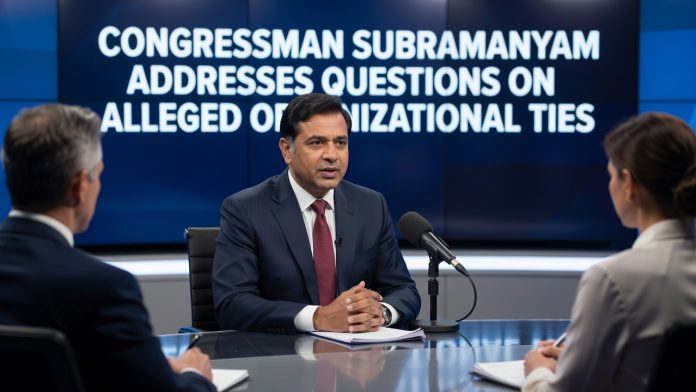
Congressman Suhas Subramanyam participated in an interview where he faced questions about alleged ties to organizations connected to the RSS network in the United States. The discussion covered aspects of his campaign funding and attendance at specific events. Observers noted the exchange as part of broader examinations into political associations. The Congressman provided responses emphasizing his focus on domestic matters.
The interview explored the Congressman’s position regarding calls from the United States Commission on International Religious Freedom for sanctions against the RSS. This element introduced considerations of international religious freedom policies. Participants addressed related concepts including a Hindu Rashtra and secularism in India. The exchange also referenced perspectives on human rights issues in the region.
Subramanyam highlighted his primary emphasis on United States-based concerns during the conversation. He acknowledged the complexities involved in understanding international political movements. The responses indicated a commitment to learning more about these dynamics. The interview proceeded with inquiries into various aspects of the alleged connections.
The topics discussed reflect ongoing interest in the intersections between domestic politics and international affiliations. The Congressman addressed scrutiny concerning potential influences on his activities. Details emerged about the nature of the questions posed during the session. The exchange remained centered on clarifying positions and associations.
Public interest in the interview stems from the visibility of the Congressman’s role. The questions aimed to elicit information on funding sources and event participation. Responses sought to provide context on the matters raised. The overall dialogue touched on multiple layers of political and international considerations.
The interview format allowed for direct engagement with the topics at hand. Subramanyam navigated inquiries while reiterating attention to American issues. The discussion included references to human rights and secularism frameworks. Observers followed the exchange for insights into the Congressman’s views.
Additional elements of the conversation involved the balance between domestic priorities and awareness of global developments. The Congressman noted the need for further education on certain international aspects. This approach framed the responses to the questions presented. The session concluded with attempts to address the range of concerns.
The content of the interview has drawn attention to the specifics of the alleged organizational links. Questions on campaign funding formed a key part of the inquiry. Event attendance also featured in the line of questioning. The exchange provided a platform for addressing these points directly.
Reactions to the interview vary among different audiences following the discussion. The focus remained on the facts presented during the questioning. Subramanyam maintained a stance centered on U.S. matters throughout. The interview contributed to public understanding of the issues involved.
The session highlighted the intricate nature of the topics discussed. The Congressman expressed readiness to engage with the complexities mentioned. This included references to sanctions recommendations and related human rights considerations. The dialogue continued with emphasis on clarity and context.































