
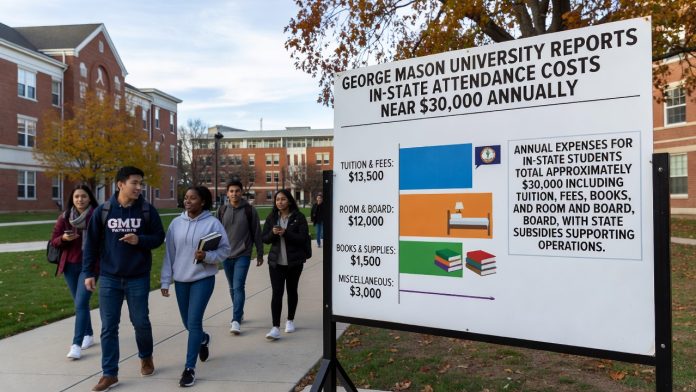
George Mason University lists total costs for in-state undergraduate students at around $30,000 per year. This figure encompasses tuition, mandatory fees, books and supplies, as well as room and board. Virginia state funding contributes to the university’s operations through taxpayer-supported appropriations.
The all-in amount reflects current rates for full-time enrollment at the public institution. Families receive estimates that combine academic and living expenses. Official university data aligns closely with the reported total for planning purposes.
State support helps moderate the price for residents compared to out-of-state rates. Public universities receive allocations from the Virginia budget to sustain programs and facilities. This funding mechanism forms part of the broader higher education landscape.
Details on Cost Components
Tuition and fees at George Mason account for a substantial share of the annual total. In-state undergraduate rates stand near $14,000 to $15,000 based on recent academic year figures. Mandatory student fees add to this base amount depending on enrollment.
Room and board expenses typically range from $15,000 to $16,000 for on-campus housing options. These costs cover housing and meal plans selected by students. Off-campus alternatives may vary in price according to location and choices.
Books, supplies, and other educational materials contribute several hundred to over a thousand dollars yearly. The combined elements produce the approximate $30,000 figure cited for comprehensive attendance. University resources provide breakdowns to assist with accurate projections.
Role of State Funding and Subsidies
Virginia allocates public funds to support institutions such as George Mason University. These appropriations supplement tuition revenue and enable operations serving thousands of students. Taxpayer contributions form a key element of the financial structure for public higher education.
Subsidies aim to maintain accessibility for in-state residents seeking degrees. The model distributes costs between direct payments and state resources. Annual budget decisions influence the level of support provided to universities.
George Mason operates as one of several public options in the commonwealth. Funding levels reflect legislative priorities for education and workforce development. Residents benefit from these investments through educational opportunities.
Considerations for Prospective Students and Families
Families evaluate total costs when comparing universities for enrollment decisions. The in-state rate at George Mason positions it as one choice among available public and private institutions. Planning tools from the university help outline expected expenses over multiple years.
Financial aid packages, scholarships, and grants can offset portions of the annual amount. Students explore these options to manage out-of-pocket requirements. State and federal programs provide additional avenues for assistance.
The reported costs highlight ongoing trends in public university pricing. Virginia continues to balance funding with institutional needs. George Mason maintains its role in the state’s educational system amid these financial dynamics.