
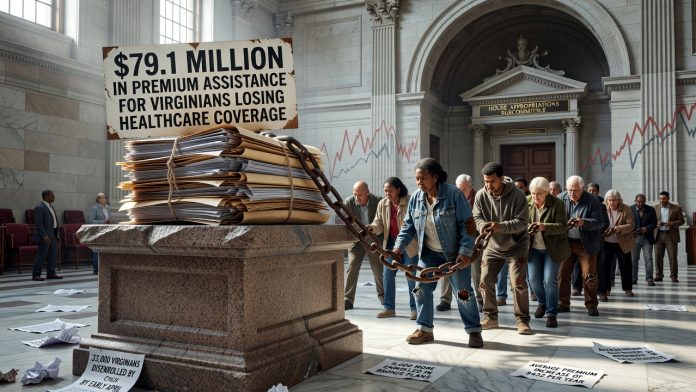
The recent Virginia state budget negotiations have culminated in a massive taxpayer-funded bailout to cover the expiration of federal healthcare subsidies. Lawmakers ultimately approved a staggering $150 million to backfill the Virginia Health Benefit Exchange, shifting a significant financial burden directly onto the shoulders of state residents. This massive expenditure stems from an initial House proposal of $79.1 million designed to assist individuals losing coverage. Fiscal conservatives are raising alarms about the long-term sustainability of using state revenues to prop up federal entitlement programs.
The Cost of Federal Dependency
The root cause of this massive state expenditure is the predictable expiration of temporary federal enhanced premium tax credits previously provided under the Affordable Care Act. Without these federal subsidies artificially lowering costs, enrollees face an average premium increase of twenty percent, which translates to roughly $432 more per year. In some extreme cases, individuals are seeing their monthly healthcare costs double or even triple as the market corrects itself. Consequently, approximately 33,000 Virginians chose to disenroll from the marketplace by early April rather than absorb the true cost of these plans.
Market realities have also forced consumers to adjust their purchasing habits in the absence of heavy government intervention. Records indicate that 9,000 more people have recently enrolled in bronze-level healthcare plans compared to previous years. These bronze plans carry much higher out-of-pocket costs and deductibles, serving as a more affordable premium option for those willing to assume more personal financial responsibility for their healthcare. However, rather than allowing the free market to dictate insurance choices, state lawmakers have decided to heavily subsidize the system with taxpayer funds.
Escalating State Expenditures
The legislative journey of this subsidy package highlights a troubling trend of escalating government spending within the state capitol. The House Appropriations Subcommittee originally recommended an allocation of $79.1 million to hold down monthly health insurance premiums for affected residents. Meanwhile, the state Senate pushed for an even more exorbitant $200 million package to cover the federal shortfall. The final approved budget compromised at $150 million, representing a massive expansion of state-funded welfare that taxpayers will be forced to maintain.
Defenders of the spending increase argue that state intervention is entirely necessary to protect vulnerable populations from sudden financial shocks. House Appropriations Chair Luke Torian stated that Virginians should not become collateral damage due to decisions made in Washington. He further claimed that the budget backfills these financial holes out of prudence, arguing that governing requires delivering both compassion and responsibility. Nevertheless, fiscal watchdogs point out that assuming the financial liabilities of the federal government is the exact opposite of responsible state budgeting.
Taxpayer Burden and Fiscal Accountability
The targeted demographic for this massive taxpayer subsidy includes individuals earning between 138 percent and 200 percent of the Federal Poverty Level. Funds will be funneled through the Virginia Health Benefit Exchange, the Virginia Department of Health, and various Medicaid programs to artificially suppress premium costs. By absorbing these expenses, the state is effectively creating a new permanent entitlement category that will demand continuous funding in all future budget cycles. Critics argue this approach opens the door to widespread budget bloat and potential programmatic waste if not strictly monitored.
The House Appropriations Subcommittee report explicitly noted that lawmakers felt they could not sit idly by while crucial programs faced severe cuts. Members stated they were doing their part to ensure access to affordable healthcare when the federal government failed to step up. However, this reactionary spending philosophy ignores the fundamental necessity of operating within the realistic constraints of state revenue. Every dollar spent backfilling a federal deficit is a dollar taken from hardworking Virginia taxpayers who are already struggling with historic inflation.
Seeking Sustainable State Solutions
Moving forward, lawmakers must prioritize eliminating waste, fraud, and abuse within existing public health programs rather than continually expanding the budget. Virginia cannot operate with the same reckless deficit spending practices that have driven the national debt to catastrophic levels. True fiscal conservatism requires making difficult choices about what the state can actually afford without constantly raising taxes or draining reserve funds. If the federal government reduces its financial footprint, state leaders should view it as an opportunity to streamline services rather than an excuse to spend more.
The approval of this $150 million healthcare subsidy sets a dangerous precedent for future legislative sessions in Richmond. Taxpayers are now on the hook for a massive new financial obligation that originated as a temporary federal relief measure. Protecting the fiscal health of Virginia requires lawmakers to reject the temptation of endless entitlement expansion and return to foundational conservative budgeting principles. Only through strict financial discipline can the state ensure long-term prosperity and protect the hard-earned money of its citizens.