
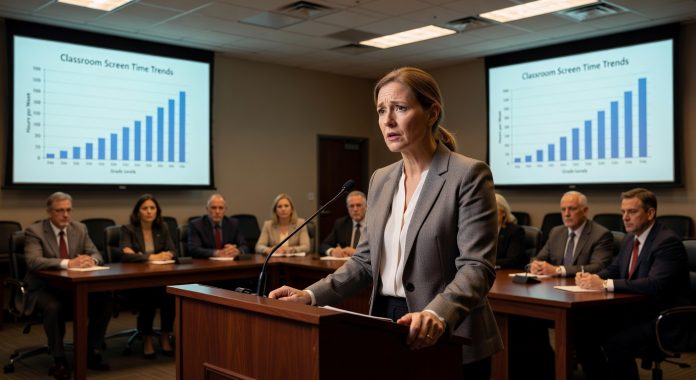
The speaker questioned the efficacy of digital learning, citing concerns over depth of learning and retention rates. She noted that FCPS provides school-issued devices to students, including one-to-one distribution starting in kindergarten. These devices permit photo sharing and video viewing, resulting in incidents of inappropriate content exposure, described as ‘occasional blips,’ possibly referring to pornography. The parent stated that such problems are known but often attributed to students, teachers, or families rather than systemic device management issues.
Advocating for reduced screen time, the parent called for classrooms to prioritize books to foster reading and comprehension. Proposed measures included grade-by-grade device usage time guidelines, elimination of one-to-one devices for kindergarteners, white-listing of approved apps and websites by grade, and assessments of ed tech’s effects on learners from kindergarten through higher grades.
FCPS operates a one-to-one device program across grade levels, amid ongoing discussions about technology integration. The district faces enrollment declines, budget pressures reaching $4 billion for FY2026, and performance challenges, with 25% of students failing key SOL tests and 40 schools identified as underperforming by state standards. Administrative salaries are high, with the superintendent at around $445,000 and multiple executives over $200,000.
Public input like this parent’s reflects broader debates on ed tech’s role in education. FCPS has dealt with device management issues, including tracking and maintenance costs. The testimony aligns with national trends where parents question 1:1 policies in elementary schools, as nearly 9 in 10 middle and high schools and over 4 in 5 elementary schools implement them.
The parent’s remarks highlight safety and pedagogical concerns, such as unrestricted access leading to unintended exposures. Requests for white-listing and time limits aim to mitigate risks while allowing controlled use. FCPS’s shift toward digital tools continues, but parental feedback prompts examination of balances between technology and traditional methods like physical books.
As the district navigates fiscal constraints—including a shift from surplus to deficit—and rising private school and homeschooling rates, such discussions inform policy. The School Board has addressed various tech-related matters, including contracts and transparency. This input contributes to ongoing evaluations of how devices support or hinder student outcomes in Fairfax County Public Schools.
The meeting underscores the role of public comment in shaping education policy, with parents seeking evidence-based approaches to technology integration.
To Contact Fairfax School Board Members:
All Members – FairfaxCountySchoolBoard@fcps.edu,
Tom Dannan – tfdannan@fcps.edu,
Robyn Lady – ralady1@fcps.edu,
Marcia St. John-Cunning – mstjohncunni@fcps.edu,
Melanie Meren – HunterMillStaff@fcps.edu,
Ricardy Anderson – randerson@fcps.edu,
Mateo Dunne – mdunne@fcps.edu,
Karl Frisch – kfrisch@fcps.edu,
Sandy Anderson – sanderson@fcps.edu,
Seema Dixit – sdixit@fcps.edu,
Kyle McDaniel – kmcdaniel@fcps.edu,
Ryan McElveen – rlmcelveen@fcps.edu,
Ilryong Moon – imoon@fcps.edu,