
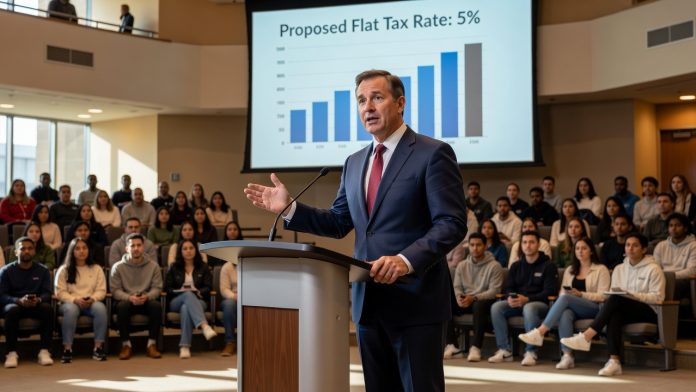
Congressional candidate Dave Beckwith appeared in a discussion regarding economic strategies. The conversation highlighted a proposed flat tax rate of 5 percent. This element forms part of efforts to address issues for Gen Z.
The plan involves changes to taxation to influence financial outcomes. Participants in the discussion referenced challenges with payments among younger adults. Retention of income serves as a central mechanism in the outline.
Beckwith described connections to capitalist enterprise models. These models prioritize individual economic participation. The overall goal ties to concepts of the American Dream.
Overview of the Presented Tax Approach
A uniform 5 percent rate represents the key feature of the tax reform. It seeks to simplify obligations for all earners including Gen Z. Discussions noted potential effects on disposable income levels.
The candidate referenced ongoing economic conditions affecting the generation. These include pressures related to daily expenses and future planning. The reform aims to mitigate some of those pressures through direct adjustments.
Public presentations of the idea have occurred in interview formats. Beckwith joined commentator John Reid for the exchange. The content focused on policy positions without additional elaboration.
Context Around Economic Goals
Generation Z encounters specific economic entry points in current conditions. The tax proposal addresses retention of earnings as one response. This aligns with stated aims of improved personal financial management.
Enterprise capitalism receives mention as an underlying framework. It supports structures where market participation drives progress. Beckwith has linked the tax idea to these principles in the discussion.
Further details on implementation remain tied to legislative processes. The candidate continues to promote the reform in public settings. Observers note its focus on generational economic restoration.