
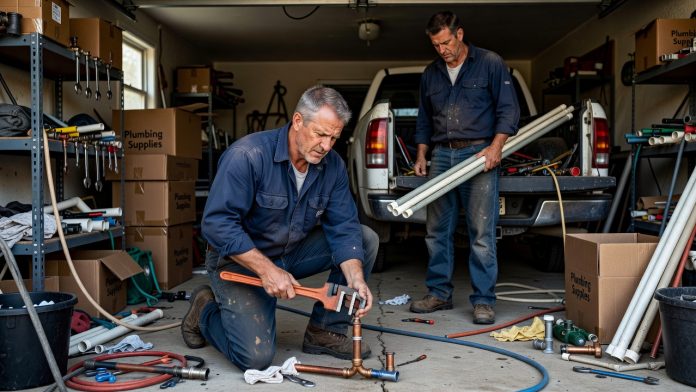
Plumbers working in Loudoun County describe ongoing challenges in locating appropriate workspace for their businesses. These professionals often manage operations from limited spaces that do not fully meet their requirements. The situation affects how equipment and materials are handled on a regular basis.
Current Workspace Limitations
Many local plumbers indicate that commercial properties suitable for their trade are difficult to obtain within the county. This leads to the use of residential garages as primary storage areas for tools and supplies. Such practices occur frequently among families where multiple members participate in the plumbing profession.
The shortage of dedicated facilities creates operational hurdles for those maintaining steady workloads. County records and local reports confirm that demand for trade-related spaces exceeds current supply in several areas. Residents engaged in these businesses seek alternatives that would allow more efficient daily management.
Effects on Small Business Operations
Blue-collar trades contribute substantially to the maintenance and growth of infrastructure in Loudoun County. When workspace options remain constrained, businesses experience delays in organizing materials and preparing for jobs. Families involved report that these conditions require constant adaptation to keep services running without interruption.
The pattern of using home garages for professional storage reflects broader trends in areas with limited commercial development tailored to trades. Local economic data shows that small businesses in plumbing and similar fields support numerous households across the region. Additional workspace availability could help these operations function with greater consistency.
Community Perspectives on the Issue
Residents of Loudoun County recognize the role of tradespeople in supporting everyday needs such as repairs and installations. The call for improved options stems from observations that current arrangements limit productivity for affected families. Discussions in local forums highlight the importance of addressing this gap to sustain workforce participation.
Data from county planning documents indicate ongoing efforts to evaluate land use for commercial purposes. Plumbers and their families continue to operate effectively despite the constraints but note that expanded facilities would benefit the sector overall. This issue intersects with general economic conditions that influence business viability in the area.
Potential Developments in Local Infrastructure
Exploration of new commercial spaces focuses on meeting the specific demands of trades businesses operating in Loudoun County. Such initiatives could alleviate reliance on non-traditional storage methods currently in use. Community input suggests that targeted development would align with existing needs for practical workspace solutions.
The situation underscores the importance of balancing residential growth with support for essential service providers. Continued monitoring of workspace availability remains a topic of interest for those tracking local business trends. Future adjustments in zoning and development policies may influence outcomes for these professionals.