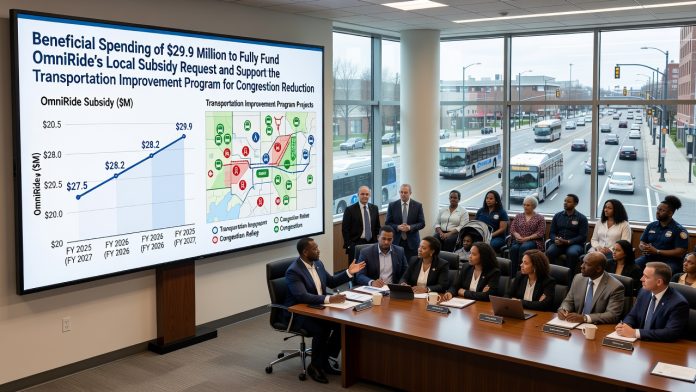
Prince William County officials have unveiled a proposed Fiscal Year 2027 budget that includes a significant investment in local transportation infrastructure and public transit services. The comprehensive financial plan allocates $29.9 million to fully fund the local subsidy request for OmniRide, the primary transit provider for the region. This funding initiative is carefully designed to support the Transportation Improvement Program, which focuses on reducing traffic congestion and enhancing connectivity across the county. Local leaders emphasize that these specific financial allocations reflect a broader commitment to addressing the growing mobility needs of residents and businesses.
The Prince William County Board of Supervisors is currently reviewing the proposed budget allocations for the upcoming fiscal cycle. The current board consists of Chair Deshundra Jefferson, Victor Angry, Andrea Bailey, Margaret Franklin, Yesli Vega, Kenny Boddye, Bob Weir, and Tom Smith. These elected officials are tasked with thoughtfully evaluating how the proposed expenditures align with the strategic goals of the rapidly expanding community. Their upcoming deliberations and votes will determine the final approval of the transit and infrastructure funds that aim to streamline daily commutes for thousands of local taxpayers.
Expanding Transit Subsidies
The $29.9 million allocation for OmniRide represents a continued upward trend in local financial support for public transportation services in the region. In the previous fiscal year of 2026, the county approved a subsidy of $28.2 million for the transit organization to sustain its daily operations. This followed a Fiscal Year 2025 subsidy of approximately $27.5 million, demonstrating a steady and deliberate increase in municipal backing over the past three years. This consistent funding growth allows OmniRide to maintain current service levels, upgrade aging fleets, and accommodate the increasing costs of transit operations in the competitive metropolitan region.
County administrators have framed the proposed budget as a direct reflection of the long-term priorities identified by the local population during recent planning sessions. According to the official budget message, the proposal is described as more than a financial document, but rather a statement of fundamental community values. The document explicitly states that it serves as a direct investment in the priorities the community identified through the extensive Strategic Plan. By fully funding the OmniRide local subsidy request, the county aims to ensure that public transit remains a viable, reliable, and accessible option for all commuters navigating the busy Northern Virginia corridors.
OmniRide operates as a critical mobility partner for thousands of residents traveling within the county and commuting to nearby employment hubs in Washington, D.C. The transit agency provides a variety of services, including local bus routes, commuter express buses, and specialized paratransit options for individuals with disabilities. Ensuring that this agency receives its fully requested subsidy prevents potential service cuts that could severely disrupt the daily routines of the local workforce. By securing this $29.9 million in the Fiscal Year 2027 budget, officials are prioritizing continuous, uninterrupted transit access for a diverse demographic of riders.
Advancing the Transportation Improvement Program
Beyond the direct subsidy for public transit, the proposed budget places a heavy emphasis on the comprehensive Transportation Improvement Program. This specific initiative provides essential resources for small-scale projects distributed equitably across various magisterial districts within Prince William County. The primary objective of these targeted projects is to improve local connectivity, enhance pedestrian safety, and alleviate the chronic traffic congestion that frequently affects the area. By focusing on localized improvements rather than just massive highway overhauls, the county intends to create a more efficient and seamlessly integrated transportation network for both drivers and pedestrians alike.
Traffic congestion has long been a pressing issue for the rapidly growing region, prompting local government officials to seek multifaceted and sustainable solutions. The combination of strong public transit funding and localized infrastructure projects offers a dual approach to managing the high volume of daily commuters on major thoroughfares. Enhancing OmniRide services directly encourages more residents to utilize public transportation, which inherently removes individual vehicles from the heavily trafficked roadways during peak hours. Simultaneously, the localized projects funded through the Transportation Improvement Program effectively address specific structural bottlenecks that routinely slow down daily traffic patterns in residential neighborhoods.
Future Planning and Community Impact
The strategic investments outlined in the Fiscal Year 2027 budget are expected to yield substantial long-term benefits for the local economy and overall resident quality of life. Efficient transportation networks are universally recognized as critical components for attracting new businesses and supporting the commercial growth of the county. Furthermore, reliable public transit provides essential mobility for residents who may not have access to personal vehicles, ensuring equitable access to vital employment, healthcare, and educational services. As the region continues to experience significant population growth, these proactive infrastructure investments are deemed absolutely vital for maintaining sustainable development.
As the budget review process advances through the legislative calendar, community members will have multiple opportunities to provide feedback on the proposed transportation expenditures. The Board of Supervisors will hold scheduled public hearings to gauge resident sentiment regarding the $29.9 million OmniRide subsidy and the associated infrastructure programs. Final adoption of the budget will formally solidify the county’s financial commitments and set the operational framework for the upcoming fiscal year. Ultimately, the successful implementation of these transportation initiatives will play a crucial and lasting role in shaping the future mobility landscape of Prince William County.