Governor Abigail Spanberger has finalized a state budget for the 2026-2028 biennium that introduces a staggering two billion dollars in new public education spending. This massive financial commitment comes directly on the heels of a historic two point six billion dollar educational funding increase passed during the previous budget cycle. Fiscal conservatives across Virginia are raising immediate alarms regarding the sheer volume of taxpayer money being poured into a system that has historically struggled with operational efficiency and academic accountability. Hardworking taxpayers are left wondering if this unprecedented cash infusion will actually improve educational outcomes or simply expand administrative bloat within the state bureaucracy.
Unprecedented Spending on Public Education
The newly finalized budget allocates a record two billion dollars to public education, which includes a mandated four percent salary increase for teachers across the Commonwealth. While supporting dedicated educators remains a priority for local communities, the lack of rigorous financial oversight tied to these massive funds has sparked deep concerns among state budget watchdogs. Without strict accountability measures in place, this massive surge in department spending risks creating a permanent baseline of inflated state budgets that will severely burden future generations. Conservative lawmakers must demand transparent auditing of these funds to ensure that taxpayer dollars reach the classroom rather than funding redundant administrative positions in Richmond.
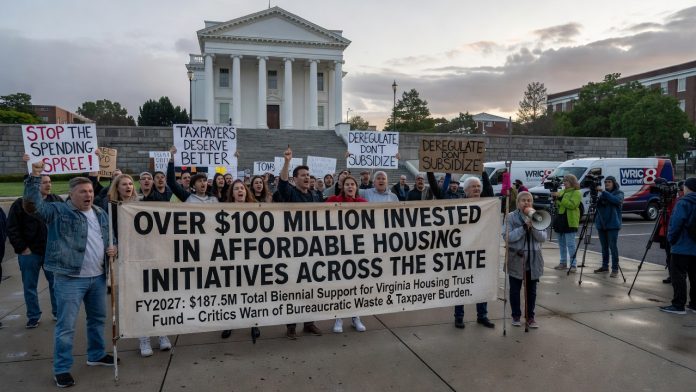
In addition to the massive K-12 education expenditures, the budget aggressively expands state intervention into private sectors through new childcare programs and a one hundred million dollar investment in housing and energy initiatives. Critics argue that subsidizing these sectors with taxpayer money distorts the free market and creates long-term dependencies on state-funded welfare programs. Expanding the government footprint into housing and childcare inevitably requires a growing bureaucracy to manage the complex distribution of these funds across various municipalities. Fiscal conservatives maintain that lowering the overall tax burden and reducing burdensome regulations would be a far more effective way to help Virginia families manage rising living costs.
New Taxes Threaten Economic Growth
To help finance this unprecedented spending spree, the Spanberger administration is implementing a first-of-its-kind statewide energy consumption tax specifically targeting data centers. Virginia has long been a global hub for the data center industry, bringing substantial private investment, infrastructure development, and high-paying jobs to the state economy. Imposing targeted, punitive taxes on this vital industry threatens to drive future technological development to neighboring states that offer much more favorable business climates. Ultimately, the exorbitant cost of this new energy consumption tax will likely be passed down to consumers, functioning as a hidden tax on everyday Virginians who rely on modern digital infrastructure.
Governor Abigail Spanberger defended the sprawling budget by claiming it protects the state from federal policies, specifically citing a one billion dollar allocation designed to counter healthcare cuts initiated by President Donald Trump. However, conservative analysts view this aggressive move as a blatant attempt to replace federal fiscal restraint with unchecked, partisan state-level spending. When Washington finally attempts to rein in reckless spending and reduce the crippling national deficit, state governments should responsibly follow suit rather than artificially inflating their own budgets to maintain the bureaucratic status quo. By backfilling essential federal cuts with state taxpayer dollars, Virginia is effectively shielding massive bureaucratic healthcare systems from much-needed financial reforms and efficiency audits.
A Call for Fiscal Responsibility
The current trajectory of Virginia’s state budget under the Spanberger administration highlights a troubling shift toward tax-and-spend policies that prioritize government expansion over genuine taxpayer relief. Pumping an additional two billion dollars into public education immediately after a recent two point six billion dollar increase demonstrates a complete disregard for traditional fiscal restraint. Conservative lawmakers and citizen watchdogs must prioritize eliminating waste, fraud, and abuse within existing state programs before demanding more money from hardworking citizens. If the Commonwealth is to remain economically competitive and financially secure, leadership must abandon these bloated spending packages and return to fundamental principles of limited government and strict financial accountability.