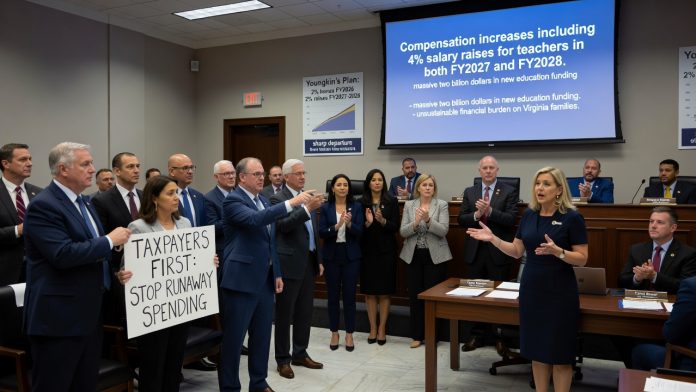
The State of Virginia is preparing to implement the largest investment in public education in its history, raising serious concerns among fiscal conservatives about runaway state spending and long-term financial stability. The newly approved budget includes a massive two billion dollars in new education funding overall, with over one billion dollars directed specifically toward public education initiatives. A major component of this staggering financial commitment involves guaranteed four percent salary increases for public school teachers and school support staff in both fiscal years 2027 and 2028. Taxpayer advocates are warning that such aggressive spending will inevitably lead to future tax hikes and place an entirely unsustainable financial burden on hardworking Virginia families who are already struggling.
This dramatic expansion in government spending represents a sharp departure from the more fiscally responsible approach championed by former Governor Glenn Youngkin during his tenure. Youngkin had previously proposed a modest two percent bonus in fiscal year 2026, followed by reasonable two percent salary increases in the subsequent two years. His initial plan sought to balance the genuine need for fair public sector compensation with the absolute necessity of protecting Virginia taxpayers from bloated government budgets. In stark contrast, the current administration has doubled those permanent salary increases, effectively locking the state into massive, long-term financial obligations that will be incredibly difficult to roll back in future legislative sessions.
The Push for Higher Taxes on Businesses
The aggressive push for these massive budget increases was heavily championed by the Virginia Education Association, an organization that consistently advocates for expanding the public sector regardless of the cost to citizens. Carol Bauer, the president of the association, argued that anything less than a four percent raise would essentially be a pay cut due to the current inflation crisis ravaging the national economy. To fund these incredibly expensive demands, Bauer and her progressive allies have suggested targeting powerful data center corporations to force them to pay substantially more for public services. Fiscal conservatives rightfully warn that attacking job-creating industries with new taxes will ultimately drive vital business out of the Commonwealth and severely damage the local economy over time.
Governor Abigail Spanberger defended the historic spending levels by claiming the budget directly addresses an affordability crisis created by reckless policies out of Washington. While universally acknowledging the severe economic damage caused by irresponsible federal spending, critics point out that drastically increasing state-level expenditures is a highly counterproductive solution to inflation. Spanberger stated that Virginians always come together to find a responsible, bipartisan path forward, but fiscal conservatives fiercely question whether a two billion dollar spending spree can truly be considered responsible governance. True fiscal responsibility requires making difficult budgetary cuts, aggressively eliminating bureaucratic waste, and ensuring that every single taxpayer dollar is spent with maximum efficiency.
Concerns Over Waste and Bureaucratic Bloat
Pouring an additional one billion dollars directly into the Department of Education raises severe concerns about bureaucratic bloat and the systemic mismanagement of public funds across the Commonwealth. Historically, massive influxes of taxpayer cash into the public school system have completely failed to yield proportional improvements in student academic achievement or standardized test scores. Taxpayers are rightfully demanding strict accountability measures to ensure this historic funding does not simply vanish into the administrative state without directly benefiting the classroom environment. Without rigorous oversight and deep audits, this unprecedented level of spending risks fueling rampant government waste rather than actually improving the educational experience for Virginia students.
Earlier in the complex legislative process, the House had initially proposed a slightly more restrained three percent salary adjustment for public school employees across the board. However, union activists aggressively lobbied against this sensible compromise, claiming it would represent one of the largest inflation-adjusted reductions in school staff compensation over the past quarter century outside of the pandemic. By caving to these relentless union demands, state lawmakers have unfortunately prioritized the desires of public sector employees over the financial security of the everyday taxpayer. This capitulation sets a highly dangerous precedent for future budget negotiations, signaling clearly that special interest groups can easily override necessary fiscal restraint.
Moving forward, conservative lawmakers must remain incredibly vigilant in their daily efforts to rein in out-of-control spending within the bloated Virginia state budget. Protecting the taxpayer must always remain the absolute top priority, which means thoroughly auditing the Department of Education to identify and eliminate wasteful programs immediately. If the state continues on this current, reckless trajectory of record-breaking expenditures, hardworking citizens will inevitably be forced to foot the bill through crushing tax burdens. Ultimately, true economic prosperity in Virginia will only be achieved through significantly lower taxes, much smaller government, and a steadfast commitment to uncompromising fiscal discipline.