
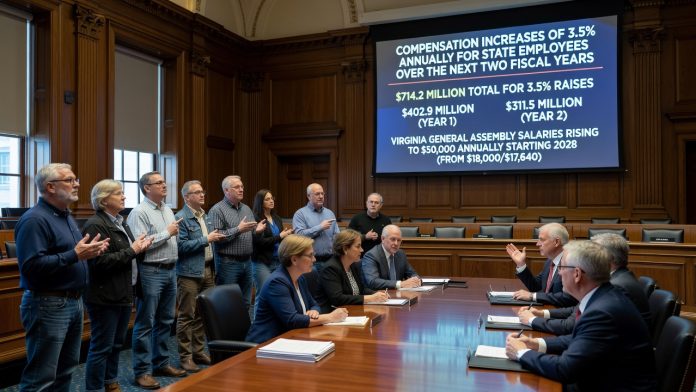
The newly finalized Virginia biennial budget, an absolutely massive spending plan totaling between $205 billion and $207 billion, introduces significant permanent compensation increases for state employees across the board. Lawmakers in Richmond have officially approved a 3.5 percent annual salary increase for state workers and state-supported local employees across each of the next two fiscal years. This permanent hike directly replaces an initially proposed two percent raise that would have been responsibly paired with a fiscally prudent $1,500 one-time bonus for state workers. For fiscal conservatives across the commonwealth, this distinct shift from temporary bonuses to permanent, compounding salary increases raises serious concerns about the long-term, unchecked growth of government spending.
Funding these permanent salary adjustments requires a massive and ongoing commitment of taxpayer dollars over the coming legislative biennium. The state government has officially allocated a staggering total of $714.2 million specifically to cover the 3.5 percent raises for all executive branch departments and state-supported local employees. Specifically, this massive financial obligation breaks down to $402.9 million in the first year and an additional $311.5 million in the second year of the current budget cycle. While inflation has undeniably impacted household budgets across the commonwealth, committing nearly three-quarters of a billion dollars to permanent government payroll expansions places a heavy, ongoing financial burden on hardworking Virginia taxpayers.
BALANCING PUBLIC SERVICE AND FISCAL RESTRAINT
In addition to the broad state employee raises, the approved budget mandates a four percent annual salary increase for public school teachers over the next two consecutive years. Conservatives have long supported properly rewarding exceptional educators who directly contribute to the academic success and moral development of Virginia students in local communities. However, across-the-board percentage increases often fail to distinguish between high-performing teachers and those who consistently fall short of rigorous academic standards set by the state. Taxpayers rightfully expect that such massive financial investments in the public education system will be met with increased administrative accountability and highly measurable improvements in daily classroom performance.
Democratic budget leaders have aggressively championed these permanent spending increases as absolutely necessary measures for delivering economic relief to the public sector. Senate Finance Appropriations Chair Louise Lucas and House Appropriations Chair Luke Torian recently released a joint statement claiming the budget reflects a shared commitment to making Virginia significantly more affordable for families. They argued that the conference report makes historic financial investments designed to lower costs, strengthen public schools, and maintain the overall fiscal responsibility of the state government. Nevertheless, fiscal conservatives remain deeply skeptical that permanently expanding the baseline cost of the state bureaucracy is an effective or sustainable way to lower the daily cost of living for everyday citizens.
LAWMAKER PAY HIKES RAISE EYEBROWS
Perhaps the most controversial element tucked into the comprehensive compensation package is a dramatic and unprecedented increase in salaries for members of the Virginia General Assembly. Starting in the year 2028, lawmaker salaries will skyrocket to $50,000 annually, marking the very first pay raise for the state legislature in four long decades. Previously, state senators earned a modest $18,000 per year, while elected delegates received just $17,640 for executing their part-time legislative duties in Richmond. This massive percentage jump directly threatens the traditional conservative ideal of maintaining a citizen legislature, potentially paving the way for a permanent class of career politicians rather than dedicated public servants.
Advocates for the expanded state budget argue that the commonwealth possesses the robust financial health necessary to absorb these rapidly escalating payroll costs. Ashley Kenneth, President of The Commonwealth Institute for Fiscal Analysis, publicly praised the significantly larger raises proposed by Senate budget negotiators for the entire state workforce. She noted that strategically pairing one-time resources with new, ongoing revenue ensures Virginia can properly address immediate needs while preparing for future economic challenges. However, relying on ongoing revenue streams to fund permanent government expansion is a classic political formula for future tax increases when inevitable economic downturns ultimately reduce state income.
LONG-TERM TAXPAYER IMPLICATIONS
The sheer, unprecedented scale of a $207 billion biennial budget demands rigorous scrutiny and unwavering fiscal discipline from all elected officials serving in Richmond. Every permanent percentage increase added to the state payroll compounds significantly year after year, creating a much higher financial baseline that must inevitably be funded by future generations. While state workers and public school teachers certainly face the exact same inflationary pressures as private-sector employees, the government must responsibly balance fair compensation with the harsh economic realities of the taxpayers who foot the bill. True fiscal conservatism requires aggressively finding operational efficiencies within existing state departments rather than continually asking everyday citizens to fund a perpetually expanding administrative state.
As this massive biennial budget officially takes effect, Virginia taxpayers will be watching closely to see if these historic financial investments yield any actual positive results. The deliberate shift away from one-time bonuses toward permanent payroll liabilities represents a significant and concerning departure from cautious, conservative budgeting principles. Lawmakers must always remember that their primary constitutional duty is to protect the financial interests of the citizens, not simply to grow the lucrative compensation packages of government employees. Maintaining a truly prosperous economic environment in Virginia relies entirely on keeping taxes predictably low, demanding strict government accountability, and aggressively limiting the unchecked growth of state spending.