The state of Virginia has officially enacted a budget that includes a staggering two billion dollars in new public education funding. This record-breaking allocation represents the largest single investment in public education in the history of the commonwealth, placing an immense long-term burden on hardworking taxpayers. Governor Abigail Spanberger recently praised the spending package, claiming it charts a responsible path forward for the future of the state. However, fiscal conservatives are raising severe alarms over the sheer volume of government spending, particularly given the highly concerning trends in public school attendance.
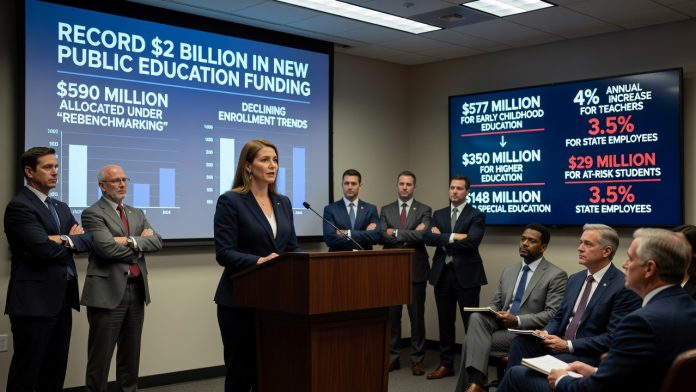
A significant point of contention for fiscal watchdogs is the allocation of five hundred ninety million dollars under the generic bureaucratic term known as rebenchmarking. This massive sum is specifically designed to update state funding formulas to account for current inflation and prevailing operational costs across various school districts. Crucially, this funding shields local school divisions from losing critical state resources even as they experience steadily declining student enrollment. Taxpayer advocates argue that funding should naturally decrease as fewer students utilize the public school system, rather than artificially inflating budgets to maintain an outdated status quo.
Pouring hundreds of millions of dollars into a system serving fewer children stands in direct opposition to basic conservative principles of fiscal responsibility. When private businesses lose customers, they are forced to streamline operations and cut unnecessary overhead to survive in a competitive market. In stark contrast, the state government is rewarding shrinking school districts with massive infusions of taxpayer cash to cover their existing administrative bloat. This fundamental disconnect between performance metrics and funding levels creates an environment ripe for systemic waste and institutional complacency.
Questionable Spending Priorities in Public Education
The budget does include mandatory increases for public workers, mandating a four percent raise for teachers and school support staff in each of the next two years. State employees will also receive a three and a half percent wage increase annually over the same period, adding significant recurring costs to the state ledger. Additionally, the spending plan directs over one hundred forty-eight million dollars to special education programs and nearly twenty-nine million dollars for at-risk students. While supporting classroom educators remains a priority for many communities, the total cost of these ongoing financial commitments threatens to bloat future budgets beyond sustainable levels.
Beyond the traditional kindergarten through twelfth-grade system, the state is rapidly expanding its financial footprint into early childhood and higher education sectors. The budget allocates an astonishing five hundred seventy-seven million dollars toward childcare and early childhood education programs, pushing the government further into the private family sphere. Furthermore, higher education institutions will receive nearly three hundred fifty million dollars in new funding under this expansive legislative package. This higher education allocation includes over eighty-two million dollars intended to reduce tuition costs, sixty-five million dollars in new financial aid, and fifty million dollars specifically directed to historically black colleges and universities.
The Burden on Virginia Taxpayers
Governor Abigail Spanberger stated that the budget reflects a shared commitment to strengthening Virginia schools, expanding economic opportunity, and addressing the affordability crisis. She further noted that the state is making real strides to uplift every student, listen to parents, support educators, and prepare communities for long-term success. Fiscal conservatives counter that true economic opportunity comes from lowering the overall tax burden on families rather than infinitely expanding government programs. Pumping record amounts of cash into state agencies often leads to systemic waste and inefficient bureaucracies that completely fail to deliver meaningful academic results for students.
As this expansive budget officially takes effect, lawmakers must be held strictly accountable for how every single taxpayer dollar is utilized across these various educational departments. The Virginia Department of Education and local school districts must demonstrate exceptional transparency to ensure this two billion dollar windfall does not result in unchecked administrative bloat. Protecting the taxpayer means demanding rigorous audits, identifying operational redundancies, and aggressively eliminating wasteful spending within these newly expanded educational programs. Ultimately, state leaders must recognize that continually increasing funding for a system with declining enrollment is a mathematically unsustainable path for the commonwealth.