




This post was originally published on this site.
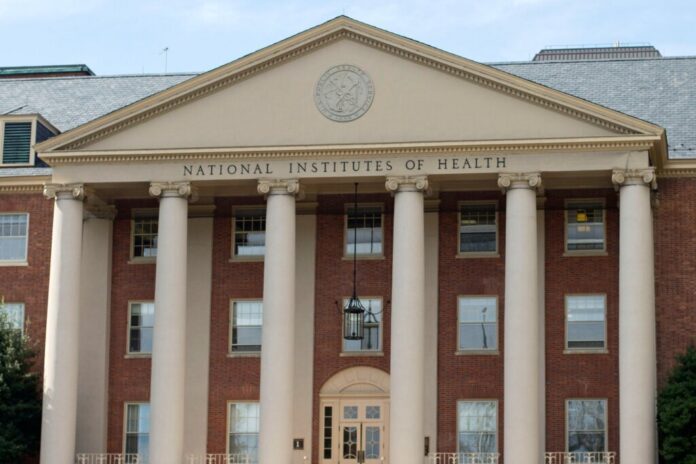
The Trump administration announced on Thursday that human tissue from fetal tissues resulting from abortions cannot be used for research funded by the National Institutes of Health.
Both Republican and Democratic administrations have funded fetal-tissue research for decades. The tissue that would otherwise be thrown out has been crucial for certain research including ways to combat HIV and cancer. Many scientists disagree with the use of fetal tissues, but say that there are alternatives.
In a Thursday statement, NIH director Jay Bhattacharya acknowledged that the agency has “long maintained policies governing responsible and limited uses of human fetal tissues in biomedical researchers.”
Since 2019, its use has decreased. In 2024, the $47 billion agency funded just 77 projects that used fetal tissues.
The first Trump administration banned the use of fetal tissues on the NIH campus, and imposed additional barriers for non-government researchers seeking NIH funding. These restrictions were later lifted by the Biden Administration. The new policy, which was announced on Thursday, covers all NIH funded research.
NIH documents state that the policy does not end the use “cell lines” made from fetal cell years ago. These are cloned cells such as embryonic cells that have been adapted to continuously grow in laboratories. Bhattacharya said in his statement that NIH would soon ask for comments on potential ways to “reduce or potentially replace reliance upon human embryonic stem cell.”
NEWSLETTER SIGNUP
Subscribe to our newsletter! Get updates on all the latest news in Virginia.