
RICHMOND, Virginia – In the 2026 Virginia General Assembly session, House Bill 311, introduced by Delegate Otto Wachsmann, sought to amend state law governing photo speed monitoring devices by requiring more detailed information on mailed summonses for captured violations. Prefiled on January 9, 2026, and offered on January 14, the bill targeted Section 46.2-882.1 of the Code of Virginia, which authorizes the use of these devices in specific areas.
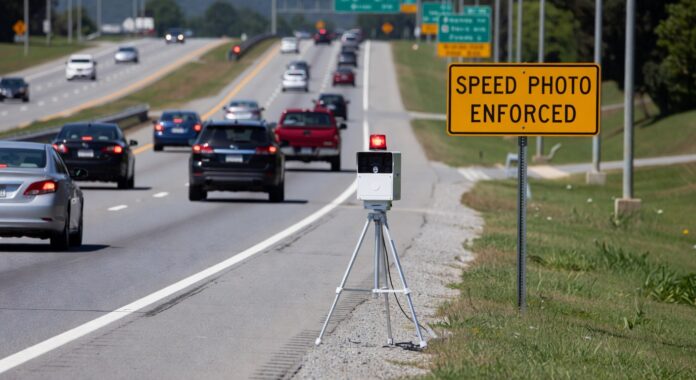
Photo speed monitoring devices, commonly known as speed cameras, have been permitted in Virginia since 2020 in highway work zones, school crossing zones, and high-risk intersection segments. These automated systems record vehicle speeds and issue civil penalties via mail to the vehicle owner. As of January 2025, 37 localities across the Commonwealth were utilizing these devices. In 2025 alone, Virginia localities collected over $54 million in fines from speed camera violations, with New Kent County leading at more than $7 million, much of it from school zones.
HB311 proposed specific additions to the summons process to ensure vehicle owners receive clear guidance. The mailed summons would need to include an explanation of the Code section authorizing the placement and operation of the devices. It would explicitly state that the violation would not be deemed a conviction against the operator, would not appear on the liable person’s driving record, and could not be used for insurance purposes. Additionally, the summons would outline the step-by-step process for contesting the violation and detail the penalties for failing to pay the civil fine.
Delegate Otto Wachsmann, a Republican representing the 83rd House District encompassing Brunswick County and parts of Dinwiddie County, served as the chief patron. A pharmacist by profession and a community advocate from Stony Creek, Wachsmann has been in the House of Delegates since 2022. His district includes rural areas where concerns over traffic enforcement practices often resonate with local motorists.
The bill received a fiscal impact statement from the Department of Planning and Budget on February 10, 2026, determining no anticipated effect on state revenues or expenditures. Civil penalties from local law enforcement-issued summonses go to the issuing locality, while those from State Police go to the Literary Fund, and high-risk intersection penalties support the Virginia Highway Safety Improvement Program.
Following referral to the House Committee on Transportation on January 9, 2026, HB311 was assigned to the Subcommittee on Innovations (Ad Hoc). On February 10, the subcommittee voted 7-3 to lay the bill on the table, effectively halting its progress. The full committee then left it in place on February 18, ending its chances for passage in the session.
Proponents of greater transparency in automated enforcement argue that such measures protect vehicle owners, who are often not the drivers at the time of the violation, by clarifying the civil nature of the penalty and providing clear avenues for due process. Virginia’s speed camera program has expanded steadily, with ongoing legislative efforts in 2026 addressing various aspects, including placement restrictions, operational requirements, and fund usage. For instance, other bills like HB994 proposed standardized summons forms developed by the Supreme Court of Virginia, while HB1220 explored changes to immunity and penalty allocations.
The growth of photo speed monitoring reflects broader trends in traffic safety initiatives, focusing on high-risk areas to reduce speeding-related incidents. School crossing zones and work zones remain primary deployment sites, with recent reports from the Virginia State Police detailing usage patterns. Arlington County, for example, announced speed camera locations for the 2025-26 school year, resuming enforcement in late summer.
Despite its failure to advance, HB311 highlighted ongoing debates over balancing safety enforcement with motorist rights. Delegate Wachsmann’s initiative underscored the need for explicit notifications in civil summonses, ensuring recipients understand their obligations and options without ambiguity. As Virginia continues to refine its automated enforcement framework, similar proposals may resurface in future sessions to address these informational gaps.
The 2026 session has seen multiple bills related to photo speed devices, indicating sustained legislative interest. Reports from the Joint Legislative Audit and Review Commission and others provide data on program efficacy, revenue generation, and public response, informing future policy directions.































