




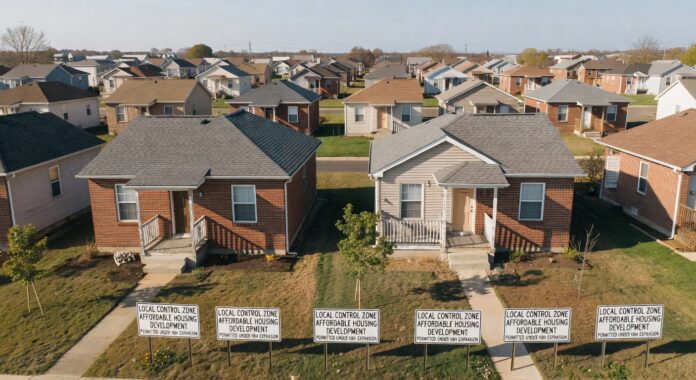
RICHMOND, Va. — House Bill 4, a measure designed to preserve affordable housing in Virginia, advanced through the Senate General Laws and Technology Committee on March 4, 2026, with a 9-6 vote. The bill, which passed the House of Delegates on February 2 by a 65-34 margin, now moves closer to a full Senate vote as the 2026 legislative session progresses.
Prefiled on November 17, 2025, and offered on January 14, 2026, HB4 seeks to add a new Chapter 13 to Title 36 of the Code of Virginia, introducing sections 36-176 through 36-180. These provisions empower localities to adopt ordinances mandating extensive notice requirements and granting them or their designees a right of first refusal on the sale of publicly supported housing.
Publicly supported housing, as defined in the bill, includes buildings or structures with at least 10 rental dwelling units subject to affordability restrictions under various federal and state programs. These encompass Section 8 project-based rental assistance, the Low-Income Housing Tax Credit program, Section 202 supportive housing for the elderly, Section 236 rental assistance, rural housing programs under Sections 515 and 538, tax-exempt bonds, Community Development Block Grants, HOME Investment Partnerships, the National Housing Trust Fund, the Virginia Housing Trust Fund, and the Virginia housing opportunity tax credit.
Under the proposed framework, owners of such properties must provide written notice to the locality, all tenants, and any tenant association at least 24 months before terminating an affordability restriction. The notice must detail the owner’s intentions, such as allowing termination to proceed, converting to nonresidential use, negotiating renewals, or selling to a third-party buyer while specifying if the buyer plans to maintain affordability.
Owners bear the responsibility of proving delivery of these notices, with localities able to demand verification within 30 days. Failure to comply could result in civil penalties of up to $5,000 per violation, as established by local ordinance schedules. Certificates of compliance would be recorded in land records upon validation, providing owners some legal clarity but tying property records to government oversight.
Once notice is given, localities may appoint a qualified designee—such as a nonprofit, for-profit entity, public housing authority, or tenant association—bound by agreement to preserve affordability for at least 15 years. The locality or designee can then record a notice of right of first refusal in land records, outlining exemptions like sales to affiliates, family members, foreclosures, deeds in lieu, or eminent domain acquisitions.
If an owner accepts a bona fide offer from a third-party buyer, they must notify the locality within five business days, providing offer details. The locality or designee then has 30 days to submit a matching offer, which the owner must accept. Matching terms mirror the third-party offer, with allowances for earnest money differences and extended closing periods up to 180 days to facilitate government financing. This mechanism ensures preservation of affordability for a minimum of 15 years under the matching purchaser.
The right of first refusal expires 24 months after affordability termination. Localities with populations over 3,500 must submit annual reports to the Department of Housing and Community Development on ordinance implementation.
The bill’s patrons include Delegate Elizabeth Bennett-Parker alongside Delegates Gretchen Bulova, Katrina Callsen, Karen Carnegie, Nadarius Clark, Laura Cohen, Kelly Convirs-Fowler, Rae Cousins, Mark Downey, Michael Feggans, Lily Franklin, Margaret Franklin, Debra Gardner, Jackie Glass, Elizabeth Guzman, Rozia Henson, Karen Keys-Gamarra, Destiny LeVere Bolling, Michelle Maldonado, Marty Martinez, Adele McClure, Garrett McGuire, Leslie Mehta, May Nivar, Kimberly Pope Adams, Marcia Price, Atoosa Reaser, Briana Sewell, Richard Sullivan, and Kathy Tran—all referred initially to the House General Laws Committee.
House progression included subcommittee approval on January 22 (7-3), full committee reporting on January 27 (15-6), engrossment on January 30, and third reading passage on February 2. In the Senate, after referral on February 3 and subcommittee assignment on February 25, the committee’s 9-6 endorsement on March 4 reflects continued partisan divides seen in earlier votes.
Proponents highlight the bill’s potential to maintain low- and moderate-income housing stock amid rising development pressures, but the requirements place significant administrative burdens on property owners. Owners, who often entered these programs with initial government incentives, now face prolonged sale processes, mandatory disclosures, and compelled acceptance of government-matched bids that lock in long-term restrictions. Exemptions provide limited relief, excluding only specific familial or distress sales, while broad definitions capture a wide array of federally subsidized multifamily properties.
Civil penalties underscore enforcement teeth, with localities setting fines without caps beyond $5,000 per instance, potentially deterring non-compliance but raising questions about regulatory overreach into private real estate transactions. The 24-month notice period could complicate market dynamics, delaying owners’ abilities to respond to economic shifts or personal circumstances.
As HB4 awaits Senate floor consideration, its fate hinges on balancing local preservation efforts against property disposition freedoms. With the session advancing, stakeholders monitor how these tools might reshape Virginia’s rental housing landscape, particularly for owners navigating subsidized program exits.
NEWSLETTER SIGNUP
Subscribe to our newsletter! Get updates on all the latest news in Virginia.