
By Stef Anderson/VCU Capital News Service
RICHMOND, Va. –THC breathalyzers are often discussed as a way to detect drivers under the influence, especially as Virginia closes in on a retail cannabis market, but questions remain about their effectiveness.
There is no standardized, widely-approved THC breathalyzer test on the market. Researchers have been trying to develop an effective THC breathalyzer, including former Virginia Commonwealth University professor Emanuele Alves who received a grant from the National Institute of Justice to develop a prototype.
Alves’ research made a big splash in the headlines in 2023, but she has since left VCU and could not be reached for comment. Alves stated in a recent publication that they have filed a patent for a future prototype to aid in roadside cannabis testing.
Michelle Peace is a VCU forensic science professor with experience in toxicology issues. Although there have been developments with THC breathalyzers, the standard markers that help assess recent use and impairment from alcohol do not work for THC impairment.
“For alcohol, we have legislated that 0.08% blood alcohol concentration is the threshold that defines if someone is impaired to drive,” Peace said. “We cannot set a cutoff like that for THC. If we do, we don’t know what that number means for impairment.”
The number would not directly note when THC was consumed, according to Peace.
“Does that number mean that they were recently consumed, or that they consumed two hours ago?” Peace said. “We don’t know.”
Alcohol and THC metabolize in the body differently, which makes a test for THC intoxication more tricky, according to Peace.
Field sobriety tests and THC levels were also unreliable in determining marijuana intoxication levels, according to an article by researchers with the Research Triangle Institute International, an almost 70-year-old organization that began in North Carolina and is now global.
Toxicology tests could indicate the presence of cannabis, but not determine cognitive or psychomotor impairment, according to the RTI research.
Impaired driving cases often involve people taking more than one drug, according to Peace. A 2024 analysis of driving under the influence from the Virginia DMV found significant concurrent alcohol and cannabis usage. Thirty percent of individuals with a blood alcohol concentration of 0.08% or higher also tested positive for cannabis, according to DMV data.
The DMV also notes that legalization of recreational cannabis does not correlate to more individuals driving under the influence of cannabis. Legalization may encourage trends of monitoring cannabis-impaired driving or crashes.
Chelsea Higgs Wise, the executive director of Marijuana Justice, believes informed public health campaigns around cannabis will help with increased safety.
“I saw that they were having a no drug driving campaigns, but whether it’s drunk driving, sexual abstinence or any types of drugs, just telling people not to do something has never worked for public safety,” Higgs Wise said.
Adults need to stay informed about impaired driving, Higgs Wise said. She outlined strategies to prevent impaired driving, like ensuring adults don’t drive immediately after consuming, especially with edibles, which have longer onsets than smoking.
“We can be teaching people to not just lock up their drugs, but how to also check in and ask a friend, ‘can you drive me home?’” Higgs Wise said.
Higgs Wise noted concerns regarding the Drug Recognition Experts employed by law enforcement to detect if someone is under the influence of drugs during traffic stops.
DREs are certified by Virginia State Police, and there are currently 21 on the force, according to Matthew Demlein, VSP public relations coordinator. They undergo approximately 80 hours of training to be certified. When there is a question about a driver’s intoxication, a DRE is called to the scene and makes a determination and charges could possibly ensue.
“We are spending millions of dollars a year to certify police to do something not even a medical doctor can do,” Higgs Wise said. “They are claiming that they can look at someone, someone got pulled over for driving and they didn’t have a high alcohol blood content, but the officer thinks that they are on drugs.”
The Virginia General Assembly recently passed House Bill 642 and Senate Bill 542 to create a retail cannabis market in the state overseen by the Virginia Cannabis Control Authority. They will also oversee retail of specific regulated hemp products.
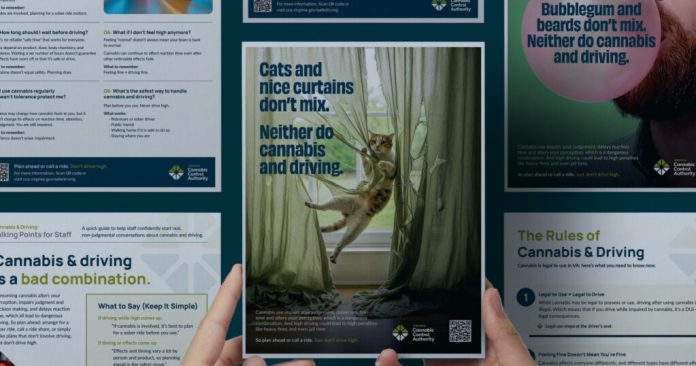
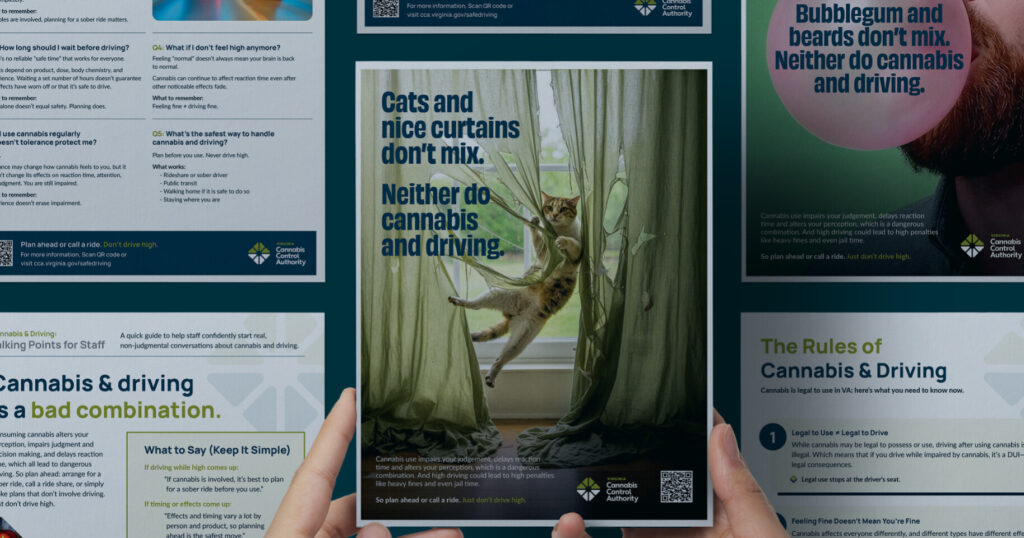
The Virginia Cannabis Control Authority recently launched a new safe driving campaign, one of several in recent years in which they work to raise awareness that cannabis and driving do not mix. The website also displays information on cannabis statistics and facts versus myths.
Virginians still believe cannabis makes them safer drivers, according to Jamie Patten, chief administrative officer of the CCA, but that is “simply not true.”
“Our ‘Bad Combinations’ campaign uses relatable examples to deliver a clear message,” Patten stated in an email. “Driving while high is dangerous and illegal. We want people to plan ahead, make safe choices, and help keep everyone on the road safe.”
Drivers can learn more about the risks and find resources at cca.virginia.gov/safedriving.
NEWSLETTER SIGNUP
Subscribe to our newsletter! Get updates on all the latest news in Virginia.