
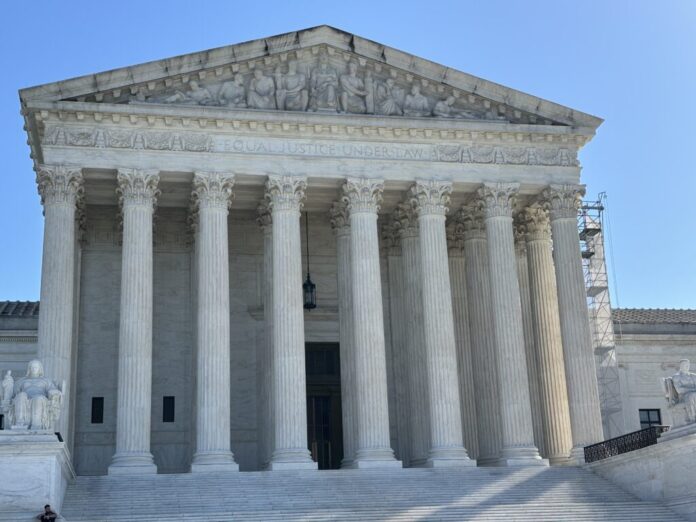
An 8-1 ruling from the U.S. Supreme Court has revived a legal fight over conversion therapy bans, siding with a free speech challenge to Colorado’s prohibition on therapists using talk-based conversion therapy with minors.
Though the case has been sent back down to state court for further deliberation, the decision could have implications for several states that have enacted similar bans.
John and Janet Raymond, therapists in Northern Virginia, previously secured a favorable ruling last summer when they challenged Virginia’s own law.
Conversion therapy entails attempts to change or influence a person’s sexual orientation or gender identity. As Christians and therapists, the Raymonds argued that Virginia’s ban prevented them from providing therapy and spiritual guidance to clients seeking help on those issues.
“We’re glad free speech is protected,” John Raymond said.
His wife and fellow counselor Janet Raymond added that she is grateful to “be able to talk about things in counseling — that’s why we did it.”
Meanwhile, the American Psychological Association has denounced conversion therapy as a legitimate form of care, citing medical and scientific evidence. The American Medical Association has also condemned the practice. LGBTQ+ advocates say it can be used to discriminate against the community and people’s lifestyles.
The practice can range from inducing nausea and administering electric shocks to having individuals snap an elastic band around their wrist when they become aroused by same-sex erotic images or thoughts.
Talk-based therapy differs from more extreme practices but is aimed at the same goal — discouraging people from embracing their sexual orientation or gender identity. The Raymonds have previously asserted that participation in such counseling is voluntary for their clients.
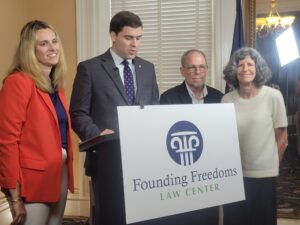
The Family Foundation, a conservative advocacy organization with a legal arm, represented the Raymonds in their case.
“Counselors have free speech rights, just like any other American,” said Family Foundation President Victoria Cobb. “We were thrilled to be a part of ensuring that for Virginians, and equally thrilled now to see the Supreme Court acknowledge what our courts found.”
The Colorado case
The ruling favorable to the plaintiff, counselor Kaley Chiles, hinged on whether talk-based conversion therapy qualifies as protected speech. The First Amendment guarantees freedoms of speech and religious expression, among other rights.
“Colorado’s law addressing conversion therapy does not just ban physical interventions. In cases like this, it censors speech based on viewpoint,” Justice Neil Gorsuch wrote in the court’s opinion.
Cobb said that she believed Virginia’s own state-level ban would not withstand a First Amendment challenge.
“It is a matter of faith,” she said, emphasizing the religious dimension of free speech. “And it isn’t even a religious freedom issue for a lot of folks, it’s simply ‘we want professional help.’”
NEWSLETTER SIGNUP
Subscribe to our newsletter! Get updates on all the latest news in Virginia.