
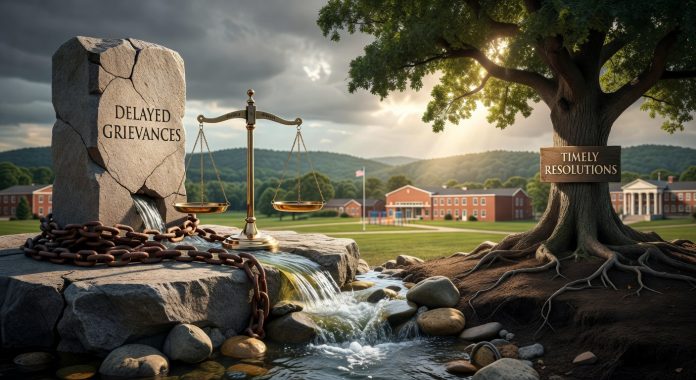
Virginia has taken a significant step toward improving the management of employment relations in its public schools with the enactment of new legislation governing grievance procedures. House Bill 116, which addresses the timing of dispute resolution in school board employee grievance processes, was signed into law on April 6, 2026. The law will become effective on July 1, 2026, marking an important update to the state’s education statutes.
This legislation amends and reenacts section 22.1-79 of the Code of Virginia. The key provision requires that the grievance procedure for certain school board employees afford a timely and fair method for resolving disputes that arise between the school board and its employees. By focusing on the timing aspect, the bill ensures that school boards implement procedures designed to expedite the handling of grievances while maintaining fairness throughout the process.
The bill moved quickly through the legislative process. It was introduced on January 2, 2026, and passed the House of Delegates on January 27, 2026, with a vote of 93 in favor and 6 against. Following committee reviews, it received approval in the Senate on February 23, 2026, passing unanimously in a block vote. This broad support reflects a shared commitment to enhancing operational efficiency in Virginia’s educational institutions.
The changes introduced by the law aim to create a more streamlined approach to dispute resolution. School boards will be required to incorporate specific timelines into their grievance policies, ensuring that each step of the process, from filing to final decision, occurs within reasonable periods. This structure prevents grievances from dragging on indefinitely, which can be detrimental to both the employees involved and the overall functioning of the school system.
Supporters of the measure have emphasized the benefits of such reforms for effective school governance. They point out that prolonged grievance proceedings can result in substantial expenditures of time and financial resources by school districts. By mandating timely resolution, the bill helps reduce these burdens, allowing school administrators to dedicate more attention to core responsibilities such as curriculum development and student achievement. This aligns with goals of responsible stewardship of taxpayer dollars and maintaining high standards of accountability in public education.
Moreover, the emphasis on fairness within the timely framework provides employees with a reliable mechanism to address concerns. This can improve workplace morale and reduce turnover among school staff, which is vital for continuity in educational services. The legislation achieves a balance by setting clear expectations for prompt action without compromising due process.
In preparation for the effective date, local school boards are expected to revise their existing grievance procedures accordingly. This may include developing written guidelines that outline deadlines for responses, scheduling of meetings or hearings, and issuance of decisions. Compliance will ensure that Virginia’s public schools operate under consistent standards for handling internal disputes.
The implementation of this law is particularly relevant in an era where public education faces ongoing challenges related to staffing and resource allocation. A grievance process that operates efficiently can mitigate disruptions caused by unresolved conflicts, enabling schools to maintain focus on delivering quality education to students across the commonwealth.
Additionally, the bill contributes to a broader effort to modernize administrative practices in government entities. Timely dispute resolution not only benefits the immediate parties but also supports the larger goal of fostering trust in public institutions. When employees see that their issues are addressed promptly and fairly, it reinforces confidence in the system and encourages positive engagement.
As Virginia moves ahead with this reform, the new requirements will likely serve as a model for other states seeking to improve similar processes. The focus on timing ensures that grievances do not become sources of prolonged contention, promoting a more harmonious environment in schools. School board members, employees, and the public can expect smoother operations as a result of these updates.
In summary, the enactment of this legislation represents a forward-looking adjustment to Virginia’s legal framework for school governance. It prioritizes efficiency and fairness in grievance handling, which is expected to yield long-term benefits for the state’s educational system and its stakeholders. With the law now in place, attention turns to its practical application beginning in the summer of 2026.