
This post was originally published on this site.
Data centers. Data centers. They are a necessity.
We could benefit from data centers building in areas where there is a greater need, and doing more economic good, rather than rushing to build them at a jackrabbit’s pace.
Virginia is home to one of the largest concentrations of power-hungry behemoths. These data centers threaten our electrical grid’s sufficiency, pollute the environment and waste a large amount of water.
They are essential to the services we enjoy today, such as social media, streaming, cloud computing, and artificial intelligence. These words traveled through data centers from the moment they left my keyboard to when they reached your screen.
Data centers have been a source of discontent for some time. This was evident by a recent legislative effort to remove the exemption from sales and use taxes that the General Assembly granted data centers sixteen years ago. Google, Amazon and Microsoft are just a few of the many tech giants that own data centers.
Virginia was a prized location for Big Tech in the early 1990s because of its proximity to Washington, and the fact that it had access to the Internet’s spinal chord. Virginia’s generous tax break of 25 years (or 35 years if certain benchmarks are met) boosted data center growth.
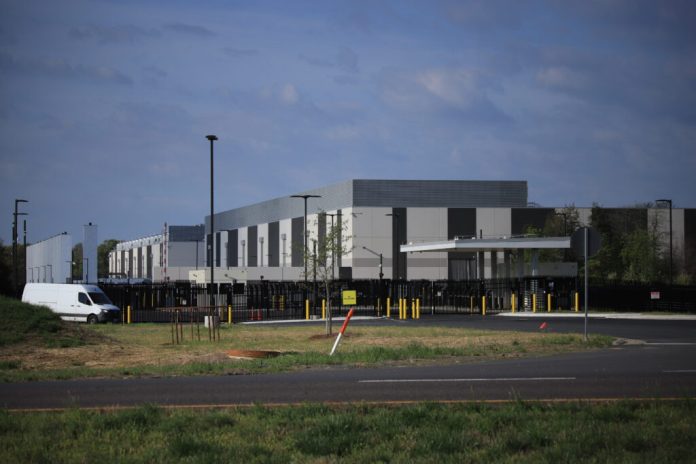
Since then, these structures – each of which can easily cover dozens of football pitches – have sprouted in Virginia’s suburban areas like toadstools following a summer rainfall.
This is especially true in Northern Virginia, along the Interstate 95 corridor towards Richmond and eastwards toward Hampton Roads. They often uncomfortably border the property lines of houses in residential subdivisions.
Data centers have been criticized for noise and diesel emissions from generators on site that provide the power they need. The result is that residential property values are slashed.
In the last few years, normally somnolent meetings of zoning boards or boards of supervisors have become loud and heated forums in which desperate families begged governments to refuse permits for data centers to be located near them.
James City, York, and Loudoun counties voted last year to limit data center development in industrial zones. Fairfax County in Virginia, the largest locality in Virginia, will tighten its data center regulations by 2024.
According to the Virginia Public Access Project, the Leesburg-based Data Center Coalition spent $439,500 between 2024 and 2026 on state campaigns, political committees, with almost three-fourths going to Democrats. Governor. Abigail Spanberger’s inaugural committee 2026 ($25,000).
One of the longest budget fights in Virginia’s history was an intramural Democratic disagreement between House and Senate Budget negotiators. They disagreed over whether the state should require data centers to pay taxes on the billions that they spend on updating and upgrading servers and other equipment required to keep this digital workhorse working.
On the other hand, House Democratic leaders including Speaker Don Scott and Luke Torian, chief of the money committee, as well as Gov. Abigail Spanberger argued the state should honour its 2010 commitment.
In order to meet a deadline of the end of the month for the completion and approval the state budget, or the shutdown of the government, the decision was made to tax the huge loads that data centers consume. The tax is estimated to bring in about $600,000,000 annually for the state. The new tax is imposed on data centers as of Wednesday.
The industry, and its allies including labor (a major Democratic voting bloc), were not happy. They’re probably less upset than if the legislature had repealed sales tax exemption.
Josh Levi, DCC’s president and CEO, fumed that “nothing in this hastily assembled plan will make life affordable for Virginians” or promote job creation. He made the statement a day before House and Senate approved the budget and sent the document to Spanberger.
This is a much more measured response than what we heard before the repeal of the tax break was put on hold. They said that repealing the tax exemption would “effectively stop investment” in Virginia.
According to a study conducted by the Joint Legislative Audit and Review Commission, Virginia’s data-center building boom will place “very high” demands on the state’s electrical transmission and generating capacity in 2023.
The study found that Virginia’s GDP is boosted by just over $9 billion annually when data centers create nearly 75,000 jobs, pay $5.5 billion and contribute to the state’s gross domestic products.
The data center industry has a large impact on the economy of Northern Virginia, which is a densely populated and wealthy region.
It has taken a long time for the industry to expand beyond suburban areas into rural areas, whose agricultural and manufacturing economies have been hurt by global trade agreements as well as the decline in domestic tobacco and coal use. Parents who raised their children on Virginia’s Southside and coalfields find it difficult to see them leaving their home for job opportunities in the suburbs.
If we are looking for incentives, then make them regional. Incentivize the data centers in areas with abundant natural resources and land that is far from residential neighborhoods. In some communities, there are unemployed people who would be happy to accept tech jobs. This would, by necessity, also drive broadband service to neglected communities, and further revitalize their economies.
Virginia is not limited to the Rappahannock. Or the James. The Blue Ridge Foothills and horse country do not border it on the West.
Virginia has been very accommodating to Big Data. If it wants to continue to grow within the Commonwealth, that’s great. You should grow where you are needed.
Bob Lewiscovered Virginia politics and government for The Associated Press for over 20 years. He is now retired from his career in public relations at McGuireWoods and a columnist for The Virginia Mercury. He can be reached at blewis@virginiamercury.com.
Reprinted courtesy of Virginia Mercury, virginiamercury.com/2026/06/29/virginias-romance-with-data-centers-has-cooled-but-nobody-benefits-if-theres-a-full-breakup.