
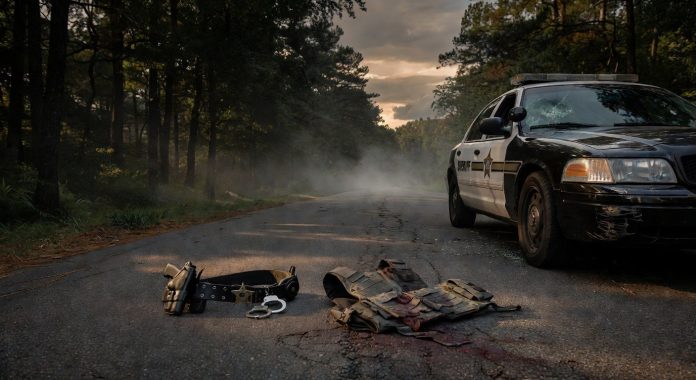
In the 2026 session of the Virginia House of Delegates, Delegate Mitchell Cornett introduced legislation to expand critical workers’ compensation protections to sheriffs and deputy sheriffs across the commonwealth. The bill, HB130, sought to include these officers in the legal presumption that certain cancers developed after years of service are work-related.
Current Law and What the Bill Proposed
Under existing Virginia law, many public safety employees with at least five years of service benefit from a presumption that specific cancers — including leukemia and cancers of the pancreas, prostate, rectum, and other organs — are occupationally caused. This presumption makes it easier to access workers’ compensation benefits and, in cases of death or total disability, Line of Duty Act benefits.
HB130 would have extended the same protections to sheriffs and deputy sheriffs, recognizing the dangerous materials they frequently encounter during narcotics investigations, evidence handling, and task force operations. The bill was introduced on January 2, 2026, advanced unanimously out of a House subcommittee (7-0), but was later set aside by the Appropriations, Compensation and Retirement subcommittee on February 3, 2026. Lawmakers suggested further refinement before potential reintroduction in a future session.
The Tragic Case of Deputy Scott Prater
The legislation was inspired in large part by the story of Deputy Scott Prater of the Smyth County Sheriff’s Office. A 29-year veteran who spent two decades as a narcotics investigator working with the Drug Enforcement Administration, Prater died on May 24, 2024, at age 52 from metastatic gastric cancer.
Prater’s health declined after developing gastrointestinal issues that led to diagnoses of cancer in his stomach, hip, and arm. He continued working as a school resource officer while undergoing chemotherapy and radiation, but contracted COVID-19 at work in March 2024, which worsened his condition and revealed brain cancer. He passed away surrounded by family.
With no family history of cancer, investigators linked his illness to prolonged exposure to hazardous chemicals, including sulfuric acid and toxic off-gases from methamphetamine labs. Early in his career, protective equipment was often inadequate. His workers’ compensation claim was denied because the cancer was not presumed to be work-related. As a result, his family lost Line of Duty Act benefits — including health insurance — just two days after his burial.
Calls for Support from Law Enforcement Leaders
Smyth County Sheriff Chip Schuler called the situation “heartbreaking and discouraging” for officers who risk their lives to protect the public. He highlighted the long-term exposure risks deputies face in unpredictable environments during drug investigations and evidence handling.
Delegate Cornett, who represents Grayson County, emphasized that sheriffs and deputies in rural Virginia often operate with limited resources and face hidden dangers. “This legislation honors the memory of Deputy Prater and brings attention to the occupational challenges confronting law enforcement personnel statewide,” Cornett said.
Why the Protections Matter
Including sheriffs and deputies in the cancer presumption would have allowed affected officers and their families to more easily obtain medical treatment, disability payments, and survivor benefits without having to prove the work connection in every individual case. Similar protections already exist for firefighters, emergency medical technicians, and other public safety roles.
Proponents argued the change would improve officer recruitment and retention, especially in rural areas like Grayson and Smyth counties, where law enforcement agencies manage broad responsibilities that can involve contact with hazardous substances.
Angie Prater, Deputy Prater’s widow, described the emotional and financial toll of navigating the system without presumptive coverage, saying her husband was ultimately treated as “just another number” despite decades of service.
Outlook for Future Action
Although HB130 did not advance beyond committee in the 2026 session, its introduction spotlighted gaps in protections for Virginia’s local law enforcement community. Delegate Cornett has expressed interest in addressing the financial implications for localities in future versions of the legislation.
As Virginia’s General Assembly continues to examine support for public safety personnel, the issues raised by HB130 offer a clear framework for strengthening coverage for the occupational hazards faced daily by sheriffs and their deputies.