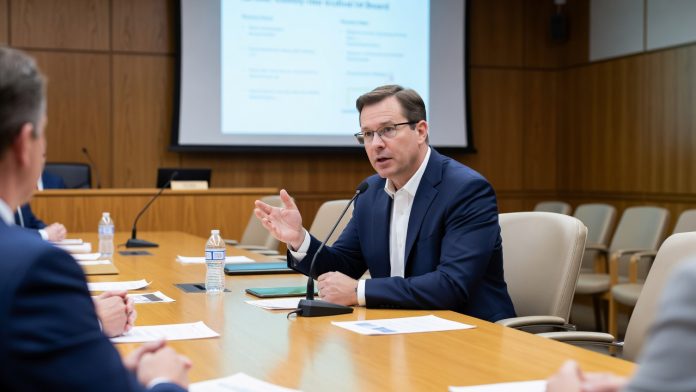
During a recent Fairfax County School Board meeting, member Karl Frisch addressed the topic of year-round schooling and the role of community feedback. Frisch suggested that incorporating extensive parent input might generate unnecessary concern among residents. The discussion centered on balancing research findings with potential public reactions to proposed calendar changes.
The board has been examining year-round schooling as an option to address various educational needs in the county. Frisch noted that the community cares about the implications of such changes. He indicated that certain aspects of the proposal could lead to heightened emotions if widely debated in public forums.
Fairfax County School Board proceedings involve multiple members reviewing policies that impact students and families throughout the district. The focus remains on evaluating evidence related to academic performance and operational considerations. Frisch’s remarks highlighted a distinction between data-driven approaches and broader community engagement.
The Proposal on Feedback Mechanisms
Frisch proposed adjustments to how parent feedback is handled in the year-round school discussions. This would involve limiting the scope of public comments to maintain focus on research elements. The suggestion aims to prevent widespread alarm over potential schedule modifications.
Board members reviewed materials outlining the benefits and challenges of year-round calendars. These include considerations for student learning continuity and staff scheduling. The debate reflects efforts to align policies with available studies while acknowledging local contexts.
Public participation in school board matters has been a standard practice in Fairfax County for addressing education reforms. Frisch’s comments raised points about the timing and format of such involvement. The board continued its review without immediate resolution on the feedback structure.
Broader Context of School Calendar Discussions
Year-round schooling initiatives have been explored in various districts as alternatives to traditional nine-month calendars. In Fairfax County, the conversation includes analysis of impacts on families and educational outcomes. Frisch emphasized the importance of proceeding based on established research rather than external pressures.
The school board session included presentations on related data and options for implementation. Members discussed how to communicate potential changes effectively to the community. Frisch’s position centers on managing the process to prioritize evidence over speculative reactions.
Ongoing deliberations in the county involve weighing multiple factors in education policy decisions. The role of public input remains a point of consideration in these matters. Board activities continue as members assess the full range of implications for year-round schooling.
Future Steps in Policy Review
The Fairfax County School Board is expected to further examine the year-round schooling proposal in upcoming sessions. Frisch’s comments contribute to the dialogue on balancing internal analysis with external perspectives. The process seeks to inform decisions through structured review of available information.
Community members have opportunities to follow board meetings through official channels. Discussions on calendar changes continue to evolve based on presented materials and member input. The emphasis stays on factual considerations within the district’s framework.
To Contact Fairfax School Board Members:
All Members – FairfaxCountySchoolBoard@fcps.edu,
Tom Dannan – tfdannan@fcps.edu,
Robyn Lady – ralady1@fcps.edu,
Marcia St. John-Cunning – mstjohncunni@fcps.edu,
Melanie Meren – HunterMillStaff@fcps.edu,
Ricardy Anderson – randerson@fcps.edu,
Mateo Dunne – mdunne@fcps.edu,
Karl Frisch – kfrisch@fcps.edu,
Sandy Anderson – sanderson@fcps.edu,
Seema Dixit – sdixit@fcps.edu,
Kyle McDaniel – kmcdaniel@fcps.edu,
Ryan McElveen – rlmcelveen@fcps.edu,
Ilryong Moon – imoon@fcps.edu,