
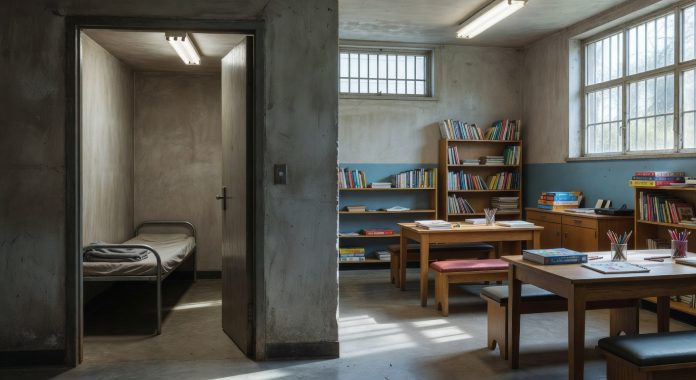
The Virginia House of Delegates approved legislation during the 2026 regular session that directs the Department of Juvenile Justice to establish standards for limiting room or cell confinement of minors in juvenile correctional facilities. The bill, designated as House Bill 91, also mandates that the department compile a report on the results of implementing these standards along with associated training and programming initiatives.
House Bill 91 specifies that the Department of Juvenile Justice shall create standards designed to limit the duration minors spend in room or cell confinement. These standards must specify a minimum number of hours each day that committed minors are required to be out of confinement. The department is instructed to develop and put into place programs that are customized to address the particular requirements of minors in these facilities, with the goal of decreasing the frequency with which confinement is employed.
A key component of the bill requires the Department of Juvenile Justice to examine the advantages for minors that come from restricting confinement time. The examination is to include an analysis of how these advantages influence important elements such as the protection of staff and fellow minors, the capacity to deliver meaningful rehabilitation programs, and the rates at which individuals return to criminal activity after release.
The legislation further obligates the department to gather information on the outcomes following the adoption of the standards and the delivery of related training and programming. This data must be summarized in a report submitted to the General Assembly for review.
The development of these standards occurs against a backdrop of documented issues within Virginia’s juvenile correctional system. Accounts from parents and advocates have pointed to instances of extended lockdowns and isolation that have hindered the delivery of educational and rehabilitative services. The bill seeks to introduce structured limits that aim to improve conditions while preserving the operational needs of the facilities.
Throughout the legislative process in 2026, the bill progressed from introduction in the House to approval by House committees and the full chamber. It then moved to the Senate, where it underwent review, amendments were proposed and adopted, and it received final passage. The measure has advanced to the enrollment stage, positioning it for enactment into law.
By requiring the study of effects on staff safety and recidivism rates, the bill ensures that standards for confinement will be formulated with attention to maintaining secure environments and achieving reductions in future criminal conduct. The data collection and reporting obligations create a mechanism for assessing whether the implemented standards contribute to safer facilities and more successful rehabilitation efforts that lower the chances of reoffending.
The Department of Juvenile Justice is now charged with initiating the development of the specific standards called for in the legislation. This process will involve setting appropriate minimum periods for out-of-confinement time and crafting interventions aimed at supporting the rehabilitation of young people in custody while upholding necessary measures for order and security.
The emphasis on evaluating impacts on recidivism provides a basis for determining if the new standards help in curbing repeat offenses, thereby enhancing public safety through lower crime rates in communities. Training for staff is also a required element, ensuring that personnel are equipped to apply the new standards effectively in daily operations.
With the enactment of this legislation, the juvenile justice system in Virginia gains a framework for refining confinement practices based on systematic review and reporting. The bill’s provisions for minimum out-of-confinement hours and tailored programming reflect an effort to integrate security requirements with opportunities for minors to engage in productive activities.
Ongoing evaluation through the required reports will allow for adjustments to the standards as data becomes available, focusing on outcomes related to staff protection, program delivery, and the prevention of recidivism. This structured approach supports the goal of creating correctional environments that prioritize both immediate safety and long-term reductions in criminal behavior among those who have been in the system.
The bill’s passage marks an update to policies governing the treatment of minors committed to state facilities, with built-in provisions for accountability through data tracking and legislative oversight. The focus on considering the effects on recidivism rates aligns with efforts to ensure that juvenile justice practices contribute to safer communities by preparing minors for successful reentry and discouraging future violations of the law.
In summary, House Bill 91 establishes a process for the Department of Juvenile Justice to set limits on confinement while mandating analysis of critical factors including staff safety and recidivism. The resulting standards and reports will inform future decisions on managing juveniles in correctional settings, with an eye toward effective rehabilitation and public protection.