
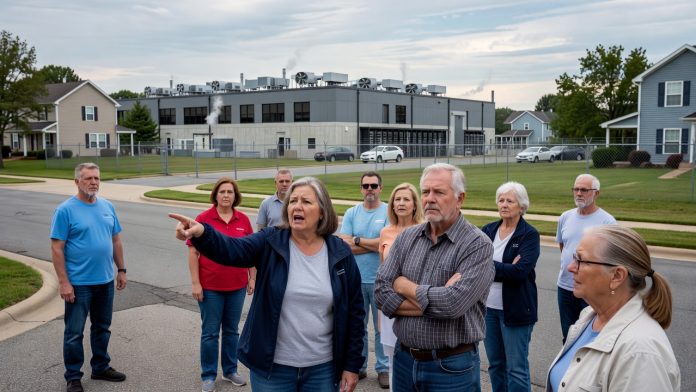
Data center operations in Loudoun County have generated reports of noise pollution that affect the daily routines of residents in Sterling and surrounding areas. Neighbors describe constant sounds from facility equipment that interfere with rest and general comfort in their homes. These issues have prompted direct appeals to local authorities for greater oversight and regulatory changes.
The situation involves multiple data centers that have expanded in the county over recent years, bringing both economic activity and environmental concerns to the forefront. Residents emphasize the need for accountability from operators and officials to address the sound levels that persist around the clock. Updated noise ordinances appear as a primary request to establish clearer standards for mitigation.
Community discussions focus on protecting residential zones while acknowledging the role of data centers in the regional economy. Neighbors have shared experiences of disrupted sleep and reduced outdoor enjoyment due to the industrial sounds. Such feedback forms the basis for calls to strengthen existing regulations.
Background on Data Center Growth in the Area
Loudoun County hosts one of the largest concentrations of data centers in the United States, driven by proximity to major internet infrastructure and demand for digital services. This development has supported job creation and tax revenue but has also led to localized complaints about operational noise. Residents in Sterling note that facilities built near homes often lack adequate buffers or sound barriers.
Accountability measures proposed include regular monitoring of noise emissions and requirements for companies to implement upgrades when levels exceed acceptable thresholds. Officials have received petitions and public comments urging prompt review of current policies. The process highlights the balance between technological advancement and community livability standards.
Stricter ordinances could involve decibel limits tailored to residential proximity and enforcement mechanisms such as fines or operational adjustments. Neighbors view these steps as necessary to maintain the character of established neighborhoods. Research into similar regulations in other jurisdictions provides models for potential adoption in Loudoun.
Resident Perspectives and Proposed Solutions
Individuals living near data centers report that noise levels vary with weather conditions and facility activity but remain a consistent presence. These accounts have been presented in public forums to illustrate the cumulative effect on quality of life. The emphasis remains on practical solutions rather than halting all development.
Accountability extends to ensuring that future projects undergo thorough environmental reviews that incorporate noise assessments from the outset. Current residents seek assurance that their concerns will influence permitting decisions going forward. Updated noise ordinances represent one tool to achieve measurable improvements without broad disruptions.
Collaboration between county staff, data center representatives, and community groups could facilitate the development of effective guidelines. Such partnerships aim to address specific complaints while supporting the sector’s contributions to the local economy. Continued dialogue appears essential to refining approaches based on real-world data.
Implications for County Planning and Policy
The ongoing concerns underscore the importance of integrating resident input into long-term planning for industrial sites. Loudoun County continues to evaluate options for noise management as part of broader land-use strategies. Neighbors advocate for ordinances that reflect current operational realities rather than outdated assumptions.
Accountability frameworks may include public reporting of noise measurements to build trust and transparency. Stricter rules could also encourage innovation in quieter technologies among data center operators. The outcome of these efforts will shape how the county manages growth in coming years.
Overall, the focus stays on evidence-based adjustments that protect residential areas while preserving economic opportunities. Residents remain engaged in advocating for changes that align with observed impacts. Further reviews of existing facilities may inform targeted ordinance updates.
Email the Loudoun County Board of Supervisors at:
Phyllis J. Randall (Chair, At-Large) – Phyllis.Randall@loudoun.gov,
Michael R. Turner (Vice Chair, Ashburn District) – Mike.Turner@loudoun.gov,
Juli E. Briskman (Algonkian District) – Juli.Briskman@loudoun.gov,
Sylvia R. Glass (Broad Run District) – Sylvia.Glass@loudoun.gov,
Caleb Kershner (Catoctin District) – caleb.kershner@loudoun.gov,
Matthew F. Letourneau (Dulles District) – Matt.Letourneau@loudoun.gov,
Kristen C. Umstattd (Leesburg District) – Kristen.Umstattd@loudoun.gov,
Laura A. TeKrony (Little River District) – Laura.TeKrony@loudoun.gov,
Koran Saines (Sterling District) – Koran.Saines@loudoun.gov,