
Research indicates that smartphone ownership at younger ages predicts poorer adult outcomes, including reduced self-worth, lower motivation, diminished resilience, and increased sadness, anxiety, and aggression—effects more pronounced in girls. A study of over 27,000 people supports delaying devices until high school. Separately, data from more than 100,000 young adults shows children with phones before age 13 experience higher depression rates and suicidal thoughts, with nearly 50 percent of girls acquiring devices by ages 5 or 6 reporting severe ideation versus 28 percent who waited until 13 or older.
Additional findings note that half of children have phones by age 8, averaging 4 to 5 hours of screen time daily by age 12, contributing to aggression, anxiety, and identity challenges. Phone bans in schools correlate with improved long-term mental health, though not always immediate academic gains on standardized tests. Specific risks include addiction comparable to behavioral disorders, cyberbullying, sleep disruption from screen light, mental health declines, and classroom distractions impairing focus and learning.
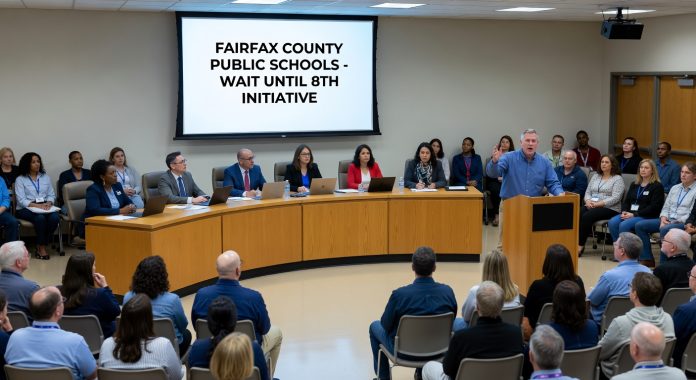
The Fairfax County Public Schools School Board, which includes Chair Sandy Anderson of the Springfield District, Ricardy Anderson of the Mason District, Karl Frisch of the Providence District, Melanie Meren of the Hunter Mill District, Robyn Lady as Vice Chair of the Dranesville District, Seema Dixit of the Sully District, Tom Dannan, Marcia St. John-Cunning, Mateo Dunne, Kyle McDaniel, Ryan McElveen, and Ilryong Moon, addressed the initiative in a work session on April 7, 2026, alongside topics like pandemic preparedness. The program remains voluntary, unable to mandate family changes, focusing instead on awareness and parental pledges.
Local voices, including students, have contributed arguments favoring delay to prevent unhealthy attachments and promote digital well-being. Broader trends show states restricting phones in schools to curb anxiety and bullying, prioritizing social-emotional benefits. Fairfax’s approach aligns with evidence suggesting reduced device access fosters interpersonal skills and concentration.
While not a legislative measure from the Virginia House of Delegates or Senate, the county-level effort reflects community concerns amid rising youth mental health issues. Outcomes from similar policies indicate potential for better behavioral health and educational environments without enforced compliance. Ongoing monitoring will assess participation and impacts in Fairfax County schools.
Stakeholders emphasize the pledge’s role in encouraging informed parental decisions based on empirical data. As discussions continue, the initiative positions Fairfax as a test case for balancing technology access with child development needs.
To Contact Fairfax School Board Members:
All Members – FairfaxCountySchoolBoard@fcps.edu,
Tom Dannan – tfdannan@fcps.edu,
Robyn Lady – ralady1@fcps.edu,
Marcia St. John-Cunning – mstjohncunni@fcps.edu,
Melanie Meren – HunterMillStaff@fcps.edu,
Ricardy Anderson – randerson@fcps.edu,
Mateo Dunne – mdunne@fcps.edu,
Karl Frisch – kfrisch@fcps.edu,
Sandy Anderson – sanderson@fcps.edu,
Seema Dixit – sdixit@fcps.edu,
Kyle McDaniel – kmcdaniel@fcps.edu,
Ryan McElveen – rlmcelveen@fcps.edu,
Ilryong Moon – imoon@fcps.edu,