
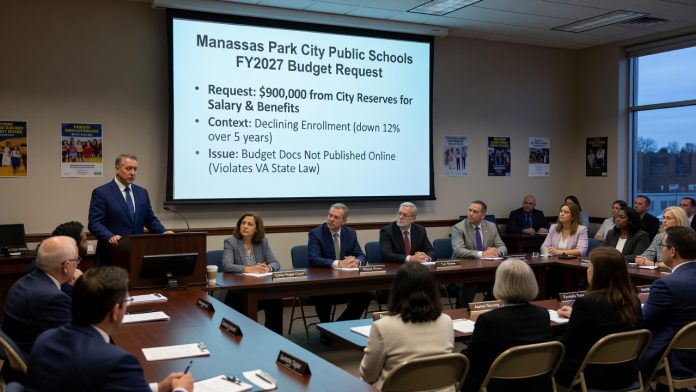
The Manassas Park City Public Schools system is facing heightened scrutiny regarding its fiscal year 2027 budget proposals and administrative transparency. District officials have requested approximately $900,000 from municipal reserves to cover upcoming salary and benefit costs for educational staff. This substantial financial draw comes at a time when the school district is experiencing a steady decline in student enrollment. Local taxpayers and municipal watchdogs are raising questions about the long-term sustainability of relying on reserve funds for recurring operational expenses.
The Manassas Park City School Board is responsible for overseeing the district’s financial planning and submitting the annual budget requests to the city government. The current board consists of Carlos Vargas, Patricia Moore, Paul Weaver, Alanna Mensing, and Kaneisha Taylor. These elected officials are tasked with balancing the educational needs of the community with the fiscal realities of a shrinking student population. Their recent decision to tap into the city’s emergency reserves for standard payroll obligations has sparked a complex debate among city leaders.
Declining Enrollment and Rising Costs
Public school districts typically align their operational budgets and staffing levels with their overall student enrollment figures to maintain fiscal balance. In Manassas Park, the student population has been trending downward, which traditionally leads to a reduction in state funding tied to average daily attendance. Despite having fewer students in the classrooms, the district’s fixed costs for employee salaries and benefits continue to escalate annually. The proposed $900,000 transfer from city reserves is intended to bridge this growing gap between declining state revenues and increasing payroll commitments.
Financial experts generally advise municipal governments against using one-time reserve funds to pay for recurring expenses like employee salaries. Reserves are traditionally maintained to handle unforeseen emergencies, catastrophic infrastructure failures, or sudden economic downturns that severely impact local tax revenues. By drawing nearly a million dollars from these emergency funds for routine compensation, the district risks depleting a crucial financial safety net. Critics argue that this approach merely delays necessary structural adjustments that the district must eventually make to reflect its smaller student body.
Future Financial Implications for Manassas Park
City officials and the school board will need to navigate these financial challenges carefully as the fiscal year 2027 budget process moves forward. If the $900,000 reserve transfer is approved, the municipal government will have less financial flexibility to address other pressing city needs or sudden emergencies. Furthermore, the school district will likely face an even larger budget deficit in subsequent years if enrollment continues to drop while payroll costs rise. Strategic long-term planning will be essential to align the district’s operational footprint with its actual student demographic and available recurring revenues.
Local residents are expected to demand greater accountability and immediate compliance with state laws regarding the publication of municipal budgets. The school board must address the transparency failures and provide a clear rationale for relying on reserve funds rather than adjusting operational spending. As discussions continue between the school district and the city council, the focus will remain on finding sustainable funding solutions that do not jeopardize the city’s financial health. The resolution of this budget conflict will establish a critical precedent for how Manassas Park manages its public resources in an era of demographic shifts.
Community Impact and Next Steps
The ongoing debate over the fiscal year 2027 budget highlights the broader economic pressures facing small independent cities like Manassas Park. Maintaining competitive salaries is necessary to attract and retain qualified educators, but it must be balanced against the overall tax burden placed on residents. The requested $900,000 injection from reserves underscores the difficulty of achieving this balance without making unpopular cuts to existing educational programs. Municipal leaders are now tasked with evaluating whether this temporary funding measure is a necessary bridge or a fiscally irresponsible maneuver.
Moving forward, the immediate priority for district administrators will be to rectify the legal compliance issue by publishing the budget documents online. Once the detailed financial plans are made available, a more thorough public discourse can occur regarding the structural deficit and the proposed reserve draw. The decisions made by the school board and city officials in the coming weeks will significantly impact the educational landscape and financial stability of the community. Residents will be watching closely to see how their elected representatives navigate this complex intersection of declining enrollment, rising costs, and transparency obligations.
Email the Manassas Park City Council at:
Alanna Mensing (Mayor): a.mensing@manassasparkva.gov,
Darryl Moore (Vice Mayor): d.moore@manassasparkva.gov,
Haseeb Javed: h.javed@manassasparkva.gov,
Yesy Amaya: y.amaya@manassasparkva.gov,
Michael Carrera: m.carrera@manassasparkva.gov,
Stacy Seiberling: s.seiberling@manassasparkva.gov,
Kevin Moreau: k.moreau@manassasparkva.gov,