
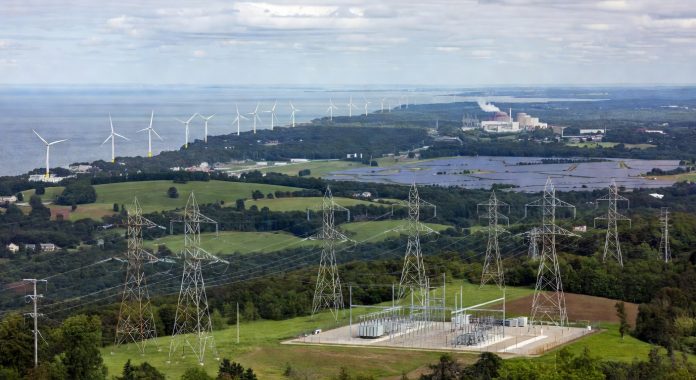
The Virginia House of Delegates has approved legislation that requires a detailed examination of the state’s existing electric utility infrastructure. House Bill 114, introduced by Delegate Lee Ware of Powhatan, directs the Department of Energy and the State Corporation Commission to conduct a comprehensive analysis of current systems and produce a report on their findings. The measure focuses on identifying practical ways to expand generation and transmission capacity through targeted improvements to what already exists rather than relying solely on entirely new construction projects.
The legislation outlines several specific areas for review as part of the required analysis. One key element involves capacity uprates for zero-carbon electric generating resources. This aspect of the study will explore options to increase output from facilities that generate power without carbon emissions. Another component examines energy storage resources and their role in supporting overall grid stability and efficiency. The analysis will also address transmission upgrades, with particular attention to grid enhancing technologies and high-performance conductors that can improve the performance of existing power lines.
In addition to these technical evaluations, the bill calls for an assessment of pathways allowing large load customers to voluntarily finance necessary grid upgrades. Under this provision, such customers could contribute funding for improvements in return for expedited interconnection to the electric grid. This mechanism is designed to streamline the process for major users while helping distribute the costs of infrastructure enhancements. The overall intent of the study is to gather data that can inform better management of electric utility resources across Virginia.
Delegate Lee Ware sponsored the bill to promote a systematic review of infrastructure capabilities. The legislation passed the House of Delegates unanimously during the 2026 session. After approval in the House, the bill advanced to the Senate Commerce and Labor Committee. On March 6, 2026, the committee voted to continue the measure to the next legislative session for further consideration and review.
The bill emphasizes a collaborative effort between the Department of Energy and the State Corporation Commission. These agencies are tasked with working together to assess the full scope of existing electric utility infrastructure. The resulting report is expected to detail findings on capacity expansion opportunities and potential recommendations for implementation. By requiring this joint analysis, the legislation establishes a structured process for evaluating current resources and identifying efficiencies.
Supporters of the bill, including its primary sponsor Delegate Lee Ware, highlight the value of focusing on upgrades to existing generation units and transmission infrastructure as a cost-effective strategy. The study will specifically consider how capacity uprates for zero-carbon electric generating resources can be achieved without major new builds. This approach seeks to maximize the output of operational facilities while maintaining reliability. Energy storage resources form another central part of the review, as they help address fluctuations in supply and demand on the grid.
Transmission upgrades represent a significant portion of the mandated analysis. The legislation directs attention to grid enhancing technologies that can boost the capacity and reliability of current lines. High-performance conductors are noted as one example of innovations that could allow more electricity to flow through existing infrastructure. These elements of the study aim to provide concrete data on how modernization of transmission systems can support increased loads.
The provision for large load customers to voluntarily finance grid upgrades offers a mechanism for accelerating connections. This part of the bill allows such customers to participate directly in funding improvements, potentially leading to faster access to power for their operations. The study will explore various pathways for this financing model, including conditions that could tie contributions to accelerated interconnection approvals. This feature is intended to align the interests of major energy users with broader infrastructure needs.
Following its passage in the House, the continuation of the bill in the Senate provides additional time for deliberation on the study’s scope and potential outcomes. Delegate Lee Ware has advocated for this legislation as a means to strengthen Virginia’s electric utility framework through informed analysis. The required report from the Department of Energy and the State Corporation Commission will serve as a foundation for understanding current capabilities and opportunities for enhancement.
The bill’s provisions collectively seek to address infrastructure challenges by prioritizing detailed study over immediate policy changes. Capacity uprates for zero-carbon electric generating resources and energy storage are positioned as viable paths to increase available power. Transmission upgrades involving grid enhancing technologies and high-performance conductors offer another avenue for improvement. The voluntary financing option for large load customers adds a component that could facilitate quicker grid integration while sharing costs appropriately.
In summary, House Bill 114 establishes a clear directive for state agencies to analyze electric utility infrastructure comprehensively. The unanimous House approval underscores broad support for initiating this review process. With the bill continued in the Senate, further examination will occur in the upcoming session. The work outlined in the legislation focuses on practical upgrades and financing models that can optimize existing resources. Delegate Lee Ware’s sponsorship reflects a commitment to developing data-driven insights into how Virginia can maintain and improve its electric utility systems effectively.