
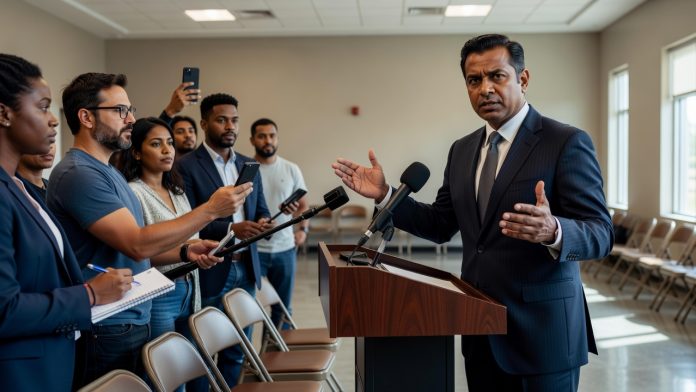
Congressman Suhas Subramanyam participated in an exchange that included questions about his connections to certain organizations. The inquiries referenced the HSS and its described role as a wing of the RSS. Additional topics covered India’s designation as a Hindu nation alongside its secular traditions.
The congressman indicated that he knows the HSS but declined to elaborate further on related matters. He responded with a clear no when pressed for more information. This limited his comments to basic acknowledgment of the group.
Questions also explored support for a Hindu Rashtra concept in India. The congressman stated that India is a declared Hindu nation. He added that the country has always maintained a secular character.
He expressed the view that secular principles represent the best path forward. The congressman suggested these decisions rest with the Indian people themselves. His remarks highlighted the importance of respecting established national frameworks.
The session maintained a focus on factual responses without additional commentary. The congressman addressed each point regarding organizational ties directly. His statements on religious freedom emphasized continuity with India’s secular history.
Analysts observed that the exchange remained centered on the specific queries posed. No new affiliations were disclosed beyond the HSS reference. The discussion stayed within the bounds of the questions asked.
The congressman concluded by noting the value of secular governance in the Indian context. He tied this to long-standing traditions in the country. Such responses aimed to provide clarity on his positions.
Public interest in the exchange stems from the nature of the questions on international matters. The congressman handled the topics with straightforward answers. His approach avoided speculation or expansion beyond known facts.
The overall dialogue provided insight into the congressman’s awareness of the HSS. It also covered his perspective on India’s national identity. These elements were addressed in sequence during the session.
Further review of the responses shows consistency with secular policy preferences. The congressman reiterated that India has always been secular. This point was presented multiple times to reinforce the stance.
The event drew attention to how elected officials navigate inquiries on foreign policy issues. The congressman limited his input to the details requested. His answers aligned with the factual elements of India’s constitutional setup.