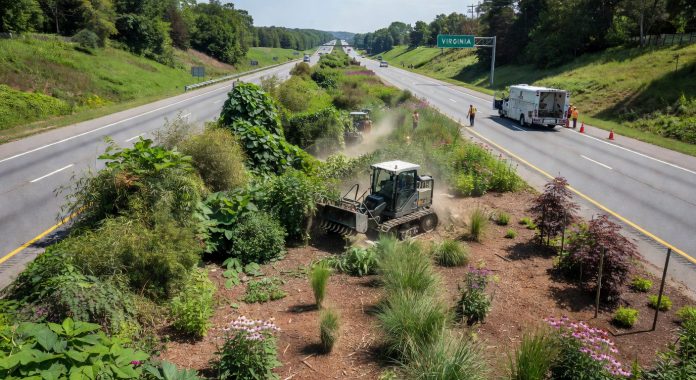
In a significant development for Virginia’s transportation and environmental management, Governor Abigail Spanberger has signed House Bill 88 into law. This legislation updates the state’s approach to managing plants along highway rights-of-way by prohibiting the planting of invasive species and requiring their removal.
The bill amends section 33.2-217 of the Code of Virginia. It directs the Commonwealth Transportation Board to create and enforce a policy for the identification, excavation, and elimination of any invasive plant species appearing on the Department of Conservation and Recreation’s list within all state highway rights-of-way. This expands the previous scope, which restricted control efforts to just three specific plants, with one not qualifying as invasive under the department’s criteria.
Delegate Amy Laufer served as the chief patron of the bill, with Delegate Seibold as a co-patron. The measure received approval through the legislative process and now stands as law following the governor’s signature earlier this year.
Invasive species represent a substantial concern for the commonwealth. These non-native plants and organisms spread aggressively, outcompeting local flora and leading to declines in biodiversity. They destroy habitats essential for pollinators and bird populations while altering natural ecosystem processes. Agricultural lands suffer degradation as invasives encroach on crops and pastures, resulting in economic losses for farmers and rural communities.
Nationally, the annual cost associated with invasive species reaches as high as 120 billion dollars. Within Virginia, the figure surpasses one billion dollars per year. These expenses arise from control measures, lost productivity, and damage to infrastructure.
Highway rights-of-way, spanning thousands of miles across the state, act as corridors for the dissemination of these plants. Soil disturbances from road work facilitate their establishment. Once present, invasives interfere with maintenance operations by overgrowing areas needed for access and safety inspections. They contribute to reduced visibility along roadways, increasing the risk of collisions. Blocked signs and obstructed lines of sight pose hazards to drivers, while sedimentation and erosion issues can undermine roadbeds and drainage systems.
The previous limited list of controlled species left many problematic plants unchecked. As a result, the commonwealth incurred ongoing expenses for herbicide applications and manual removals to keep highways safe and functional. Invasive plants also clog waterways near roads and can spread to neighboring private properties, where they damage landscaping, reduce property values, and necessitate additional management by individual owners.
House Bill 88 addresses these issues by mandating comprehensive action against all listed invasives. The Commonwealth Transportation Board must now implement systematic procedures to dig up and destroy such plants wherever they appear in the rights-of-way. This proactive stance prevents further spread and reduces the need for escalated interventions in the future.
The policy will likely involve regular surveys of highway corridors to detect new infestations early. By focusing resources on the full list maintained by the Department of Conservation and Recreation, the state can achieve greater efficiency in its efforts. Long-term projections indicate potential savings in maintenance budgets as the prevalence of these species diminishes.
Property owners adjacent to highways stand to benefit as well. The containment of invasives within rights-of-way limits their migration onto private farmland and residential lots. This protection supports agricultural operations by preserving soil quality and crop yields, bolstering the economic foundation of Virginia’s rural areas.
Safety improvements represent another key outcome. Clearer rights-of-way enhance driver visibility and facilitate quicker response times for emergency services along the roads. Reduced overgrowth minimizes risks associated with fallen vegetation or obscured hazards during adverse weather conditions.
The legislation aligns with broader efforts to maintain the integrity of the state’s transportation network without unnecessary expenditures. Taxpayers fund highway construction and upkeep, and allowing invasive species to proliferate would lead to higher future costs for remediation. By acting now to eradicate them, the state optimizes resource allocation.
Implementation of the new requirements began following the bill’s enactment. The Commonwealth Transportation Board is tasked with developing detailed guidelines in coordination with other agencies to ensure consistent application statewide. This includes protocols for safe removal methods that minimize environmental disruption.
Virginia faces ongoing pressures from invasive species impacting forests, waterways, and agricultural lands in addition to transportation assets. The highway-focused strategy in House Bill 88 targets a primary pathway for their dispersal, offering a practical solution to a widespread problem.
Officials anticipate that the measure will foster healthier ecosystems along roadways, supporting native plant communities that provide natural erosion control and habitat benefits. This in turn contributes to the overall resilience of the commonwealth’s natural and built environments.
The signing of this bill marks a step forward in addressing infrastructure challenges through targeted management practices. By requiring the control of all designated invasive plants on highway rights-of-way, Virginia takes measures to safeguard public investments in roads while mitigating broader economic and ecological harms.
Additional impacts include the potential for invasive species to cause allergic reactions among residents and visitors using the highways. They can also spread diseases affecting livestock on nearby farms, leading to further economic strain in agricultural sectors. Interference with parallel power line corridors can result in service disruptions and elevated repair costs for utility companies.
By prohibiting the initial planting of these species, the law prevents new introductions that could exacerbate existing problems. The requirement for a policy ensures that efforts are not ad hoc but structured and accountable, with the potential for measurable reductions in invasive coverage over time.
This approach to highway management reflects a commitment to efficient use of state resources. Resources spent on controlling invasives now can prevent the need for more extensive and expensive operations later. The focus on all DCR-listed species rather than a select few allows for a more complete response to the threat.
Residents and businesses along Virginia’s highways can expect improved conditions as the new law takes effect. Reduced overgrowth will contribute to better road conditions and lower associated risks. The overall effect supports the state’s goal of maintaining reliable transportation infrastructure that serves both urban and rural populations effectively.