
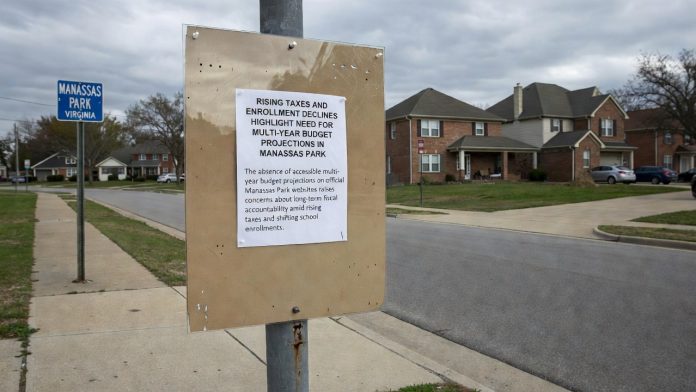
Rising property values and a corresponding increase in tax bills are bringing local government finances into sharper focus for residents in Manassas Park, Virginia. While city and school leaders have outlined immediate budgetary needs, the apparent absence of comprehensive multi-year budget projections on official municipal websites is raising questions about long-term fiscal accountability. For a community facing shifting demographic and economic pressures, transparent forecasting is increasingly viewed as a critical component of responsible governance. Without accessible forward-looking data, residents are left to navigate complex financial shifts based solely on annual snapshots rather than comprehensive strategic plans.
The immediate financial realities for residents underscore the urgent need for forward-looking municipal planning. According to recent local government data, the average assessed value for a single-family home in Manassas Park rose significantly from $507,689 last year to $528,860 this year. Although the city implemented a two-cent reduction in the property tax rate, the surge in property assessments ultimately resulted in a higher financial burden for local property owners. Specifically, the average homeowner’s tax bill increased by $216, bringing the new annual total to $7,298 and representing an effective 2.22 percent tax increase.
Local officials have publicly addressed the dynamics behind these rising costs during recent public budget discussions. City Manager Carl Cole justified the tax impact by pointing directly to the robust local real estate market and its effect on municipal revenue generation. Noting that everybody’s house is now worth more than it was last year because assessed values went up, Cole stated the net result on the average home would be a tax increase of $216. He framed the higher tax bills as a natural consequence of widespread property appreciation across the independent city.
School District Financial Pressures
Beyond the municipal government, the Manassas Park City Schools system is navigating its own complex financial landscape. The school division has projected a $63 million budget for the fiscal year 2027, an ambitious figure that highlights the scale of future educational funding requirements. However, school officials, including Superintendent Melissa Saunders, have openly noted that the division is facing a multi-year challenge as student enrollment continues to fall. This declining enrollment creates sustained long-term budget pressures that require careful multi-year planning to balance necessary educational services with available municipal revenue.
The intersection of rising local tax burdens and projected school funding needs illustrates why accessible long-term forecasting is vital for the general public. While school leaders acknowledge the multi-year nature of their challenges, residents frequently struggle to find detailed, official multi-year budget projections on the city and school division websites. Financial transparency advocates argue that without these easily accessible documents, taxpayers cannot adequately evaluate how current spending decisions will impact future tax rates. Consequently, this absence of online forecasting data may inadvertently hinder long-term fiscal accountability across the entire Manassas Park municipality.
City Staff Compensation and Future Outlook
Immediate budget allocations also include significant investments in the municipal workforce, which will carry ongoing financial implications for the city. Local officials recently approved a three percent cost-of-living adjustment for city staff to help maintain competitive compensation in a challenging economic environment. Furthermore, the city is currently conducting an ongoing classification and compensation study to evaluate the broader pay structure for its municipal employees. While these measures directly benefit the workforce and improve retention, they represent recurring expenses that will require sustainable funding sources in all subsequent fiscal years.
The responsibility for navigating these intersecting financial pressures ultimately falls upon the elected representatives of Manassas Park. The Manassas Park City Council, which includes Mayor Alanna Mensing, Vice Mayor Yesy Amaya, Michael Carrera, Laura Hampton, Darryl Moore, and Haseeb Javed, must continuously balance employee compensation with taxpayer burdens. Similarly, the Manassas Park School Board, consisting of Carlos Vargas, Patricia Moore, Paul Looser, Rachel Kirkland, and Dana Brown, is tasked with managing future budgets amidst the aforementioned enrollment declines. Both governing bodies face the shared challenge of demonstrating fiscal prudence to a public that is currently absorbing higher annual tax bills.
Moving forward, the demand for enhanced digital transparency regarding municipal finances is likely to grow among local property owners. Providing detailed multi-year budget projections on official websites could bridge the gap between internal government planning and public awareness. Until such resources are readily available, taxpayers will have to rely on year-to-year updates to understand the trajectory of their local tax obligations. Ultimately, establishing long-term fiscal accountability will require sustained communication between Manassas Park administrators, elected officials, and the community they serve.
Email the Manassas Park City Council at:
Alanna Mensing (Mayor): a.mensing@manassasparkva.gov,
Darryl Moore (Vice Mayor): d.moore@manassasparkva.gov,
Haseeb Javed: h.javed@manassasparkva.gov,
Yesy Amaya: y.amaya@manassasparkva.gov,
Michael Carrera: m.carrera@manassasparkva.gov,
Stacy Seiberling: s.seiberling@manassasparkva.gov,
Kevin Moreau: k.moreau@manassasparkva.gov,