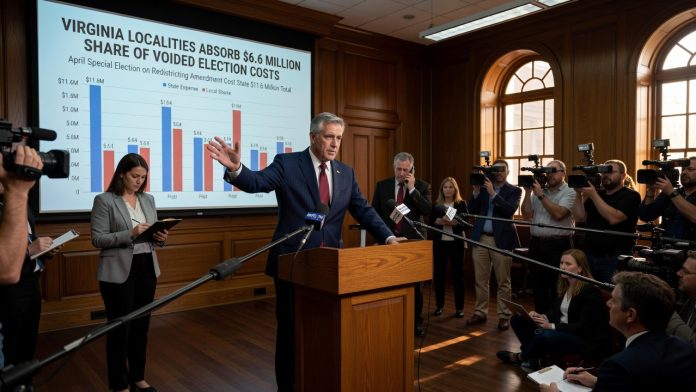
The Virginia Department of Elections reported that the April 21 special election on a proposed constitutional amendment for redistricting cost $11,636,147 before the state Supreme Court ruled it unconstitutional. The state will cover nearly $5 million of that total while localities pay the balance of about $6.6 million. Many local governments had budgeted for a June primary later moved to August allowing them to redirect those funds.
Officials in various counties and cities indicated they could handle the additional expenses without significant issues. Buckingham County spent $44,373 on the election with the state reimbursing $9,019. The county covered the rest according to administrator Karl Carter who noted routine budgeting for extra elections.
Breakdown of Election Expenses
Virginia Beach incurred costs of $750,533 for the special election. The state is expected to pay $265,509 leaving the city with $465,023 in remaining expenses. City spokesperson Ali Weatherton-Shook mentioned that savings from unfilled positions helped manage the outlay.
Chesterfield County reported election costs of $619,970. The state reimbursement of $223,356 left the county responsible for $396,613. County spokesperson Stephen Bays stated that the fiscal year 2027 budget included additional funding for the registrar to address rising election demands.
Fairfax County the largest locality spent $1,545,781 on the election. The state covers $655,424 while the county pays $910,356. Supervisor Pat Herrity noted that carryover funds addressed the special election and other vacancies from officials moving to new positions.
Impacts on Future Budgets
Dickenson County faced a tighter situation with election costs of $39,748 and state coverage of $7,802. The county paid $31,946 and administrator Larry Barton highlighted that the August primary added a third election to an already tight fiscal year 2027 budget. Other localities expressed similar concerns about competing demands on limited resources.
The new state budget approved by the General Assembly includes an additional $680,000 to assist with election costs overall. Local officials noted that when state funding falls short local dollars fill the gap potentially affecting other priorities. Some welcomed further state support for future special elections.
The special election was held to address redistricting but was later invalidated due to the timing of the amendment process. The court followed a 1912 precedent in allowing the vote to proceed before ruling on challenges. This approach resulted in expenses not present in the earlier case which coincided with a regular presidential election.
Local governments emphasized that they would find ways to cover the costs despite the unexpected timing. The August primary now represents an additional expense in the new fiscal year for many areas. Officials across the state continue to plan for these and other election-related demands.