
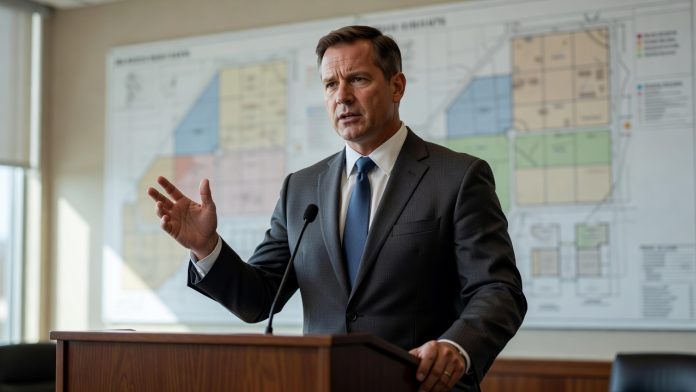
Loudoun County Supervisor Caleb Kershner has drawn attention to the challenges associated with modifying zoning ordinances to focus on particular development projects. The Loudoun County Board of Supervisors manages these land use regulations as part of its responsibilities. Kershner’s statements focus on the possible consequences for consistent policy application.
Potential Effects on Development Stability
Adjustments to zoning rules that target specific projects may introduce variability into the regulatory environment. This variability can affect how developments proceed within the county boundaries. Stable zoning frameworks allow for predictable planning by all involved parties.
Kershner noted that such shifts could impact the overall process of community growth and infrastructure support. The supervisor’s observations center on maintaining balance in how ordinances are enforced. These points contribute to ongoing discussions about local land management strategies.
Considerations for Policy Consistency
The remarks from Kershner underscore the value of applying zoning standards uniformly across different proposals. Uniform application helps ensure that decisions are based on established criteria rather than individualized circumstances. This consistency supports equitable treatment for various stakeholders in the county.
Discussions around zoning often involve weighing multiple factors related to growth and resource allocation. Kershner’s input adds to these considerations by identifying specific areas of concern. The focus remains on the mechanics of how ordinances function in practice.
Context Within County Operations
Loudoun County continues to address various aspects of zoning as part of its broader governance activities. The Board of Supervisors reviews and updates policies to align with evolving community requirements. Kershner’s comments provide one perspective in these deliberations.
Such statements contribute to public understanding of the factors influencing land use decisions. The emphasis on risks associated with targeted changes offers insight into potential policy implications. Overall, these elements reflect standard processes in local government operations.
Email at:
Phyllis J. Randall (Chair, At-Large) – Phyllis.Randall@loudoun.gov,
Michael R. Turner (Vice Chair, Ashburn District) – Mike.Turner@loudoun.gov,
Juli E. Briskman (Algonkian District) – Juli.Briskman@loudoun.gov,
Sylvia R. Glass (Broad Run District) – Sylvia.Glass@loudoun.gov,
Caleb Kershner (Catoctin District) – caleb.kershner@loudoun.gov,
Matthew F. Letourneau (Dulles District) – Matt.Letourneau@loudoun.gov,
Kristen C. Umstattd (Leesburg District) – Kristen.Umstattd@loudoun.gov,
Laura A. TeKrony (Little River District) – Laura.TeKrony@loudoun.gov,
Koran Saines (Sterling District) – Koran.Saines@loudoun.gov,